Tennessee cityBlues, soul and civil rightsTwo-night stop

Memphis Where the Delta came north and the music changed

Memphis stands on the bluff above the Mississippi where the Delta blues came north and turned into rock and soul, and where the motel Martin Luther King Jr was killed at is now the National Civil Rights Museum.

Choose an area
Build your Memphis tripInspire → plan → book
The destination story

The city the Delta came to

Memphis sits on the Chickasaw Bluff, the first high ground on the eastern bank of the Mississippi River above the flood plain, and for a century it was where the cotton of the Mississippi Delta was graded and sold. The people who grew that cotton came up the same road, and they brought a music with them.

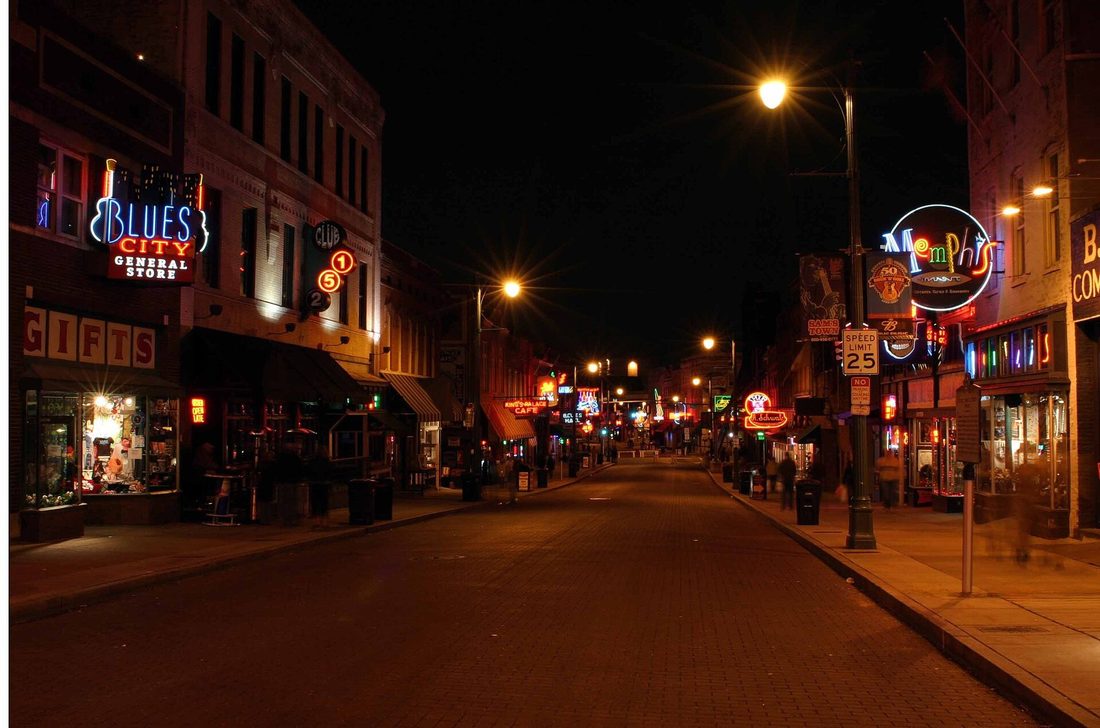
Beale Street was the result: the commercial and entertainment street of the Black mid-South, with its own theatres, banks, pharmacies and pawnshops as well as its clubs. W. C. Handy published from an office on it and turned a regional folk form into printed, sellable music. Almost none of the original street survived the urban renewal of the 1960s and 1970s. What stands now is three restored blocks with real bands in them and a great deal of neon, and it is worth going to, provided you do not go looking for 1920.

The history that did survive is in two small buildings a few miles apart. At Sun Studio on Union Avenue, Sam Phillips recorded Howlin' Wolf, Rufus Thomas and B. B. King before he recorded Elvis Presley, and the room is still one room, still open, still used at night. At McLemore Avenue in the neighbourhood called Soulsville, Stax Records put a Black and white house band in the same studio through the 1960s and made Otis Redding, Booker T. & the M.G.'s and Isaac Hayes. The original building was demolished; the museum on the site is a reconstruction, and says so.

On 4 April 1968 Martin Luther King Jr was shot dead on the second-floor balcony of the Lorraine Motel on Mulberry Street. He was in Memphis to support the city's striking sanitation workers, whose placards read I Am a Man. The motel front has been left exactly as it was, with two period cars parked below the balcony and rooms 306 and 307 preserved, and the National Civil Rights Museum has been built through the buildings behind it and across the street. It is not a memorial with a museum attached; it is a full account of the movement, and the balcony is the last thing you reach.

What followed is part of the city's story too. Riots, white flight and disinvestment hollowed out downtown; Stax went bankrupt in 1975; Memphis is still one of the poorer big cities in the United States, and the visitor's Memphis of Beale Street, the riverfront and Graceland sits inside a much harder one. Nobody here pretends otherwise, and the museums are better for it.

“Two rooms in this city changed popular music, and both of them are smaller than you expect.”

Memphis is the middle of three cities that belong together. New Orleans invented jazz out of Congo Square and the brass bands; Memphis turned the Delta blues into rockabilly and soul; Nashville built a publishing industry out of country songwriting. Our music trail guide runs all three as one route.

Where you stay shapes the trip

Choose your area

Compare four bases by how much of the city you can reach on foot, how loud the evening is, and whether Graceland or the museums are the reason you came.

The balcony of the Lorraine Motel outside room 306, with a wreath marking where Martin Luther King Jr was killedThe painted Sun Studio record logo on the brick wall of the Memphis Recording Service buildingPerfect
day
GlobeSaga perspective

A perfect day in Memphis

Put the Civil Rights Museum first, while you have the attention for it, and let the day get lighter rather than heavier. Everything below is a short drive from the next thing.

  • AM
    The National Civil Rights Museum Two to three hours if you read the exhibits, ending at the balcony and then in the boarding house across the street. Go at opening; it fills up.
  • 12
    Barbecue and South Main Pulled pork a few minutes' walk away, then the galleries and shopfronts of the South Main blocks to get your head back.
  • PM
    Sun and then Stax The Union Avenue studio on a guided half-hour, then out to McLemore Avenue for the soul museum. Two very different rooms, twenty minutes apart.
  • EVE
    Beale Street Walk it end to end, pick the club with the band you can hear from outside, and stay for a set rather than a drink.
Experience Memphis

Two studios, one motel, and the road south

Choose a theme to explore four bookable experiences. The selection updates directly below without leaving GlobeSaga.

Showing themeAttractions & tickets
Open all results

Loading Memphis activities…

Activities and tickets are booked through GetYourGuide, GlobeSaga's activities partner.
Explore the geography

The studios, the motel and the Delta

Use the route filters to separate the record-making city from the civil-rights one, and both from Midtown and the road south into Mississippi. Select a place to understand its role before adding it to the itinerary.

Interactive route explorerChoose how to see Memphis
Memphis stopExcursionSelected route
Beyond the city

Four worthwhile excursions

Memphis is the top of the Delta, and the country south of it on Highway 61 is flat, agricultural and thinly populated. These are driving days rather than half-hour hops, and the interest is in the landscape as much as the stops.

Car

Clarksdale

Full day

An hour and a half south, at the crossroads of Highways 61 and 49 that the crossroads legend attached itself to. The Delta Blues Museum occupies the old railway depot, and juke joints in the town still book live Delta blues most weekends.

Car

Dockery Plantation

Half day

Another hour south of Clarksdale, a working cotton plantation whose commissary and cotton gin still stand. Charley Patton lived and played here, and a good case is made that this is where the Delta blues actually started. It is a marker on the Mississippi Blues Trail, self-guided and usually empty.

Car

Tupelo

Full day

Two hours east in Mississippi, where Elvis Presley was born in a two-room shotgun house his father built. The house, the family church moved onto the site and a small museum make an honest counterweight to Graceland: this is what he came from.

Car

Oxford, Mississippi

Full day

An hour and a quarter south-east, a university town around a courthouse square. Rowan Oak, the house William Faulkner lived and wrote in, stands under cedars a short walk from the square with his outline for a novel still pencilled on a bedroom wall.

Planning tip: All four of these need a car, and services in the Delta are sparse enough that fuel and food are worth planning rather than assuming. Several of the smaller museums close for part of the week; check before committing a day.
Find the right area

Where to stay in Memphis

Downtown is the default and mostly the right one: Beale Street, the riverfront and the trolley are all there, and the National Civil Rights Museum is a walk away. South Main, immediately below it, trades the noise for galleries and small hotels and is quieter at night. Cooper-Young and the rest of Midtown are where the city itself eats and drinks, four miles east, and mean driving back in. Whitehaven, out by Graceland and the airport, makes sense only if that house is the trip.

Hotel information, availability and booking are provided by Trip.com. GlobeSaga may receive a commission at no extra cost to the traveller.

Gastronomy

Food experiences in Memphis

Memphis barbecue means pork, and mostly shoulder: slow-smoked over hickory, pulled or chopped, served on a bun under slaw. Ribs come dry, rubbed with spice and served without sauce, or wet, and the city argues about it in public. The other tradition is soul food, cooked in the same neighbourhoods that made the music and, in the case of the Four Way, in the same few blocks as Stax.

Practical questions

Before you go

Quick, honest answers to the questions that actually decide how a Memphis trip goes.

Two nights covers the National Civil Rights Museum, Sun Studio, Stax and an evening on Beale Street without rushing any of them. A third buys either Graceland or a day out into the Mississippi Delta, and those two are genuinely different trips.
That it is built around the Lorraine Motel, the working motel where Martin Luther King Jr was shot on the balcony outside room 306 on 4 April 1968. The motel front has been left standing, the two cars are parked as they were, and rooms 306 and 307 are preserved behind glass; the museum runs through the building behind and continues in the boarding house across the street where the shot was fired from. The exhibition covers the whole movement, not only the killing, and it takes two to three hours if you read it. It is not a light morning, and people come out quiet.
Yes, if you know what it is now. Beale was the Black commercial and entertainment street of the mid-South, and W. C. Handy published the music that made the blues a national form from an office on it. Almost none of the original street survived urban renewal in the 1960s and 1970s; what stands today is three restored blocks of clubs and bars, pedestrianised and busy, with real bands playing every night and a lot of neon. Treat it as a living music street rather than a historic one, and go to Sun and Stax for the history.
Effectively yes, unless you plan to stay downtown and take rideshares. Downtown, Beale Street and the National Civil Rights Museum are walkable together, but Sun Studio, Stax, Midtown and Graceland are spread across several miles and public transport between them is thin. Anything out into the Mississippi Delta needs a car outright.
It depends whether Elvis Presley is the reason you came. The house is nine miles south of downtown and is visited on a timed, self-guided audio tour of the ground floor and grounds; the upstairs is closed and always has been. It is smaller than people expect and the 1970s interiors are intact, which is most of the point. Around it sits a large separate complex of exhibition halls, aircraft and shops that can absorb a whole day if you let it.
Spring and autumn. Summer in the Mississippi valley is hot and humid and thunderstorms build most afternoons; winter is cool, grey and quiet, and occasionally freezes. May fills the city for the festival month, and the week around 16 August, the anniversary of Elvis Presley's death, fills Whitehaven in particular.
Advertisement
Plan MemphisStays · Flights · Cars · Trains · Activities