Southern UtahNational parkHoodoo country

Bryce Canyon An amphitheatre you look down into

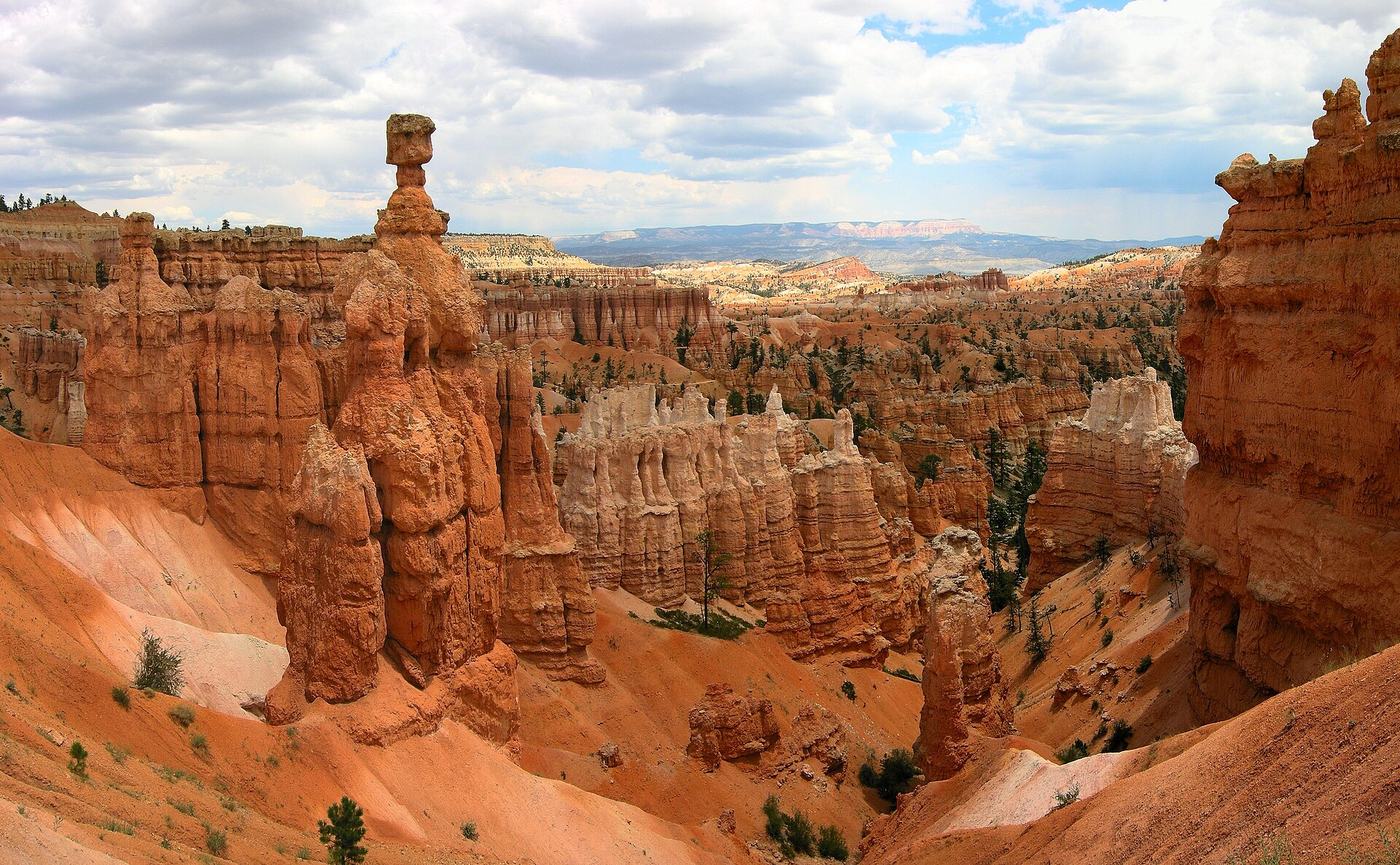
Bryce Canyon is not a canyon but a run of amphitheatres eroded into the edge of a nine-thousand-foot plateau, filled with hoodoos that frost carves and frost destroys, seen from the rim above and walked from the top down.

Choose a base
Build your Bryce Canyon tripInspire → plan → book
The destination story

Not a canyon, and not carved by a river

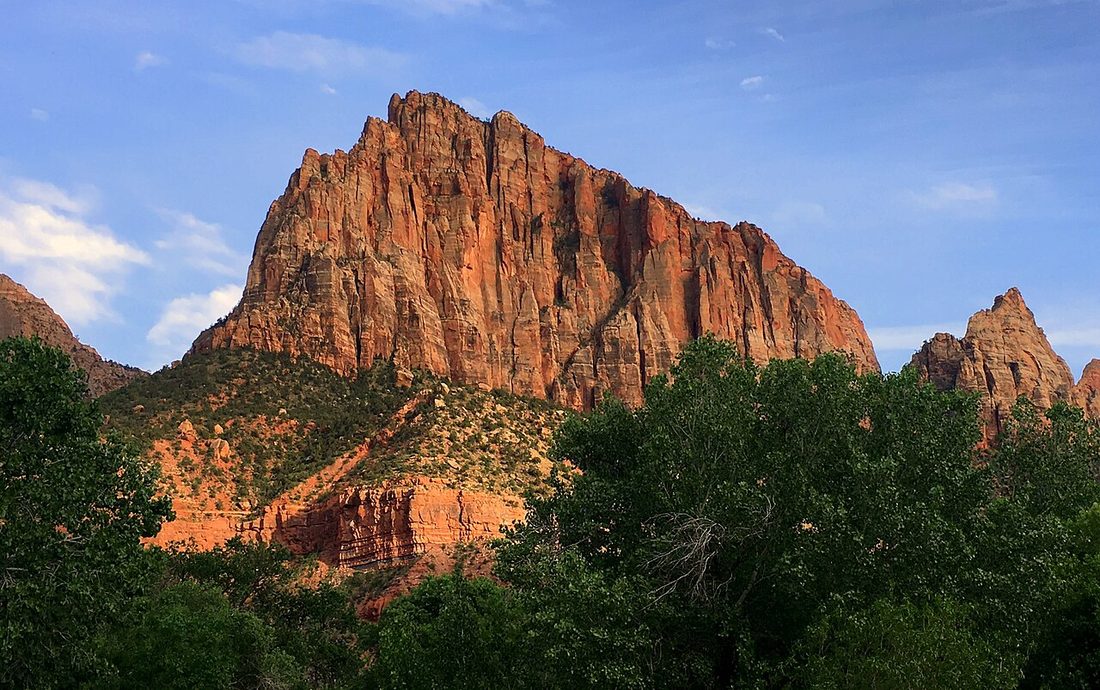
Bryce Canyon National Park is misnamed twice over. It is not a canyon, because no river runs through it; and it is not one bowl but a line of amphitheatres bitten out of the eastern edge of the Paunsaugunt Plateau. You arrive along the top, park on the rim at eight thousand feet and look down into it — the exact inverse of Zion, two hours west, which you enter from the floor.

What fills the amphitheatres are hoodoos: free-standing spires of soft, iron-stained limestone, orange and pink and white in bands. The mechanism that makes them is frost. Water works into the vertical joints in the rock, freezes overnight and levers the joint wider, and at this altitude that happens on something like two hundred nights a year. Joints open into walls, walls are pierced into windows, windows collapse and leave columns. Nothing here is finished; the amphitheatre is retreating into the plateau a little further every winter.

The name comes from Ebenezer Bryce, a Mormon settler who ran cattle below the rim in the 1870s and is remembered chiefly for a remark about it being a difficult place to lose a cow. The area became a national monument in 1923 and a national park in 1928, and the lodge on the rim dates from the same decade of railway-driven park building that produced most of the great western lodges.

It is a small park by American standards and an easy one to underestimate. A day covers it. But it is also the highest and coldest of the southern Utah parks, dark enough at night to have become one of the country's best-known places to look at stars, and quite different at dawn from how it looks at noon.

“Zion you walk up into. Bryce you stand above, and then walk down.”
Where you base yourself shapes the trip

Choose your base

Everything here is within twenty minutes of the rim, so the choice is really between being on the rim at dawn and paying less to be a short drive away. Compare four bases by what each puts within reach of a sunrise.

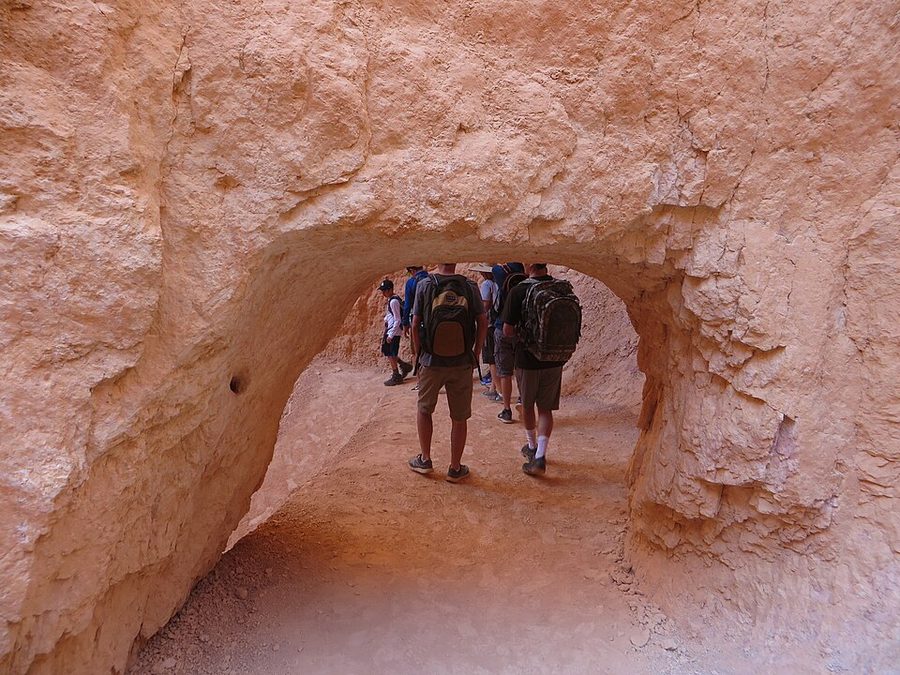
Thor's Hammer standing above the hoodoos of the Bryce Canyon amphitheatreWalkers passing through a cut in the rock on the Navajo Loop below the Bryce Canyon rimPerfect
day
GlobeSaga perspective

A perfect day at Bryce

Two things make a day here work: being on the rim before the sun clears the horizon, and going down into the amphitheatre rather than only looking at it. Everything else is optional.

  • AM
    Be on the rim for first light The hoodoos are lit from the side at sunrise and flat at midday; the difference is not subtle. It is cold at that hour in any month, so take more clothing than the forecast suggests.
  • 09
    Drop below the rim The short loops that switchback down into the amphitheatre and climb back out put you among the columns instead of above them. Budget for the climb out, which is at eight thousand feet.
  • PM
    Drive the rim road south The road climbs another thousand feet towards the far end of the plateau, where the forest thickens and the views open east across the Grand Staircase. Fewer people get this far.
  • EVE
    Stay out after dark This is some of the darkest sky in the lower forty-eight, and the park runs astronomy programmes because of it. Let your eyes adjust for twenty minutes and look up.
Experience Bryce Canyon

The rim, the descent and the night sky

Choose a theme to explore four bookable experiences. The selection updates directly below without leaving GlobeSaga.

Showing themeTours & tickets
Open all results

Loading Bryce Canyon activities…

Activities and tickets are booked through GetYourGuide, GlobeSaga's activities partner.
Explore the geography

One road along a rim, and the country below it

The park is a single road running south along the plateau edge, with the amphitheatre and its viewpoints at the northern end. Everything else — the gateway settlements, the scenic highway east, the monument beyond — sits below and around it. Use the filters to see what belongs to the same day.

Interactive route explorerChoose how to see Bryce
Bryce stopExcursionSelected route
Beyond the rim

Four worthwhile excursions

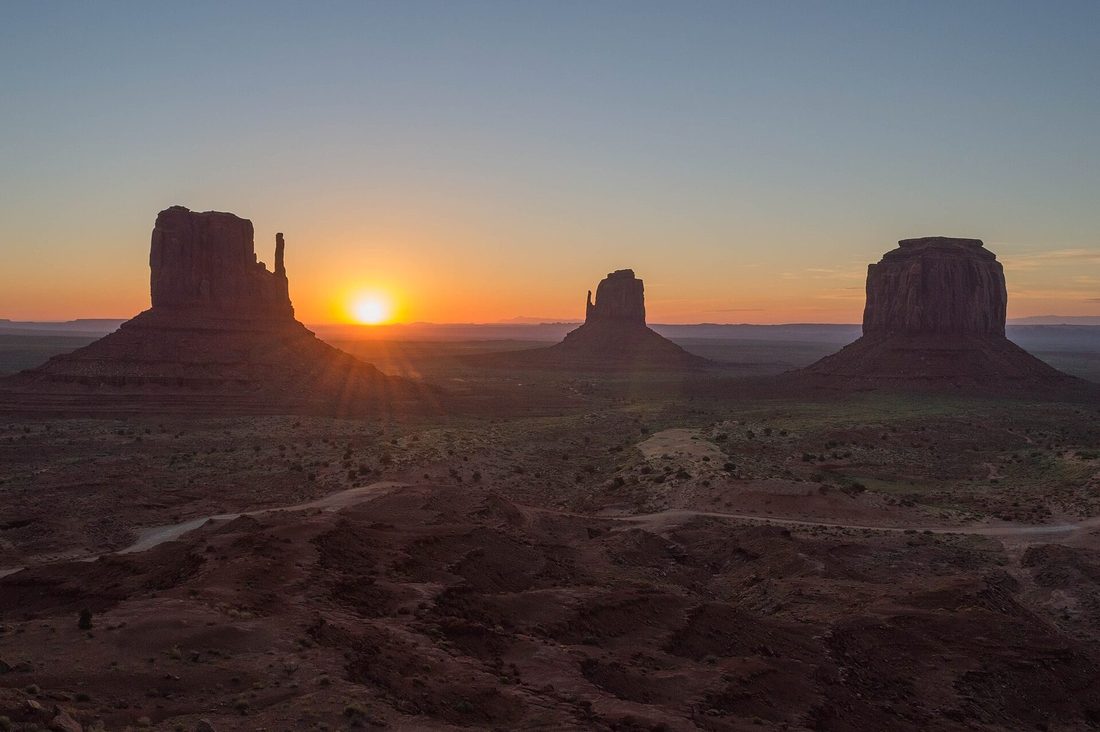
Bryce is small enough that a second day is better spent on the country around it than on more viewpoints. It also sits in the middle of the southern Utah run: Zion is two hours west, Moab and Arches about five east along the scenic highway, and Monument Valley further south again. The national parks guide explains how the parks differ and the road trip guide sets out the driving.

Car

Kodachrome Basin

Half day

Kodachrome Basin State Park is twenty minutes past Tropic and holds several dozen sandstone chimneys — pipes of harder rock left standing when the surrounding stone weathered away. Very few visitors bother, which is most of the appeal.

Car

Cedar Breaks

Full day

Cedar Breaks National Monument is the same kind of eroded amphitheatre in the same coloured rock, cut into a different plateau an hour and a half west and a good deal higher. Its road is closed by snow for much of the year, which is worth checking before setting out.

Car

Red Canyon and the plateau forest

Half day

The approach road to Bryce passes through a short gorge of red pinnacles with tunnels cut through the rock, and beyond it the plateau is high ponderosa and bristlecone forest — Great Basin bristlecone pine being among the longest-lived trees on earth. Easy walking, no crowds, and a good use of a half day.

Planning tip: Whether the park shuttle is running, which viewpoints its route reaches and whether any of the rim road is closed by snow are all decided by the park and change from year to year. Check the National Park Service page for Bryce Canyon before you travel rather than relying on a printed itinerary.
Find the right base

Where to stay at Bryce Canyon

Bryce Canyon City, immediately outside the entrance, is where most of the beds are; it is less a town than a single large family-run hospitality operation with a few neighbours, and it puts you three minutes from the rim road. The lodge inside the park is the only way to be on the amphitheatre edge at first light without a drive in the dark, and it books out months ahead. Tropic, fifteen minutes east and a few hundred feet lower, is a real village with better restaurants and lower prices. Panguitch, half an hour west on the main highway, has a nineteenth-century brick main street, the widest choice of ordinary motels and the longest drive in. Note the altitude when you book: nights are cold here in every month, and heating matters more than air conditioning.

Hotel information, availability and booking are provided by Trip.com. GlobeSaga may receive a commission at no extra cost to the traveller.

Gastronomy

Food experiences at Bryce Canyon

This is ranch country at eight thousand feet, and the cooking is honest rather than ambitious: beef, trout, soups, and pie taken seriously enough to be a reason to stop. The choice divides between the two dining rooms inside the park, the large operation at the boundary in Bryce Canyon City, and the handful of independent places down in Tropic, which are the ones locals name. Several close for the winter. Every restaurant below was confirmed trading against its own website or that of its operator; where a place is seasonal it is said so, and no hours are carried into this page because they change.

Practical questions

Before you go

Honest answers to the questions that actually decide how a Bryce Canyon visit goes.

A hoodoo is a free-standing rock spire left behind when everything around it has been removed. Bryce sits on the eastern edge of the Paunsaugunt Plateau, where the rock is a soft, iron-stained limestone that fractures along vertical joints. Water gets into the joints, freezes overnight, expands and levers the rock apart — and at this altitude that freeze-and-thaw cycle happens on roughly two hundred nights a year. The joints widen into fins, the fins are pierced into windows, and the windows collapse to leave columns. The same process is still going: the hoodoos you look at are being made and unmade continuously.
No, and the rim viewpoints along the plateau edge are genuinely enough for a short visit. But Bryce is the rare park where a couple of hours of walking changes the place completely: from the rim it reads as a pattern, and from the floor the hoodoos become individual towers standing over you. The short loops that drop below the rim and climb back are the best use of a morning here. Remember that the climb out is at eight thousand feet and comes at the end, not the beginning.
The park has run a seasonal shuttle between the gateway and the main amphitheatre viewpoints, and unlike Zion's it has generally been an option rather than a requirement, with private cars still allowed on the rim road. That is exactly the sort of arrangement that gets changed as visitor numbers move, so do not plan around what a guidebook says: check the park's own website for how the shuttle is running the season you travel, and expect the car parks at the busiest viewpoints to fill regardless.
The rim runs from roughly eight thousand feet at the amphitheatre to over nine thousand at the southern end of the road, which makes Bryce far higher and far colder than Zion two hours away. Snow lies here when the canyons below are dry, nights are cold even in high summer, and the sun at this altitude burns much faster than the air temperature suggests. It also means the park is spectacular under snow, which is the version most visitors never see.
Bryce Canyon City, at the park boundary, is the practical base and is essentially one large family-run hospitality operation plus a handful of other properties. The lodge inside the park puts you on the rim at dawn and books out a long way ahead. Tropic, below the rim on the scenic highway east, is a real village at lower prices, about fifteen minutes away. Panguitch, west on the main road, is a proper old town with more choice and a longer drive in.
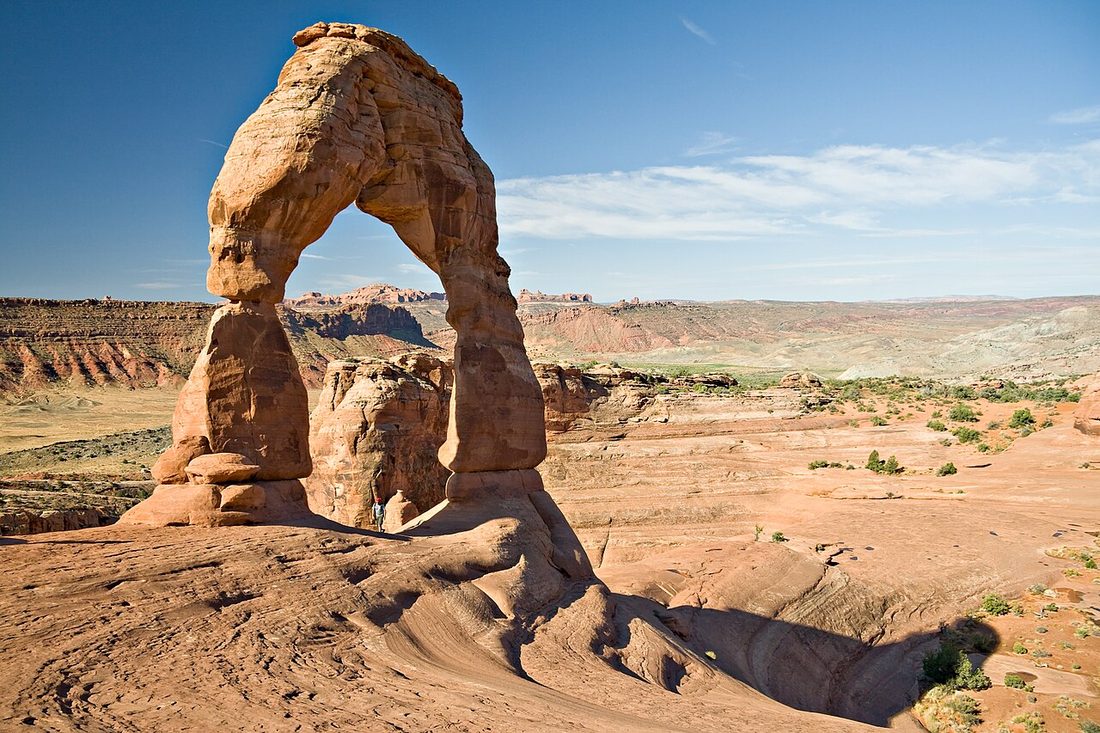
It is the middle of the three. Zion is a canyon entered from the floor, Bryce an amphitheatre looked into from above, and Arches a high desert of free-standing stone. Bryce is two hours from Zion and about five from Moab along the scenic highway east, and taking it in that order means one long driving day rather than two. It is also the highest of the three, so it is the one whose roads a spring or autumn cold snap can affect.
Advertisement
Plan Bryce CanyonStays · Flights · Cars · Trains · Activities