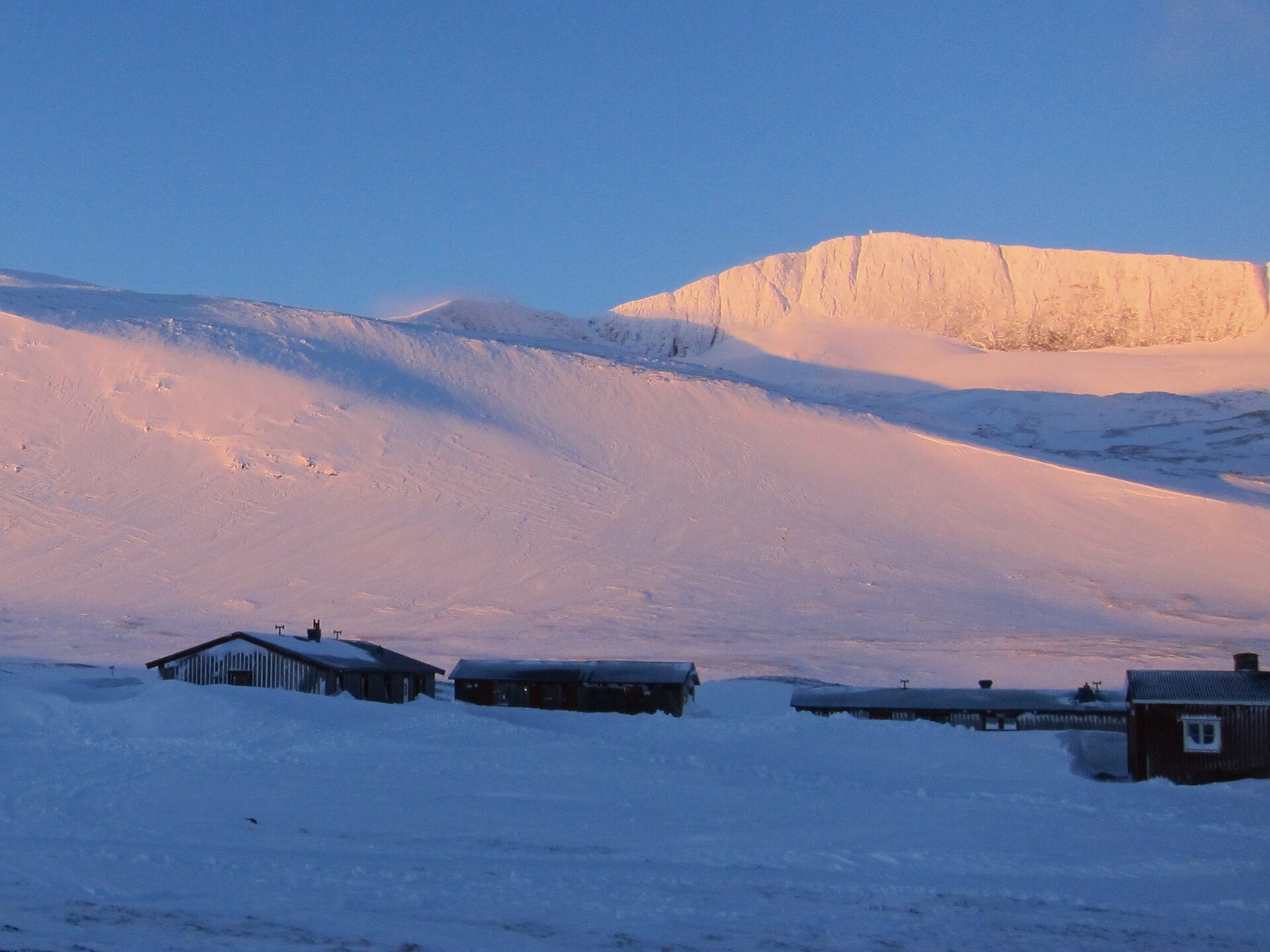
A lift station on Areskutan buried after a snowstorm
Low mountains, long seasons

Åre and the Swedish Mountains

The Swedish fells are old, rounded and mostly below the treeline's ambitions. That makes them poor drama and excellent skiing — and it means the season here is decided by daylight and wind rather than by altitude.

Sweden has no alps. The mountains along the Norwegian border are the worn-down stumps of a range older than the Atlantic, and almost all of the skiing happens between about 400 and 1,400 metres. What that produces is not steepness but space: broad open fells above a low treeline, long gentle descents, and an enormous amount of terrain you can simply walk or skin into without a rope.

It also produces a season shaped by light rather than by snow. Snow is rarely the problem in the Swedish mountains; darkness is, and the further north you go the more brutally that shows in the opening dates. This guide covers Åre and the linked valley, the other mountain areas worth the drive, cross-country as the sport the country genuinely does, and the ski touring that most visitors never find out about.

Biggest areaÅre, Åreskutan 1,420 m, about 890 m of lift-served vertical
Core seasonFebruary to April everywhere; December is dark and January is cold
Furthest northRiksgränsen, which cannot open until February — there is no daylight before it
The national sportCross-country, on prepared tracks in almost every Swedish town
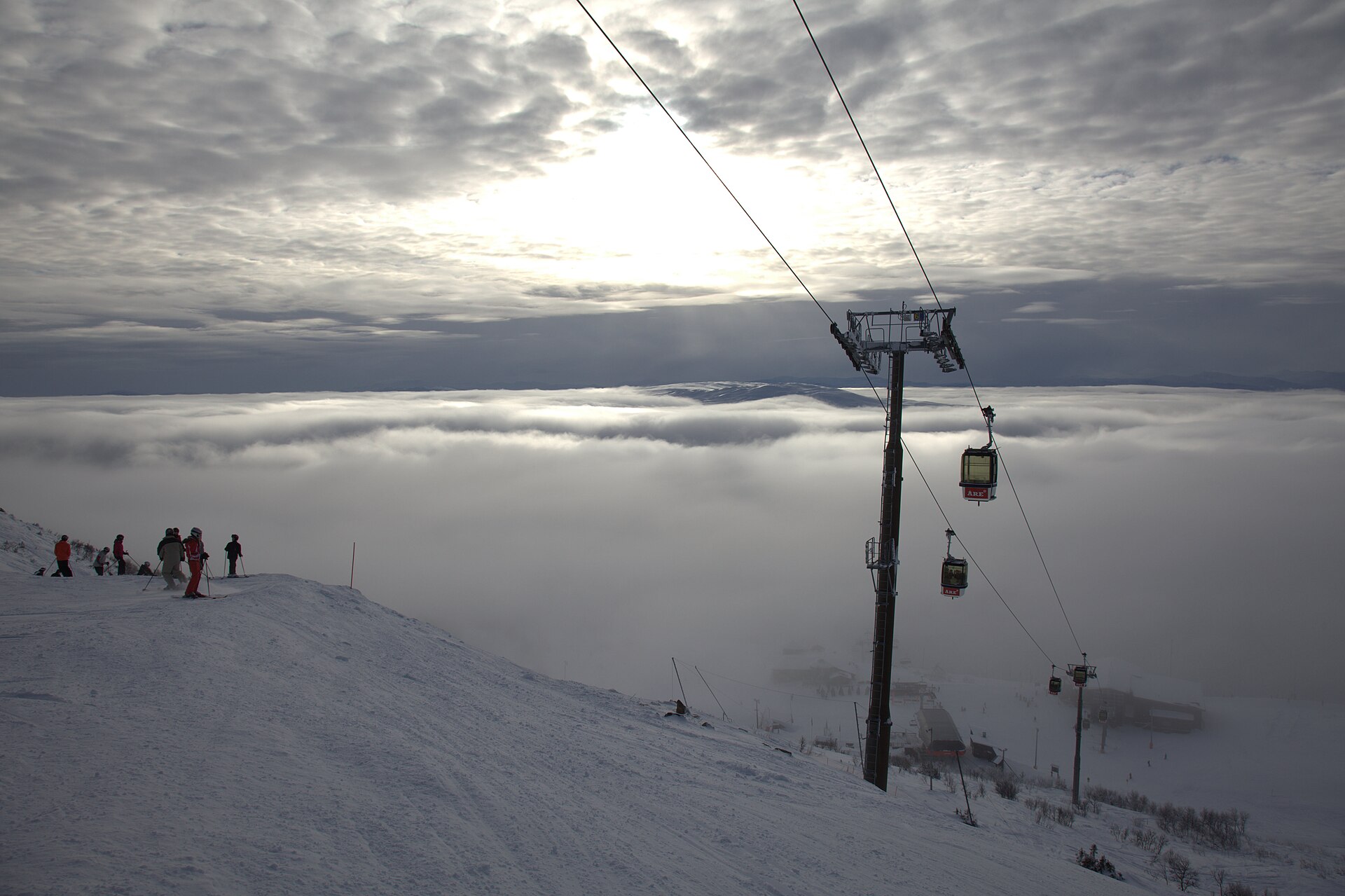
The gondola climbing Areskutan above the village of Are
Chapter 01

Åre: what “Sweden's largest” actually buys you

Åreskutan · Duved · Tegefjäll · Björnen · Östersund

One mountain, four base areas and a valley that is longer than the village suggests.

The mountain and the four doors into it

Åre sits on the shore of Åresjön with Åreskutan rising 1,420 metres directly behind it, and a funicular has been climbing out of the village square since 1910. The linked area across Åre, Duved, Tegefjäll and Åre Björnen is the largest in Sweden, with roughly 890 metres of lift-served vertical — a genuinely large mountain by any standard except an Alpine one.

The four bases are not interchangeable. Åre By is walkable, expensive and loud; Björnen seven kilometres east is family terrain and quiet evenings; Duved eight kilometres west has its own lifts, cheaper beds and a year-round population. The destination page compares them properly.

Above the trees, which is the real characteristic

The treeline here sits low, so a large share of Åre's terrain is open fell. That is what makes the skiing feel spacious and the visibility problematic: in a front-driven storm the upper mountain closes not because of avalanche risk but because you cannot see, and the wind on Åreskutan's summit is a serious number. Locals simply drop to the trees at Tegefjäll and Duved and carry on.

Östersund, ninety minutes east on Storsjön, has the airport (OSD), the restaurants and a much larger bed base. It is the reason Åre is easier to reach than its size suggests, and a reasonable place to stay if you have a car.

A chairlift at Riksgransen, the most northerly ski area of its size in the world
Chapter 02

The season is long at both ends, and it ends differently in the north

December · February · May · Polar night · Midnight sun

Sweden's ski calendar is not one season. It is two, and they barely overlap.

The southern and central mountains

Åre, Sälen, Idre, Vemdalen and Funäsdalen usually run lifts from around the start of December to the beginning of May. December is skiable but dark: at Åre's latitude the sun is above the horizon for only about four and a half hours around the solstice, and much of what people call a December ski day happens under floodlights.

February to April is the reliable core — cold snow, lengthening days and, by April, an absurd amount of light. The Åre page is blunt about the other end of it: May and late October are genuine closed seasons in the valley, with lifts stopped and many hotels and restaurants shut. Do not book them by accident.

And then the far north, which is the opposite

Riksgränsen at 68.43°N does not open until around late February. The reason is not snow — it has plenty — but that the polar night runs to early January and the weeks after it are still too dark to ski safely. Once it opens it runs to late May, and from the end of May the lifts turn under a sun that no longer sets.

In good snow years it reopens for a handful of midsummer weekends purely for midnight-sun skiing. Björkliden, forty kilometres east above Torneträsk, runs a similar late season. Nowhere else in the ski world inverts the calendar quite like this.

The Salen fells seen from Hundfjallet, with Tandadalen behind
Chapter 03

The other mountains, and who each one is for

Sälen · Idre · Vemdalen · Funäsdalen · Hemavan

Åre is the biggest, not the default. Four other areas do specific jobs better.

Sälen, Idre and the Dalarna fells

Sälen in northern Dalarna is the largest ski destination in the country by beds rather than by vertical: Lindvallen, Högfjället, Tandådalen, Hundfjället, Kläppen and Stöten sit within a few kilometres of each other. It is gentle, family-shaped, four hours from Stockholm by road, and it fills completely in the February school weeks.

Idre Fjäll, further north in the same county, is the same idea with a longer sight-line and a colder microclimate. Both are far easier to reach from southern Sweden than Åre, which is most of the point of them.

In the wikiSälenIdre

Härjedalen, and the far northern outliers

Vemdalen and Funäsdalen in Härjedalen sit between Sälen and Åre and get less attention than either. Funäsdalen is the higher and more exposed of the two, with Sweden's highest public road over Flatruet, and both have a serious cross-country network attached.

Hemavan-Tärnaby in Västerbotten is the southern trailhead of the Kungsleden in summer and a compact ski area in winter, and it is where Ingemar Stenmark learned. Its real value is being the far-north option that does not require a February start.

Cross-country skiers on the open fell below Helags in Jamtland
Chapter 04

Cross-country is the sport the country actually does

Skidspår · Elljusspår · Vasaloppet · Östersund

Alpine skiing is a holiday in Sweden. Cross-country is a Tuesday evening.

Tracks everywhere, including in town

Almost every Swedish town of any size maintains prepared cross-country tracks, and a great many maintain a floodlit loop — an elljusspår — so that people can ski after work in the dark. Municipalities publish grooming status online, equipment hire is cheap and widely available, and the tracks are free.

For a visitor this is the single most underused thing about a Swedish winter. You do not need a resort, a lift pass or a mountain: you need a town with snow, which from December to March is most of them north of Stockholm.

Vasaloppet, and why the date never moves

Vasaloppet runs 90 kilometres from Sälen to Mora in Dalarna on the first Sunday in March, and has done since 19 March 1922, when 119 skiers started and Ernst Alm won in 7 hours 32 minutes 49 seconds. It has grown into a whole week of races, and the track between the two towns is maintained as a permanent facility.

If you want to watch elite cross-country and biathlon instead, Östersund's arena hosts World Cup biathlon most winters and sits ninety minutes from Åre. It is a genuinely good spectator sport in a way alpine racing is not.

The mountain station at Helags in February, a base for ski touring
Chapter 05

Ski touring, and the mountain stations that make it possible

Fjällstation · Red crosses · Jämtlandstriangeln · Kebnekaise

The best thing about low, rounded mountains is that you can walk up almost all of them on skis.

A hut system built for exactly this

The Swedish Tourist Association runs mountain stations and huts across the fells, and in winter they are linked by routes marked with red crosses on tall poles — visible in flat light, and the difference between an expedition and an outing. The Jämtlandstriangeln, a 47-kilometre circuit between the Storulvån, Sylarna and Blåhammaren stations, is the standard introduction; Blåhammaren at 1,086 metres is the highest mountain station in the country.

Further north, Helags has Sweden's southernmost glacier behind it, and the Kebnekaise station is the base for the country's highest mountain. None of this requires technical skill. It requires navigation, fitness and the sense to turn round.

The right of public access applies in winter too

Allemansrätten does not switch off when the snow arrives: you may ski across private land, and you may pitch a tent for a night. What it does not cover is driving. Snowmobiles are motor vehicles and are restricted to marked trails and permitted areas — going where you like on one is an offence, not a grey area.

It also does not entitle you to disturb reindeer, and winter is when that matters most: animals forced to run in deep snow burn reserves they cannot replace. In the reindeer-herding area, give herds a very wide berth and keep dogs under control.

The national biathlon arena at Ostersund
Chapter 06

Cold, wind, avalanches and the things that end a day

Windchill · Lavinprognoser · Fjällräddning · 112

Swedish mountains are not steep enough to frighten anybody, which is precisely why people get caught out on them.

Wind is the hazard, not gradient

Open fell terrain plus a maritime storm track produces windchill numbers that visitors consistently underestimate. A still −12°C is pleasant; the same temperature with 20 m/s across an exposed ridge is a different proposition, and it is the ordinary condition on Åreskutan or Sylarna in a front.

Practical consequences: a proper face covering, goggles rather than sunglasses, and the willingness to ski the trees instead. Lift closures on the upper mountain are routine and are not a sign that something has gone wrong.

Avalanches exist here, and are forecast

The Swedish Environmental Protection Agency publishes avalanche forecasts for six mountain regions — Abisko/Riksgränsen, the Kebnekaise fells, western Vindelfjällen, southern Lapland, southern Jämtland and western Härjedalen — at lavinprognoser.se. Outside those six areas there is no forecast at all, which is a reason to be more careful rather than less.

Mountain rescue in Sweden is run by the police and reached on 112. Register your route with the mountain station, carry a map that does not need a battery, and accept that phone coverage in the fells is patchy to absent.

Six areas compared

Where to ski, and when each one works

Seasons are typical rather than guaranteed; the northern areas in particular open on daylight as much as on snow.

AreaRegionTypical lift seasonCharacterNearest airport
ÅreJämtlandEarly December – early MayLargest linked area in Sweden; village nightlife; big verticalÖstersund (OSD), 90 km
SälenDalarnaLate November – late AprilBiggest bed base; gentle, family terrain; four hours from StockholmArlanda (ARN) and drive
Idre FjällDalarnaLate November – late AprilHigher and colder than Sälen, quieter, strong cross-countryArlanda (ARN) and drive
Vemdalen & FunäsdalenHärjedalenDecember – late AprilBetween Sälen and Åre, less crowded than eitherÖstersund (OSD)
Hemavan-TärnabyVästerbottenDecember – early MayCompact, far north, Kungsleden trailhead in summerHemavan (HMV)
Riksgränsen & BjörklidenNorrbottenLate February – late May, plus midsummerAbove the Arctic Circle; opens on daylight; midnight-sun skiingKiruna (KRN)

Why the northern season starts so late. Riksgränsen sits at 68.43°N, where the sun does not rise at all between early December and early January. Opening in late February is not a commercial decision, it is an astronomical one — and the same arithmetic is why the lifts can still be turning at midnight in late May.

What goes wrong

Six ways a Swedish ski trip disappoints

Snow is almost never the problem.

Booking December for the skiing

Snow is usually fine. Daylight is not — at Åre the sun is up about four and a half hours around the solstice.

Booking the February school weeks

Swedish sportlov fills Sälen and Åre completely and prices follow. Late March is better in every respect.

Assuming Riksgränsen is open in January

It is not, and cannot be. The season starts around late February.

Turning up in May at Åre

May is a genuine closed season in the valley — lifts stopped, restaurants shut.

Ignoring wind

Exposed fell plus an Atlantic front is the standard way an upper mountain closes here.

Skipping the cross-country

It is free, it is everywhere, and it is what Swedes actually do with a winter.

Before you book

Six things to settle first

Most of these are calendar questions rather than mountain questions.

Weeks

Avoid the February sportlov weeks unless you have booked a year out.

Latitude

North of the Arctic Circle the season starts in February. Plan accordingly.

Base

Village, family end, working valley or lake city — the Åre page compares all four.

Skis

Decide whether this is an alpine trip, a cross-country trip or a touring trip. They want different weeks.

The drive

Winter tyres are a legal condition from 1 December when the road is wintry. Confirm the hire car has them.

A bad-weather plan

Trees, a swimming hall, a museum in Östersund. The upper mountain will close at some point.

Honest planning

Frequently asked questions

Season lengths, latitudes and what the mountains are actually like.

February to April almost everywhere. December has snow but very little daylight — at Åre the sun is above the horizon for only about four and a half hours around the solstice. March and April combine cold snow with long days, and April in particular is very light.
It is the largest linked ski area in Sweden, spread across Åre, Duved, Tegefjäll and Åre Björnen, with Åreskutan rising to 1,420 metres and roughly 890 metres of lift-served vertical. That is large by northern European standards and small by Alpine ones, and the terrain is mostly open fell rather than steep couloir.
Because there is no daylight before then. Riksgränsen sits at 68.43 degrees north, where the sun stays below the horizon from about 6 December to 6 January and the weeks either side are still very dark. The trade-off is a season that runs into late May under the midnight sun, and midsummer weekends in good snow years.
For young children and for anyone driving from southern Sweden, usually yes. Sälen is gentler, has far more ski-in accommodation, and is about four hours from Stockholm by road. Åre has the bigger mountain, the better restaurants and the more interesting terrain.
For Åre, no — the train runs up the valley and a ski bus serves it. For Sälen, Idre, Vemdalen and Funäsdalen, effectively yes, because they are not on the rail network. If you hire one between December and March, confirm it has winter tyres carrying the Alpine symbol.
Yes, and it is the best-value thing in a Swedish winter. Almost every town maintains free prepared tracks and many have a floodlit loop for skiing after dark. Equipment hire is cheap and grooming status is published online by the municipality.
Yes. The Swedish Environmental Protection Agency publishes forecasts for six mountain regions at lavinprognoser.se: Abisko and Riksgränsen, the Kebnekaise fells, western Vindelfjällen, southern Lapland, southern Jämtland and western Härjedalen. Outside those six there is no forecast, which is a reason for more caution rather than less. Mountain rescue is run by the police and reached on 112.
A 90-kilometre cross-country race from Sälen to Mora in Dalarna, held on the first Sunday in March since 1922. It has grown into a full week of races on the same track, and the route between the two towns is maintained as a permanent facility that anyone can ski.
Continue the story

Pick the week before you pick the mountain

Avoid the February school weeks, treat daylight as the constraint it is in the north, and leave a day for the cross-country tracks that cost nothing.

Advertisement