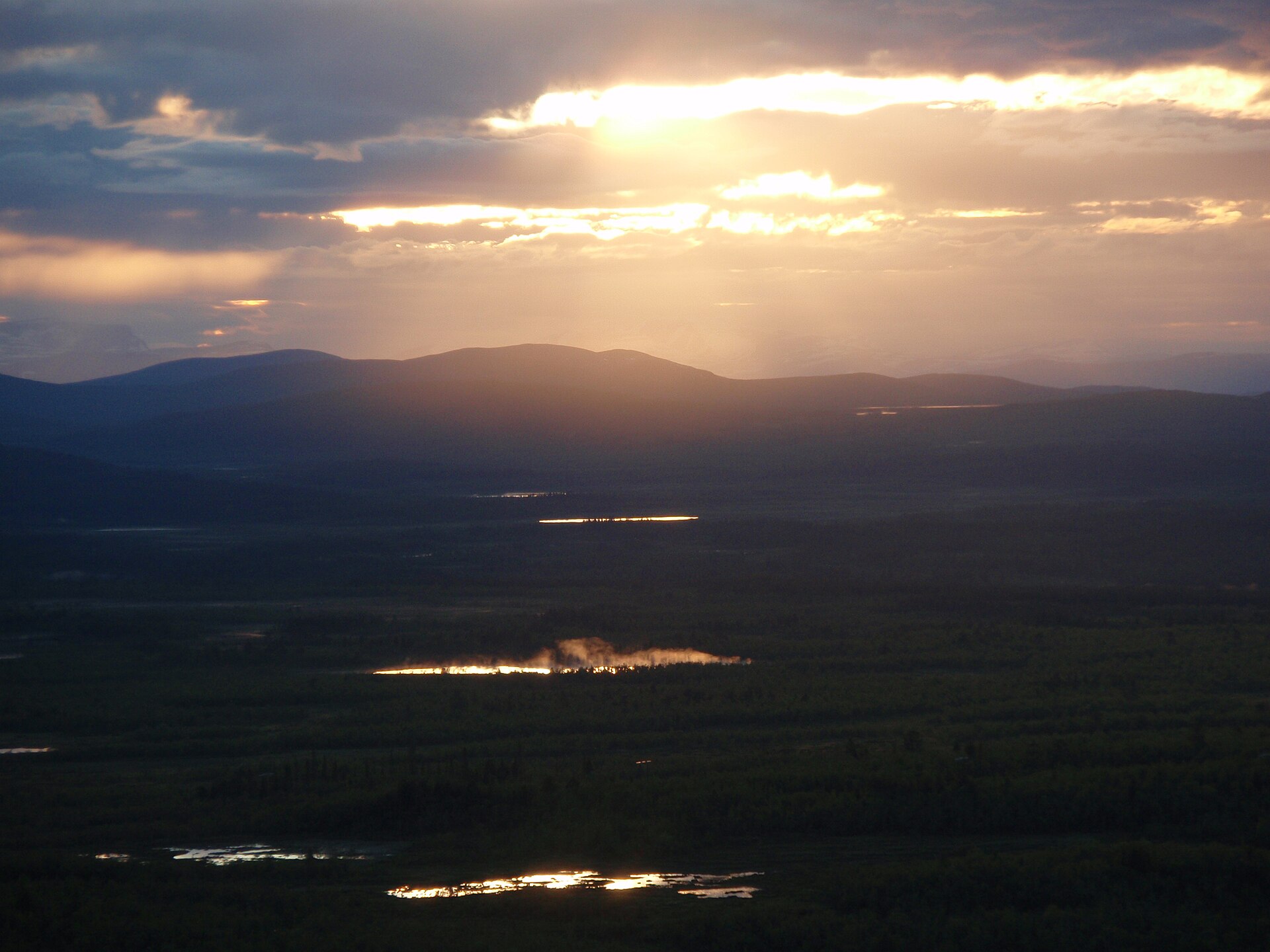
The midnight sun over Lake Tornetrask seen from the summit of Nuolja above Abisko
Where the day has no edge

The Midnight Sun in Sweden

Only the top eighth of Sweden gets a sun that never sets. A far larger part of the country gets something almost as strange and much less advertised: a June in which the sun goes down and it still never gets dark.

The midnight sun has a precise definition and a precise boundary. It happens where the sun's disc stays above the horizon at local midnight, which requires the sun's declination to exceed 90° minus your latitude — and since the Earth's tilt caps that declination at about 23.4°, the phenomenon is confined to latitudes above roughly 66°34′N. That line is the Arctic Circle, and in Sweden it crosses the country just north of Jokkmokk.

But the interesting number is not the one on the signpost. Refraction bends the sun's image up over the horizon, the disc has a width of its own, and twilight reaches much further than either. The result is that the zone with no midnight sun but also no darkness stretches hundreds of kilometres south of the Circle, past Umeå and arguably as far as Stockholm. This guide gives the dates by latitude, and then what to do about them.

The lineAbout 66°34′N — the Arctic Circle, just north of Jokkmokk
KirunaMidnight sun 28 May – 16 July; polar night 12 Dec – 1 Jan
At the Circle itselfBarely a month, roughly 5 June – 6 July
The bigger zoneFrom Åre northwards the sun never sinks far enough for real night in June
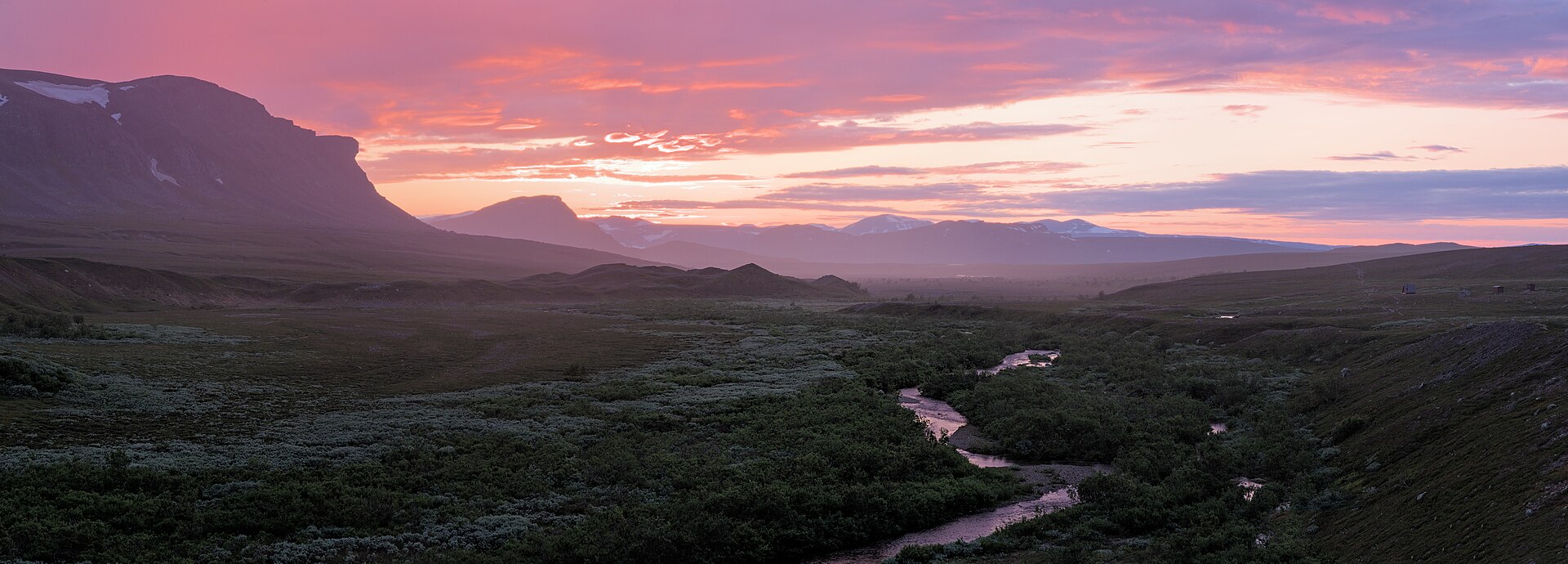
Two in the morning at Abiskojaure, with the sun still above the horizon
Chapter 01

The definition, and why the signpost is not the whole story

66°34′N · Refraction · Declination · Upper limb

The Arctic Circle marks where the midnight sun becomes geometrically possible. It marks the start of the phenomenon, not the middle of it.

One day at the line, fifty at Kiruna

Standing exactly on the Arctic Circle, the sun's centre grazes the horizon at midnight on one day of the year. Because atmospheric refraction lifts the image by roughly half a degree and the visible disc adds a quarter more, in practice you get about a month — roughly 5 June to 6 July.

Move north and the window opens fast. At Kiruna, 1.3 degrees further up, it runs 28 May to 16 July: fifty days. At Abisko, half a degree further again, it is about a week longer at each end. The gain per degree of latitude is steep, which is why the difference between two Swedish towns an hour apart can be substantial.
It moves, and it is not quite symmetrical

The Arctic Circle is defined by the Earth's axial tilt, and the tilt oscillates. The line is currently drifting north by roughly fifteen metres a year, so the boundary markers along the Swedish road network are all slightly in the wrong place, and getting more so.

The midnight sun window is also not exactly centred on the solstice. It is very nearly so, but the Earth's orbit is slightly elliptical, which shifts things by a day or two. Published Swedish dates account for that; approximations from memory usually do not.

The midnight sun in June seen from Luossavaara above Kiruna
Chapter 02

The dates, by latitude, for places you would actually go

Kiruna · Abisko · Gällivare · Jokkmokk · Riksgränsen

Five Swedish places with a midnight sun, and the ranges are genuinely different from one another.

The far north

Riksgränsen at 68.43°N and Abisko at 68.35°N have the longest run in Sweden, from around 24 May to around 18 July. Kiruna at 67.86°N gets 28 May to 16 July, which is the figure Swedish sources publish and the one used across GlobeSaga's Kiruna pages.

Further down, Gällivare at 67.14°N runs roughly 1 June to 10 July, and Jokkmokk at 66.61°N — only just inside the Circle — gets barely a month. If the midnight sun is the point of the trip, that difference is worth two hundred kilometres of driving.

Where it stops

Luleå at 65.58°N is the clearest illustration of how sharp the boundary is. It has no midnight sun — but at midsummer the sun is below the horizon for less than an hour and never sinks more than about a degree below it. In practice the sun sets and the sky does not change.

Umeå at 63.83°N is about three hundred kilometres south of the Circle and has neither midnight sun nor polar night, which its own page says plainly. The sun sets for roughly three hours in late June, and even then does not fall far enough for the sky to leave civil twilight.

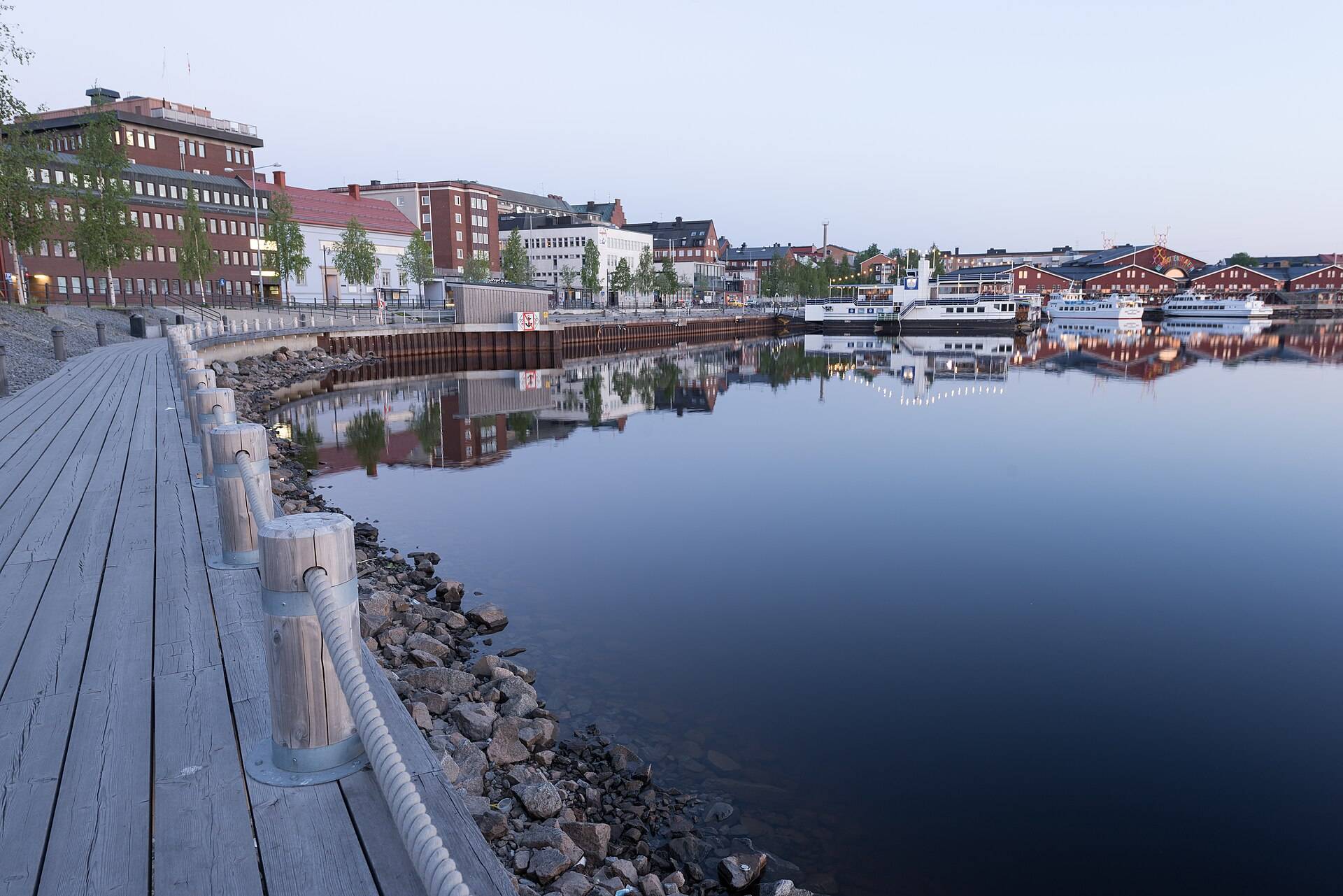
Lulea north harbour at midnight in early summer, south of the Arctic Circle
Chapter 03

The zone nobody advertises: no midnight sun, no night either

Civil twilight · Light nights · Åre · Stockholm

For sleeping, walking, driving and eating outside, what matters is not whether the sun sets but how far below the horizon it goes.

The six-degree rule

Civil twilight ends when the sun is 6° below the horizon — the point at which you need artificial light to read outdoors. In June, over an enormous slice of Sweden, the sun never gets there.

At Åre, 63.4°N, the sun at midsummer dips only about 3.2° below the horizon; at Umeå about 2.7°; at Luleå about 1°. None of those places has a midnight sun and none of them has a night. The Åre page puts it well: at 63°N in July it never gets properly dark, though unlike Kiruna the sun here does still set.

How far south it reaches

Stockholm at 59.33°N gets around five and a quarter hours with the sun below the horizon at midsummer, but never more than about 7° below it. There is a couple of hours of genuine civil darkness and no nautical darkness at all — the sky stays a deep blue rather than going black, and faint stars never appear. Swedes call these the light nights, and they change the character of the city completely.

Gothenburg and Malmö do get a proper night in June, though a short one. It is only around 55°N that a Swedish summer sky behaves the way visitors from further south expect.

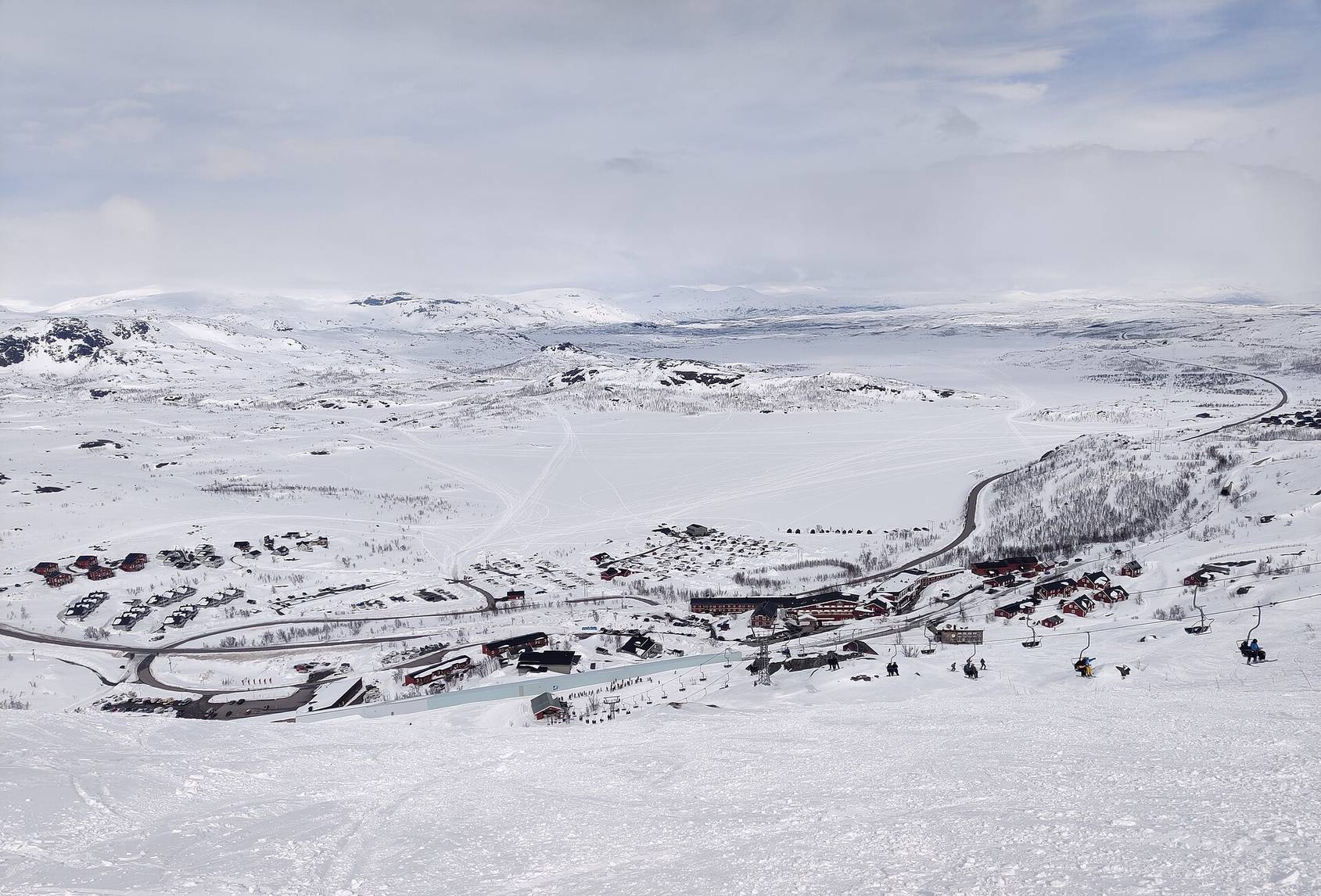
Riksgransen in May, where the lifts run under the midnight sun
Chapter 04

What a day without night does to a trip

Sleep · Blackout · Mosquitoes · Midnight skiing

The novelty lasts about two days. After that it is a logistical condition, and it rewards planning.

The practical problems, in order

Sleep is the first. Northern Swedish hotels take this seriously and most have proper blackout blinds, but cabins and hostels often do not; carry an eye mask and do not rely on the curtains. The second is that the day has no natural end, so you keep going — and then find you have been awake for nineteen hours somewhere the last kitchen closed at nine.

The third is mosquitoes. Late June and July in the northern interior are the peak, and in wet years around the lakes and mires they are genuinely limiting rather than merely irritating. Repellent and a head net weigh nothing.

What it is actually good for

The best use of a night without darkness is doing something ordinary at an extraordinary hour. Walking a fell path at one in the morning in full daylight is the single thing people remember about a northern Swedish summer, and it costs nothing.

Riksgränsen, at 68.43°N, runs its lifts into late May and reopens for a few midsummer weekends when the snow holds, so you can ski at midnight in daylight. Further south, golf courses, kayak operators and Luleå's archipelago boats all run late-evening trips for the same reason.

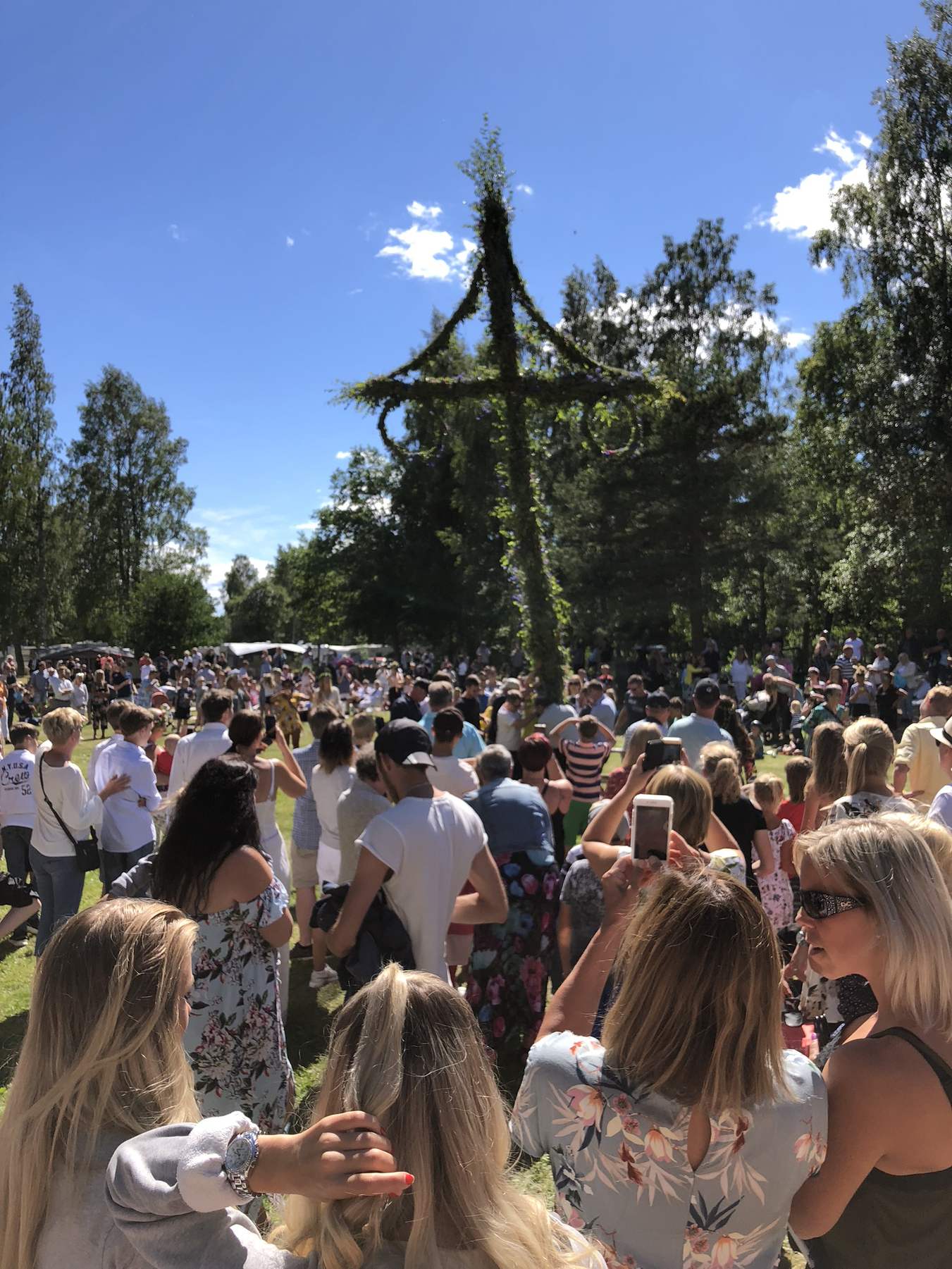
A midsummer pole raised at Boda on Oland, far south of the midnight sun line
Chapter 05

Midsummer: the light Sweden actually celebrates

Midsommarafton · 19–25 June · Leksand · Closed shops

The country's real summer holiday happens hundreds of kilometres south of the midnight sun, and it will close half the businesses on your itinerary.

The date moves, and the country stops

Midsommarafton, Midsummer's Eve, always falls on the Friday between 19 and 25 June — it was fixed to a weekend by law in 1953 rather than left on 23 June. The celebrating happens on that Friday, not on the Saturday that is the actual public holiday.

Treat it as a planning constraint. Shops close early on the Thursday and stay shut, restaurants outside the resorts close, public transport runs a holiday timetable, and the roads out of the cities are heavy on Thursday afternoon. Book accommodation for that week months ahead.

Where to actually be

The heartland is Dalarna, where the maypole raising at Leksand draws tens of thousands and the villages around Lake Siljan keep customs most of Europe let go. It is a working tradition rather than a performance, which is exactly why it is worth attending.

But midsummer is celebrated everywhere, including the far south, and a village pole on Öland or in the Stockholm archipelago is a gentler introduction than a crowd of twenty thousand. Note the irony: the most enthusiastic midsummer celebrations happen where the sun does still set.

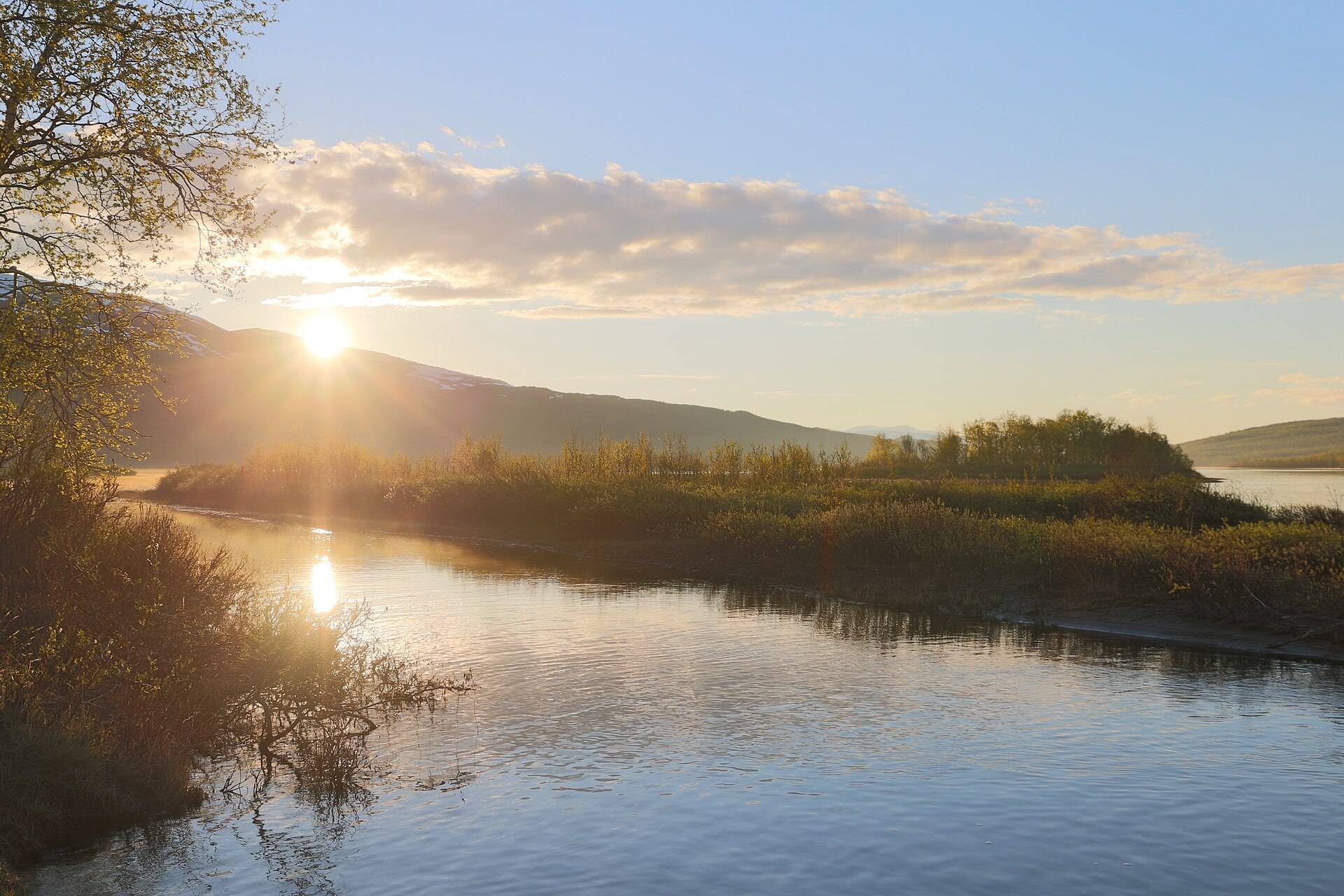
A northern stream under the long golden hour of the midnight sun
Chapter 06

The other half of the bargain

Polar night · 12 December · Blue light · Ski seasons

Every day of midnight sun is paid for with a day at the other end of the year, and the accounting is exact.

What the polar night is and is not

At Kiruna the sun stays below the horizon from about 12 December to 1 January. At Abisko and Riksgränsen it runs longer, roughly 6 December to 5 January. It is not twenty-four hours of black: around the middle of the day the southern sky turns a sustained deep blue, bright enough to walk and ski in, and over snow it is far lighter than the numbers suggest.

Gällivare, Jokkmokk and everything south of them keep a sliver of sunrise all winter. The polar night, unlike the midnight sun, does not quite reach the Arctic Circle — refraction works in your favour in December and against you in June.

In the wikiPolar night

Why it is the better half for some trips

The polar night is the reason the aurora season exists, and the reason the ice hotel at Jukkasjärvi can be rebuilt from river ice each winter. December and January carry the most usable dark hours of the year, and the light that does arrive — two or three hours of low, pink, sideways sun before it goes again — is the best light the north gets.

It also has consequences for skiing. Riksgränsen does not open until February, because before then there is no daylight to ski in. That single fact explains the shape of the whole northern winter season.

The arithmetic

Midsummer and midwinter, by latitude

Midnight sun and polar night dates use the sun's upper limb including refraction, the convention behind the published Swedish figures. The last column is the greatest depth the sun reaches below the horizon at the June solstice — the number that decides whether it gets dark.

PlaceLatitudeMidnight sunPolar nightDeepest the sun sinks in June
Riksgränsen68.43°NAbout 24 May – 18 JulyAbout 6 Dec – 6 JanIt does not set
Abisko68.35°NAbout 24 May – 18 JulyAbout 6 Dec – 5 JanIt does not set
Kiruna67.86°N28 May – 16 July12 Dec – 1 JanIt does not set
Gällivare67.14°NAbout 1 June – 10 JulyNoneIt does not set
Jokkmokk66.61°NAbout 5 June – 6 JulyNoneIt does not set
Luleå65.58°NNoneNoneAbout 1° — under the horizon for less than an hour
Umeå63.83°NNoneNoneAbout 2.7° — never leaves civil twilight
Åre63.40°NNoneNoneAbout 3.2° — never leaves civil twilight
Stockholm59.33°NNoneNoneAbout 7.2° — brief civil darkness, never nautical

Read the last column, not the third. The midnight sun is a narrow northern phenomenon. The absence of darkness is a national one, and it is what actually changes how a Swedish summer feels: from Åre northwards there is no true night in June at all, and even Stockholm never reaches the nautical darkness that would let you see faint stars.

What goes wrong

Six midnight sun misconceptions

All of them cost either a day or a night's sleep.

Assuming all of Lapland qualifies

Umeå and Luleå are both sold as the north and neither has a midnight sun. Check the latitude, not the brochure.

Booking the solstice week only

At Kiruna the window is fifty days long. Early June and early July are quieter and just as light.

Trusting the curtains

Cabins and hostels frequently have none worth the name. Bring an eye mask.

Forgetting midsummer closes the country

Midsummer's Eve is the Friday between 19 and 25 June, and most of Sweden shuts for it.

Ignoring the mosquitoes

Late June and July in the northern interior are the peak. A head net weighs nothing.

Expecting warmth

Continuous daylight is not continuous heat. Clear June nights above the Circle can approach freezing.

Before you book

Six things to settle first

Light is the whole reason for this trip, so plan it deliberately.

Latitude

Decide whether you want the sun above the horizon or merely no darkness. They are different trips.

Dates

Check them against the table above rather than against the solstice.

Midsummer

Either build the trip around it or avoid the week entirely. Do not stumble into it.

Sleep

An eye mask, and ask the hotel about blackout blinds before booking.

Insects

Repellent and a head net for anywhere inland in late June and July.

Something at midnight

A walk, a boat, a lift. The point is doing an ordinary thing at an impossible hour.

Honest planning

Frequently asked questions

Dates and latitudes, answered precisely rather than approximately.

Only north of the Arctic Circle, which crosses Sweden just north of Jokkmokk at about 66 degrees 34 minutes north. In practice that means Jokkmokk, Gällivare, Kiruna, Abisko and Riksgränsen. Luleå, Umeå, Åre and everywhere further south do not have a midnight sun, however light their summer nights are.
28 May to 16 July, about fifty days. Abisko, half a degree further north, gets roughly a week more at each end. At the Arctic Circle itself the window is barely a month, around 5 June to 6 July.
No, and it has no polar night either. Umeå sits at 63.83 degrees north, some three hundred kilometres south of the Arctic Circle. In late June the sun sets for about three hours, but it never falls more than roughly 2.7 degrees below the horizon, so the sky never leaves civil twilight and you will not need a light.
Luleå at 65.58 degrees north is just south of the Circle and has no true midnight sun. At midsummer the sun is below the horizon for less than an hour and never more than about a degree down, so in practice the sun sets and nothing changes.
Midsummer's Eve is always the Friday between 19 and 25 June, with Midsummer's Day on the Saturday that follows. The celebrating happens on the Friday. Shops close early the day before and stay shut, restaurants outside the resorts close, and transport runs a holiday timetable.
Not particularly. Continuous daylight does not mean continuous heat, and clear June nights above the Arctic Circle can approach freezing. Days inland can be genuinely warm; the swing between the two is larger than visitors expect.
At Kiruna the sun stays below the horizon from about 12 December to 1 January, and at Abisko roughly 6 December to 5 January. It is not dark for twenty-four hours: the middle of the day brings several hours of sustained deep blue light, which over snow is bright enough to walk and ski in.
At Riksgränsen, yes. It is the most northerly ski area of its size in the world at 68.43 degrees north, it runs its lifts into late May under a sun that no longer sets, and in good snow years it reopens for a few midsummer weekends specifically for midnight skiing.
Continue the story

Pick the latitude, then pick the week

Decide whether you want a sun that never sets or a night that never comes, check the dates against the table, and plan around midsummer rather than into it.

Advertisement