One island, two climates and a mountain in between
Tenerife is not off the coast of Spain. It lies in the Atlantic off north-west Africa, roughly 1,300 kilometres from the mainland, and the difference is not academic: the archipelago keeps Western European Time, one hour behind Madrid, and applies its own indirect tax instead of Spanish VAT. Both catch first-time visitors out.
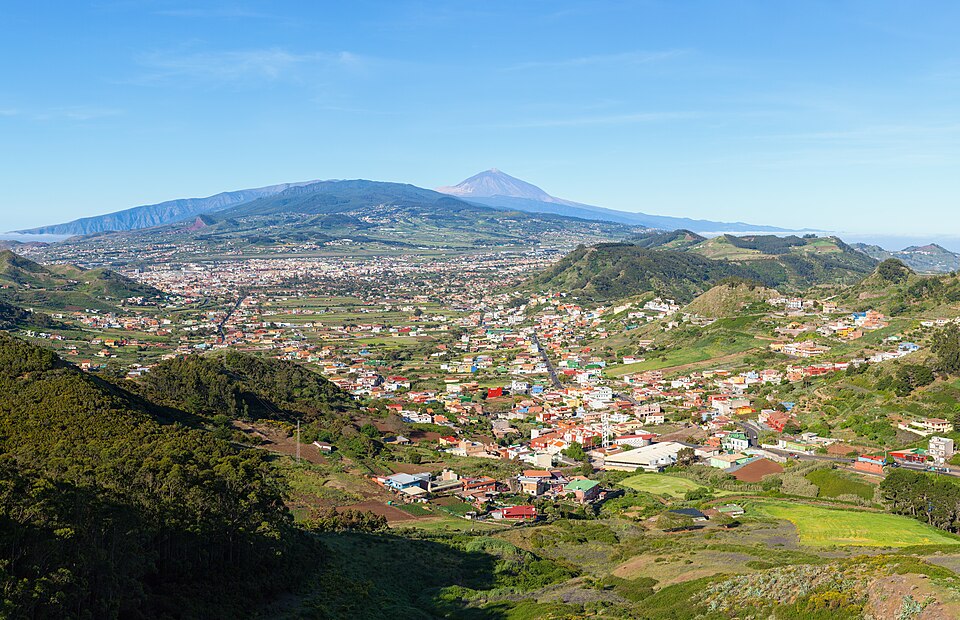
The island's shape is set by Teide, the volcano at its centre and the highest point in Spain. The trade winds come from the north-east, break against the mountain and leave their moisture on the northern slopes, which is why one side of the island grows laurel forest and banana terraces and the other is dry, bright and built for winter sun. You can drive from one to the other in an hour and change season doing it.
What survives of the pre-Hispanic island is thinner but present: the Guanches were the Berber-descended inhabitants Castile spent most of the fifteenth century subduing, and their place names are still on the map. Above them sits La Laguna, the former capital, whose unwalled colonial grid was inscribed by UNESCO in 1999 and became the template for Spanish town planning across the Americas.
“The mistake is treating Tenerife as one place. Book the wrong airport and the wrong coast and you will spend the week driving between two different islands.”