A red ADO coach pulled up on a street in Tlaxcala, with white local taxis in the foreground and a shared minibus waiting behind it
The bus is not the fallback

Getting Around Mexico

Mexico has almost no passenger railway, a domestic air market run by three airlines, and one of the best long-distance coach networks in the world. Most visitors work that out three days late.

The honest hierarchy for internal travel is: the bus for almost everything, a flight for the very long hops, a hire car for the countryside, and a train only on the Yucatán peninsula. That is not a list of compromises. Mexican first-class coaches are better than the trains of several European countries and go where nothing else does.

Below: the operators and the class system, the Tren Maya and what it does not solve, why the rest of the country lost its passenger trains in a single year, the airlines and the three capital airports, toll roads against free roads, and the colectivos and taxis that cover the last mile.

The real networkLong-distance coaches — ADO in the east and south, ETN and Primera Plus in the centre and west
Passenger railSuspended nationally in 1997; the Tren Maya and a handful of new lines are the exceptions
Tren Maya1,554 km around the Yucatán; serves Campeche, Mérida and Tulum
RoadsCuota is the toll motorway, Libre is the free road. Take the cuota, and not at night
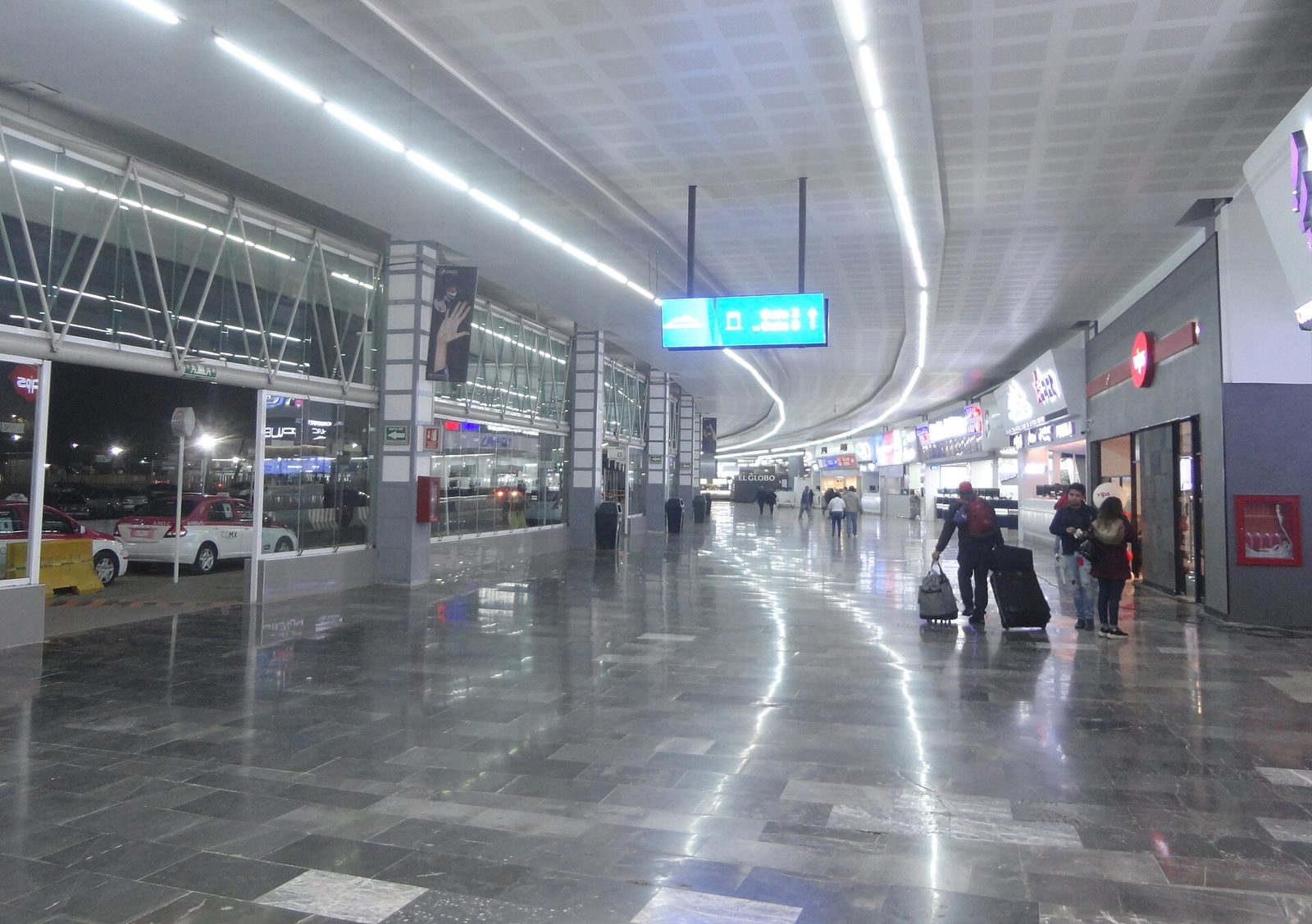
The long polished concourse of the Terminal Central de Autobuses del Norte in Mexico City, shops down both sides and passengers wheeling cases towards the gates
Chapter 01

The coach network is the transport system

ADO · ETN · Primera Plus · Four terminals in the capital

In a country with no passenger railway to speak of, the intercity coach is not the budget option. It is the infrastructure.

Who runs what

ADO was founded on 23 December 1939 with six buses on the Mexico City to Veracruz road and now covers roughly the eastern half of the country: Puebla, Oaxaca, Chiapas, Veracruz, Campeche, Yucatán and Quintana Roo among others. For the south or the peninsula, ADO is your operator.

ETN runs a luxury-only fleet through the centre, the Bajío and the Pacific, advertising more than seventy destinations including Guadalajara, Querétaro, Guanajuato, Morelia and Puerto Vallarta. Primera Plus, part of Grupo Flecha Amarilla, covers the western-central states. You choose a route, not an operator.

The terminals, and the one thing to know about them

Mexico City has four coach stations, arranged by the direction you are travelling. TAPO, beside the San Lázaro metro station, serves fourteen states to the east and south — Puebla, Veracruz, Oaxaca, the Yucatán — and normally handles around ten thousand passengers a day. Terminal Norte, Taxqueña in the south and Observatorio in the west cover the other three quadrants.

Check which terminal your service leaves from before booking anything else; they are an hour apart across the city, and at holiday peaks TAPO's traffic runs into the hundreds of thousands.

A red first-class ADO coach at the kerb outside the bus station in Tlaxcala
Chapter 02

Reading the class system

Primera clase · GL and Platino · Segunda clase · What the advisories mean

Every operator has its own ladder and none line up. What matters is which rung the advisories tell you to stand on.

The ladder, using ADO as the example

ADO's three tiers ascend as ADO for first class, ADO GL for Gran Lujo, and ADO Platino at the top. Separately, Grupo ADO runs second and third class over the same territory under other names — SUR, Volcanes, OCC and AU — and those stop in every village and pick up at the roadside.

First class means reclining seats, air conditioning, a lavatory and the toll motorways. Executive or luxury means the same bus with about a third fewer seats, more legroom, power sockets and sometimes a terminal lounge.

Why the class actually matters

The Foreign Office's published advice is to take first-class buses on toll roads rather than second or third class, and that is the practical difference: the class decides which road the bus uses, how often it stops, and whether it runs at night on unlit two-lane highways.

Book the main corridors ahead around Semana Santa, Christmas and Day of the Dead. Overnight services save a hotel night and are how Mexicans cross the country.

A green and white Tren Maya unit standing at the platform at Valladolid in Yucatán, passengers waiting alongside it
Chapter 03

The Tren Maya, and what it does not solve

1,554 km · Campeche, Mérida, Tulum · Opened December 2023

Mexico's one genuinely new intercity railway is real, useful, and entirely confined to one peninsula.

What it connects

The line runs 1,554 kilometres around the peninsula. The Campeche to Cancún section opened on 15 December 2023 and the final segment, Escárcega to Chetumal, on 15 December 2024. Of the destinations on this site it serves Campeche, Mérida and Tulum.

It also stops at Chichén Itzá, Valladolid, Playa del Carmen, Bacalar and Palenque, with terminals at both Cancún and Tulum airports. On the Campeche–Mérida–Valladolid–Cancún axis it is straightforwardly good.

The honest caveats

It reaches nothing outside the peninsula. Timetables and served stations have changed repeatedly since opening and there have been two derailments, in March 2024 and August 2025, so check the operator's own site rather than a travel article, including this one.

And the station serving Mérida is not in Mérida. It is Teya, beyond the edge of the city near a hacienda of that name, so arriving by train at the peninsula's biggest city ends with a road transfer.

The concourse of the Teya-Mérida station on the Tren Maya, passengers queuing at ticket barriers beside a large Maya-styled sign, with a National Guard soldier standing by the entrance
Chapter 04

Where the rest of the railway went

1997 · Privatisation · El Chepe · Lines due in 2027

Mexico did not fail to build railways. It built more than twenty thousand kilometres and then, in one year, stopped carrying passengers on almost all of it.

The year the trains stopped

By 1910 Mexico had well over twenty thousand kilometres of track in service. In 1995 the government announced that the state railway, Ferrocarriles Nacionales de México, would be privatised and split into four systems, and as part of that restructuring it suspended passenger service in 1997. Freight continued under concession. Passengers simply lost the network.

Almost everything running today postdates that: the capital's suburban line from 2008, the Tren Maya, the Tren Interoceánico and El Insurgente from 2023, and a Buenavista link to Felipe Ángeles airport in 2026. Intercity lines to Querétaro, Irapuato and Nuevo Laredo are due in 2027, so they are not options now.

The two survivors, and the booking problem

Two tourist railways came through. The Ferrocarril Chihuahua al Pacífico, universally El Chepe, runs about 673 kilometres between Chihuahua and Los Mochis across the Copper Canyon, over 37 bridges and through 86 tunnels, reaching around 2,400 metres near Divisadero; finished in 1961 and run by Ferromex since 1998. The other is the Tequila Express out of Guadalajara.

There is also nothing to book. The rail partner this site uses carries no Mexican inventory at all: its Mexico trains page returns a 404, and Mexico is absent from its own published list of rail markets, which is confined to Europe and east Asia. That is why the honest answer for thirteen of our sixteen destinations is a coach.

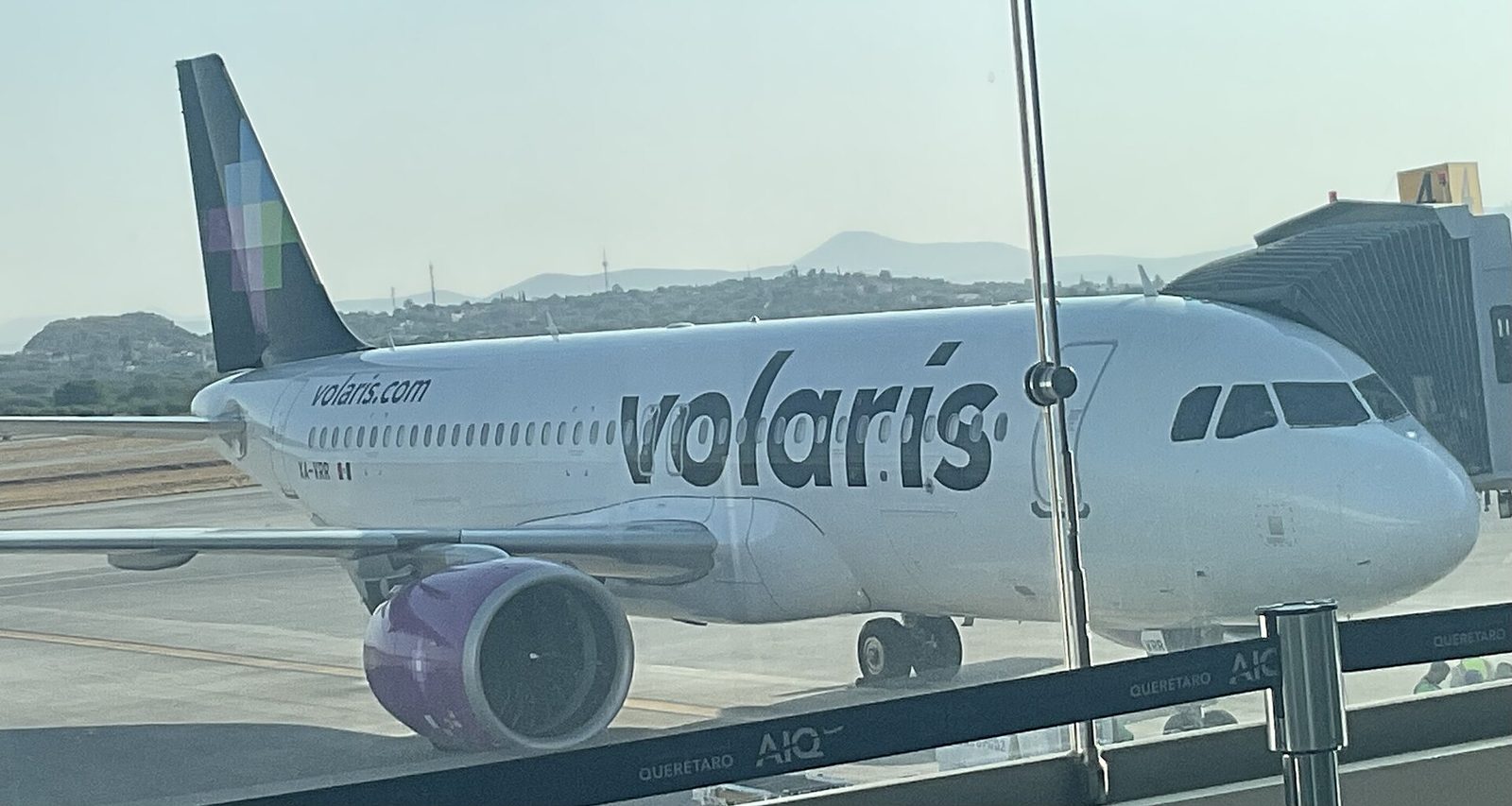
A Volaris Airbus at a jetbridge at Querétaro airport, dry hills behind the apron
Chapter 05

Flying, and the three Mexico City airports

Volaris · Aeroméxico · Viva · MEX, AIFA and Toluca

Fly when the coach would take more than about twelve hours. That is a shorter list than people expect.

The three airlines

Volaris is an ultra low-cost carrier, the largest Mexican airline by passengers, with about two fifths of the domestic market and bases including Cancún, Guadalajara, Tijuana and Monterrey. Aeroméxico is the flag carrier and a SkyTeam member, hubbed at Mexico City.

Viva, formerly Viva Aerobus, is the third largest, based in Monterrey with more than 160 routes, and its ownership is the detail worth keeping: it belongs to IAMSA, the largest bus company group in Mexico. The state-owned Mexicana relaunched small, based at Felipe Ángeles. Read the baggage rules before comparing low-cost fares.

Which airport, and the transfer trap

Benito Juárez, the airport almost everyone means, is the country's busiest: about 850 aircraft movements and 122,000 passengers a day, at full capacity. It is close to the centre, which is its whole advantage.

Felipe Ángeles opened for civil use in 2022 at Zumpango, 35 kilometres north, is run by the defence ministry and handled about seven million passengers in 2025 — calm, modern and a long way out, now with a rail link from Buenavista. Toluca is the third. Check which one a cheap fare uses before you book it.

A two-lane free federal highway in Nayarit with a coach ahead, a volcano on the skyline, and roadside signs warning of a dangerous bend and a runaway-truck ramp
Chapter 06

Driving, and the last mile

Cuota and libre · Topes · Never at night · Colectivos and apps

A hire car is right for the countryside and wrong between cities. Two words on the signs decide the day.

Cuota, libre, and the dark

Federal highways come in two kinds. Tolled limited-access expressways are signed Cuota, usually carry a D after the route number, are fenced and are limited to 110 kilometres an hour for cars. The free alternative alongside is signed Libre, is usually two lanes with junctions at grade, and is limited to 100. Route numbers run odd north to south, even east to west.

Both governments say to use the cuota, avoid isolated roads and not to drive intercity at night. Add topes — speed bumps, ubiquitous, often unpainted, severe — and unlit roads with livestock on them, and the case closes. We could not source the topes point to an authoritative reference, so take it as widely reported practical advice.

Colectivos, taxis and the app question

Colectivos are shared vans regulated by the state or city, running fixed routes for a flat fare. They fill the gaps the coach network leaves, many run between towns as well as within them, and in rural areas they are frequently the only public transport there is. On the Riviera Maya and around Mérida they are how most people reach the cenotes.

In the capital the metro is the fastest way across town: twelve lines, 195 stations, just over 200 kilometres, the second-largest rapid transit system in North America, running from five to midnight. Apps work in the big cities, but at airports their legal position has been contested and enforcement has come and gone, so use the authorised taxi desk or a hotel car.

Mode by mode

What to use, and when

Six ways of moving around Mexico, and the case for each.

ModeWhere it worksBook aheadWatch out forUse it when
First-class coachAlmost the whole countryMain corridors and holidaysWhich Mexico City terminalDefault under about twelve hours
Executive coachCentre, Bajío, Pacific and ADO's eastYes, fewer seatsNot every route has oneOvernight and long daytime legs
Second-class busVillages and short local hopsNo, turn upFree roads, many stops; advisories say avoidShort daytime hops only
Tren MayaYucatán peninsula onlyYes, on the operator's siteSchedules change; Mérida's station is TeyaCampeche to Cancún via Mérida
Domestic flightBetween distant regionsWeeks aheadBaggage rules; which capital airportYucatán to the Pacific, anything to Baja
Hire carYucatán back roads, Baja, rural OaxacaYes; check the insuranceTolls, topes, no night drivingCenotes, small ruins, coast roads

There is no national train, and pretending otherwise wastes a day. Passenger rail was suspended in 1997 and what has been rebuilt since is regional. Outside the Yucatán and two commuter corridors around the capital, the intercity answer is a coach or a flight; the lines under construction are due in 2027 at the earliest.

Check the terminal, not just the time. Mexico City's four coach stations are arranged by compass direction and an hour apart in traffic; the Tren Maya's Mérida station is outside the city; and a cheap flight into Felipe Ángeles lands you 35 kilometres north of where you meant to be.

What goes wrong

Six ways people lose a day in transit

All six are avoidable, and five of them before you leave home.

Assuming there is a train

Outside the Yucatán there is essentially no passenger railway. A rail itinerary for central Mexico has to be rebuilt on arrival.

Turning up at the wrong terminal

Mexico City's coach stations are split by direction and an hour apart. The ticket says which; read it before ordering the taxi.

Booking a second-class bus by accident

The cheaper fare means a different road, more stops and the class both advisories tell you to avoid. Check the brand, not the time.

Driving intercity after dark

Unlit roads, livestock, unpainted topes and the security advice all point the same way. Leave earlier or take the overnight coach.

Expecting the Tren Maya to reach Mérida

The station is Teya, outside the city: a good train with an awkward last kilometre. Put the transfer in the plan.

Comparing low-cost fares without the extras

Baggage, seats and changes are priced separately on the low-cost carriers, and the airport may not be the one you assumed.

Before you book

Six things to settle about the moving parts

Sort the legs before the dates and the itinerary designs itself.

Draw the legs first

Write down every city-to-city move, then pick bus, train or plane for each. Any leg over about twelve hours by road is a flight.

Identify the operator

ADO for the south and the peninsula, ETN and Primera Plus for the centre and west. Look up the route, not the brand.

Check the terminal

In Mexico City, confirm which of the four stations each service uses and how long it takes to reach in traffic.

Decide where you need a car

Hire it for the countryside days and give it back before the next city. Confirm the insurance and the toll arrangement.

Verify the train separately

If the Tren Maya is in the plan, check schedules and stations on the operator's site close to travel. They have changed repeatedly.

Plan the airport transfer

Book the hotel car or use the authorised desk rather than solving it at the kerb, and confirm which airport the flight uses.

Honest planning

Frequently asked questions

Answers written to make the plan realistic rather than optimistic.

For most of the country, yes, and it is not a compromise. First-class and executive coaches recline, are air-conditioned, have lavatories, run on the toll motorways and leave from proper terminals. The British Foreign Office's own advice is to travel by first-class bus rather than second or third class, which tells you where the line is. The network reaches almost everywhere and overnight services replace a hotel night. The exceptions are the long hops — the Yucatan to the Pacific, or anything involving Baja — where you should fly.
Three operators covering three parts of the country. ADO, founded in 1939 on the Mexico City to Veracruz road, runs roughly the eastern half: Puebla, Oaxaca, Chiapas, Veracruz, Campeche, Yucatan and Quintana Roo. ETN runs a luxury-only fleet across the centre, the Bajio and the Pacific, advertising more than seventy destinations. Primera Plus, part of Grupo Flecha Amarilla, covers the western-central states. You rarely choose an operator; you choose a route and take whoever serves it.
Each operator has its own ladder and they do not line up. ADO's three ascend as ADO, ADO GL for Gran Lujo, and ADO Platino at the top. Grupo ADO separately runs second and third class over the same territory under other names — SUR, Volcanes, OCC and AU — and those stop in every village and are not what the advisories mean by first class. ETN is luxury throughout, so any ETN service is near the top of the range.
Essentially no, and the reason is a single administrative decision. Mexico had well over twenty thousand kilometres of track in service by 1910, and when the state railway Ferrocarriles Nacionales de Mexico was broken up for privatisation it suspended passenger services in 1997. Freight carried on under concession; passengers did not. Today the list is short: the Tren Maya, the Tren Interoceanico, El Insurgente between Toluca and Mexico City, the capital's suburban lines, and two tourist railways. Intercity lines including Mexico City to Queretaro are under construction and scheduled for 2027, so they are not options yet. There is also nothing to book: the rail partner this site uses carries no Mexican inventory and Mexico is absent from its own list of rail markets.
A 1,554-kilometre line around the Yucatan peninsula. The Campeche to Cancun section opened on 15 December 2023 and the last segment, Escarcega to Chetumal, on 15 December 2024. Of the destinations this site covers it serves Campeche, Merida and Tulum, and it also stops at Chichen Itza, Valladolid, Playa del Carmen, Bacalar and Palenque, with terminals at Cancun and Tulum airports. It is useful on the Campeche-Merida-Valladolid-Cancun axis, does not connect the peninsula to the rest of Mexico, and its Merida station is Teya, several kilometres outside the city, so budget for a transfer. Check schedules on the operator's own site.
Fly when the alternative is more than about twelve hours on a bus, which means anything crossing between the Yucatan, the centre, the Pacific and Baja. Three carriers dominate: Volaris, an ultra low-cost airline that is the country's largest by passengers with roughly two fifths of the domestic market; Aeromexico, the flag carrier; and Viva, the third largest, owned by IAMSA, the largest bus company group in Mexico. Mexico City has three airports, and a cheap fare may not use the one you want.
Hire a car for the Yucatan's cenotes and smaller ruins, for Baja, and for the countryside around Oaxaca. Do not hire one to move between big cities, where the bus is better and parking is worse. Federal highways come in two kinds: tolled limited-access expressways signed Cuota, usually with a D after the route number, limited to 110 kilometres an hour for cars, and free non-limited-access roads signed Libre, usually two lanes, limited to 100. Both governments advise the toll roads: faster, better maintained and fenced. The libre is the interesting one and the slow one, and it goes through every village.
Do not drive between towns after dark. Both the British and American advisories say so, and beyond security there are practical reasons: unlit two-lane roads, livestock, and topes. Topes are speed bumps, everywhere including on village approaches to main highways, frequently unpainted and severe enough to damage a car taken at speed. We could not find an authoritative published source for that last point, so treat it as widely reported practical advice rather than documented fact. Ride-hailing apps work in the cities, but at airports their legal status has been contested and enforcement has varied, so use the authorised taxi desk.
Continue the story

Take the coach, and check which terminal

Mexico's long-distance coaches are the best thing about moving around the country and the last thing most visitors try. Book first class or better, use the toll roads, do not drive between towns at night, and treat the train as a Yucatán option rather than a national one.

Advertisement