Brunelleschi’s dome rising above Florence
The complete culture guide

Italy’s Art & Architecture

Italy is a living timeline of Western art — Roman engineering, golden mosaics, Gothic cathedrals, Renaissance perspective, Baroque theatre and modern design, all encountered in the streets where they were created.

Great Italian art does not live only in famous museums. It fills churches, civic halls, archaeological parks, palaces, train stations, workshops and entire city plans.

This guide follows the major movements and the best places to experience them, while helping you build a cultural journey that remains rewarding rather than exhausting.

How to see art in Italy

The most satisfying approach is to connect each work to its setting. A Roman temple makes sense beside the forum it served; a Renaissance altarpiece becomes richer inside the chapel designed for it; a Venetian painting changes when seen against the city's water, light and trade history.

Alternate major museums with smaller churches, outdoor spaces and neighbourhood walks. Reserve timed entries for the most celebrated collections, but leave room for discoveries that require no queue: a carved doorway, an early mosaic, a quiet cloister or a contemporary gallery inside an old industrial building.

  • Plan one major museum or archaeological site each day
  • Check church opening periods and dress respectfully
  • Use a guide where context changes ruins into a readable city
  • Look up as often as you look at eye level — ceilings and domes tell half the story
Eight cultural journeys

Art and architecture across Italy

From ancient engineering to twentieth-century creativity, each chapter can anchor a complete trip.

The Colosseum in Rome
01 · Antiquity

Ancient Rome, Pompeii and the architecture of empire

Colosseum · Forum · Pantheon · Pompeii · Paestum

Rome reveals how architecture expressed power, ritual and civic life. The Colosseum, Forum and Palatine form one connected landscape; the Pantheon demonstrates engineering through its vast dome; aqueducts, baths and roads show how infrastructure made the empire function.

Pompeii and Herculaneum add the human scale: houses, shops, gardens, frescoes and street plans preserved by catastrophe. Paestum's Greek temples, Sicily's archaeological parks and Verona's arena remind travellers that ancient Italy extends far beyond the capital.

  • Rome: monumental planning and extraordinary engineering
  • Pompeii and Herculaneum: domestic life, painting and urban form
  • Paestum and Sicily: Greek architecture in Italian landscapes
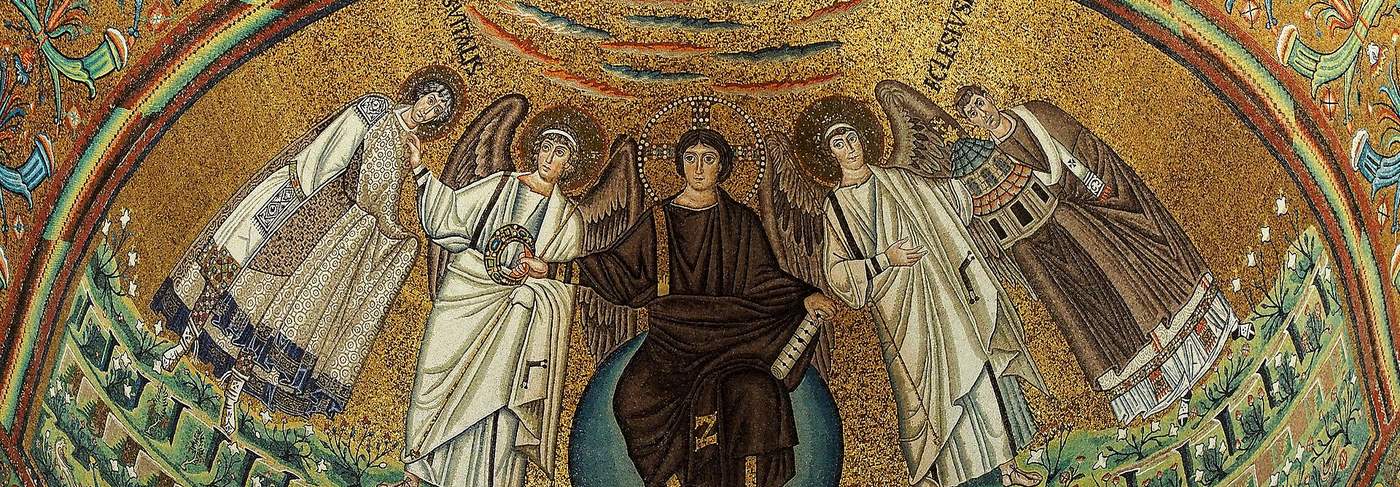
Golden mosaics inside San Vitale in Ravenna
02 · Mosaics and early Christianity

Ravenna — a small city of immense artistic importance

San Vitale · Galla Placidia · Sant’Apollinare · Byzantine art

Ravenna's unassuming brick exteriors conceal some of Europe's most luminous mosaics. Gold backgrounds, imperial processions, stars, gardens and sacred figures cover domes and apses, preserving the visual world of late antiquity and Byzantium.

The sites are compact enough for two slow days. San Vitale and the Mausoleum of Galla Placidia provide the celebrated centre, while Sant'Apollinare Nuovo and Sant'Apollinare in Classe expand the story. Add Aquileia, Monreale or Palermo for other great mosaic traditions.

  • See the monuments in short sessions so detail remains vivid
  • Visit Sant’Apollinare in Classe for space and atmosphere
  • Compare Ravenna's mosaics with Venice and Norman Sicily
Gothic vaulting and stained glass inside Milan Cathedral
03 · The medieval city

Cathedrals, communes and the rise of civic Italy

Milan · Siena · Orvieto · Parma · Assisi

Medieval Italy was not a single style. Romanesque churches use powerful mass, carved portals and rhythmic arcades; Gothic buildings reach upward through pointed arches, stained glass and intricate façades. Civic towers, town halls and piazzas reflect the growing confidence of independent communes.

Milan Cathedral offers Gothic ambition on a vast scale. Siena connects cathedral, civic palace and shell-shaped piazza; Orvieto's striped walls and glowing façade rise above volcanic cliffs. Parma, Modena, Pisa and Assisi each reveal different regional materials and artistic traditions.

  • Siena: sacred and civic art in one compact city
  • Orvieto: sculpture, mosaics and a dramatic hilltop setting
  • Milan: cathedral interior, roof terraces and urban scale
The marble façade and dome of Florence Cathedral
04 · Renaissance Florence

Perspective, humanism and a city transformed by art

Duomo · Uffizi · Accademia · Santa Croce · Brancacci Chapel

Florence gathers the Renaissance into walkable streets. Brunelleschi's dome changed architectural possibility; Donatello and Michelangelo reimagined sculpture; Masaccio, Botticelli and Leonardo explored space, body and emotion. The Medici used patronage to shape both culture and political identity.

The Uffizi is essential, but Florence becomes more coherent when major paintings are paired with the buildings around them. See the cathedral complex, the sculpture of Piazza della Signoria, monastic frescoes at San Marco and chapels where art, architecture and ritual remain connected.

  • Reserve the Uffizi and Accademia, preferably on different days
  • Climb to a viewpoint to understand the dome in the city
  • Add Arezzo, Piero della Francesca or Renaissance Urbino
The richly decorated interior of St Peter’s Basilica
05 · Renaissance and Baroque Rome

Michelangelo, Caravaggio and Bernini’s theatrical city

Vatican · St Peter’s · Caravaggio churches · Piazza Navona

Renaissance Rome concentrates power and artistic ambition in the Vatican, palaces and monumental churches. The Sistine Chapel, Raphael Rooms and St Peter's reveal art serving faith, diplomacy and spectacle. Michelangelo's architecture and sculpture give the city a heroic physical presence.

Baroque Rome turns streets into theatre. Bernini's colonnades, fountains and sculpture direct movement and emotion; Borromini bends walls into complex rhythms; Caravaggio's paintings bring sacred drama into recognisable human darkness. Several masterpieces remain free inside the churches for which they were made.

  • Give the Vatican Museums a focused half-day
  • Follow Caravaggio through San Luigi dei Francesi and Santa Maria del Popolo
  • Walk Bernini and Borromini's city after the busiest hours
Golden mosaics inside St Mark’s Basilica in Venice
06 · Venice

Art made from water, trade, colour and light

St Mark’s · Doge’s Palace · Titian · Tintoretto · Biennale

Venice developed a visual culture unlike any other Italian city. Byzantine inheritance glows inside St Mark's; Gothic façades turn stone into lace; grand scuole and churches hold vast canvases by Titian, Tintoretto and Veronese. Reflected light makes colour itself an architectural material.

Move beyond Piazza San Marco to the Frari, Scuola Grande di San Rocco, Accademia and smaller island churches. The Peggy Guggenheim Collection, Punta della Dogana, Biennale venues and adaptive reuse projects show how modern and contemporary art continue to inhabit the lagoon city.

  • See St Mark’s early, then return to the square at night
  • Choose one major painting collection and several church interiors
  • Use the vaporetto to experience architecture from the water
The mosaic-covered interior of Monreale Cathedral in Sicily
07 · The south and Sicily

Norman mosaics, southern Baroque and cities rebuilt

Palermo · Monreale · Lecce · Noto · Ragusa

Southern Italy combines cultures rather than following a single line. Palermo and Monreale bring Latin, Byzantine and Islamic forms together in Norman monuments. Naples layers ancient streets, theatrical churches, aristocratic palaces and intense contemporary life.

Lecce turns local limestone into elaborate Baroque sculpture. In southeast Sicily, towns rebuilt after the 1693 earthquake became complete Baroque compositions: Noto is harmonious, Ragusa dramatic and Modica vertical. Their stairways, balconies and façades make urban walking the main museum.

  • Palermo and Monreale: multicultural medieval architecture
  • Lecce: richly carved stone in warm southern light
  • Noto, Ragusa and Modica: Baroque towns as total works of art
Intricate craftsmanship inside a historic Italian building
08 · Modern Italy and living design

Industrial cities, radical design and enduring craft

Milan · Turin · Rome · Venice · Murano · contemporary galleries

Italian creativity did not end with the Baroque. Turin and Milan shaped industrial architecture, furniture, fashion, graphic design and the modern city. Rationalist buildings, post-war experimentation and contemporary conversions reveal a country constantly negotiating its historic fabric.

Milan is the strongest base for design museums, foundations and architecture. Turin adds elegant planning, industrial heritage and ambitious galleries; Rome's MAXXI and EUR offer contrasting modern visions. Craft remains equally important: Murano glass, Florentine leather, ceramics and small workshops keep design connected to making.

  • Milan: twentieth-century architecture, design museums and foundations
  • Turin: industrial modernity and contemporary art
  • Across Italy: seek studios and workshops, not only finished objects

The secret to a great art journey: see less, but connect it better. A single church, square and museum can explain an entire period when experienced slowly and in context.