The island that moved its beauty outdoors
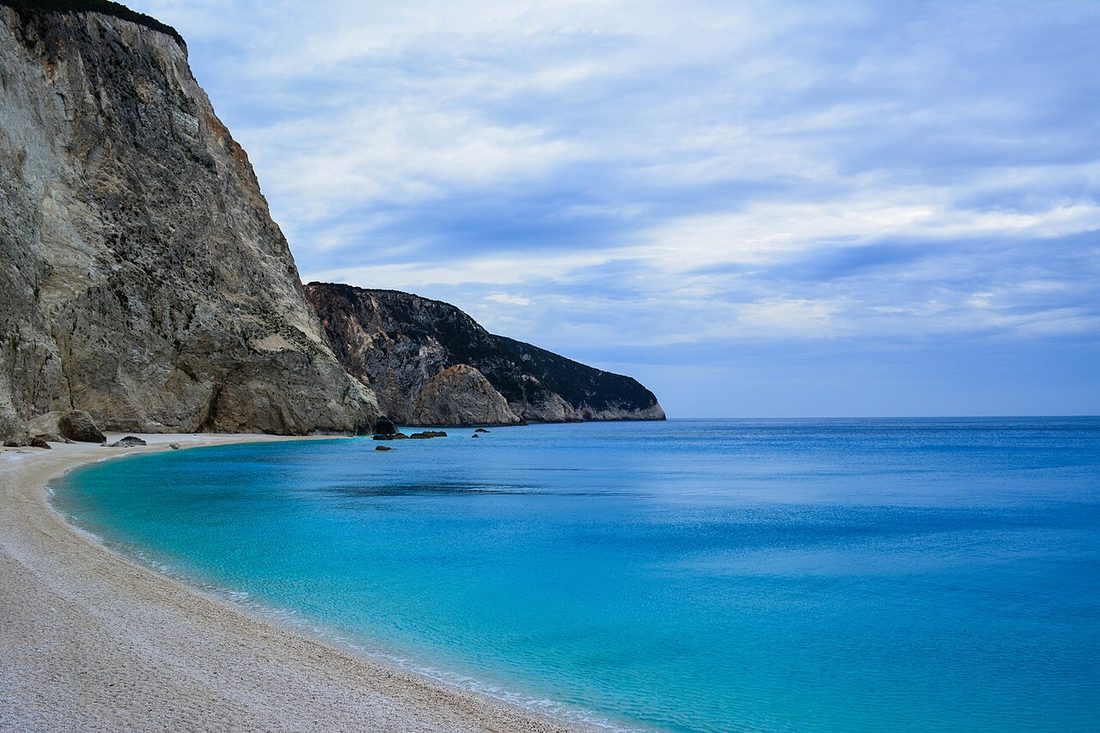
Kefalonia is the largest of the Ionian islands, and it wears its size as emptiness: fir forest, vineyards and open sea in every direction, with the towns kept small. In August 1953 an earthquake levelled nearly everything built here; only the far north kept its Venetian houses. What was rebuilt is plain and practical — the island's beauty simply moved outdoors, into the white sweep of Myrtos, the lake cave of Melissani and the dark slopes of Mount Ainos.
Argostoli, the capital, curls around a lagoon crossed by the De Bosset bridge, a stone causeway begun under British rule in 1813, and loggerhead turtles cruise the fishing quay most mornings. The town's evening happens on the Lithostroto, its marble pedestrian street, and its cellars pour Robola, the sharp white grape grown high on the mountain. Ainos itself — at over 1,600 metres the highest summit in the Ionian — is a national park of black fir so dense the Venetians called the mountain Monte Nero, with half-wild horses on its southern slopes.
The coasts divide the island into trips. North, the corniche runs above Myrtos to Assos, a hamlet on the neck of a pine peninsula below a sixteenth-century Venetian fortress, and ends at Fiskardo, where the yachts moor against houses the earthquake spared. East, Sami pairs a working ferry port with the underground — Melissani and Drogarati — and with the crossing to Ithaca, the island tradition hands to Odysseus. Louis de Bernières set Captain Corelli's Mandolin in these landscapes, and the film crews came to Sami and Antisamos when the novel reached the screen. South-east of the mountain, long sandy beaches run from Skala towards Poros; west, over the lagoon, the Paliki peninsula keeps the red sand of Xi and its white clay cliffs for the fewest visitors of all.
“Plan Kefalonia in hours on the road rather than kilometres — the mountain sits between almost everywhere and everywhere else.”