Old ungrafted vines growing low in the volcanic soil of Santorini
Old vines, native grapes, very little of it exported

Greek Wine: Grapes, Regions and Labels

Greek wine is built on native varieties that grow almost nowhere else. Learn three grapes and three regions and most Greek wine lists become readable.

Greek wine is one of the oldest continuous winemaking traditions in the world, and for most of the twentieth century almost none of it left the country in a form worth drinking. That changed from the 1980s onwards, when a generation of producers went back to the indigenous varieties instead of planting international ones. The result is a small industry — Greece produces a fraction of what Italy, France or Spain does — growing grapes that have no equivalent anywhere else.

Three varieties will get you a long way: Assyrtiko for whites, Xinomavro for structured, ageworthy reds, and Agiorgitiko for softer ones. Each has a home region that shaped it. Learn the pairs, and the rest of the list — the Cretan varieties, the aromatic whites, the sweet wines — falls into place around them.

The white to knowAssyrtiko, from Santorini's volcanic soil
The serious redXinomavro, from Naoussa in Macedonia
The easy redAgiorgitiko, from Nemea in the Peloponnese
Worth unlearningThat Retsina is what Greek white wine tastes like
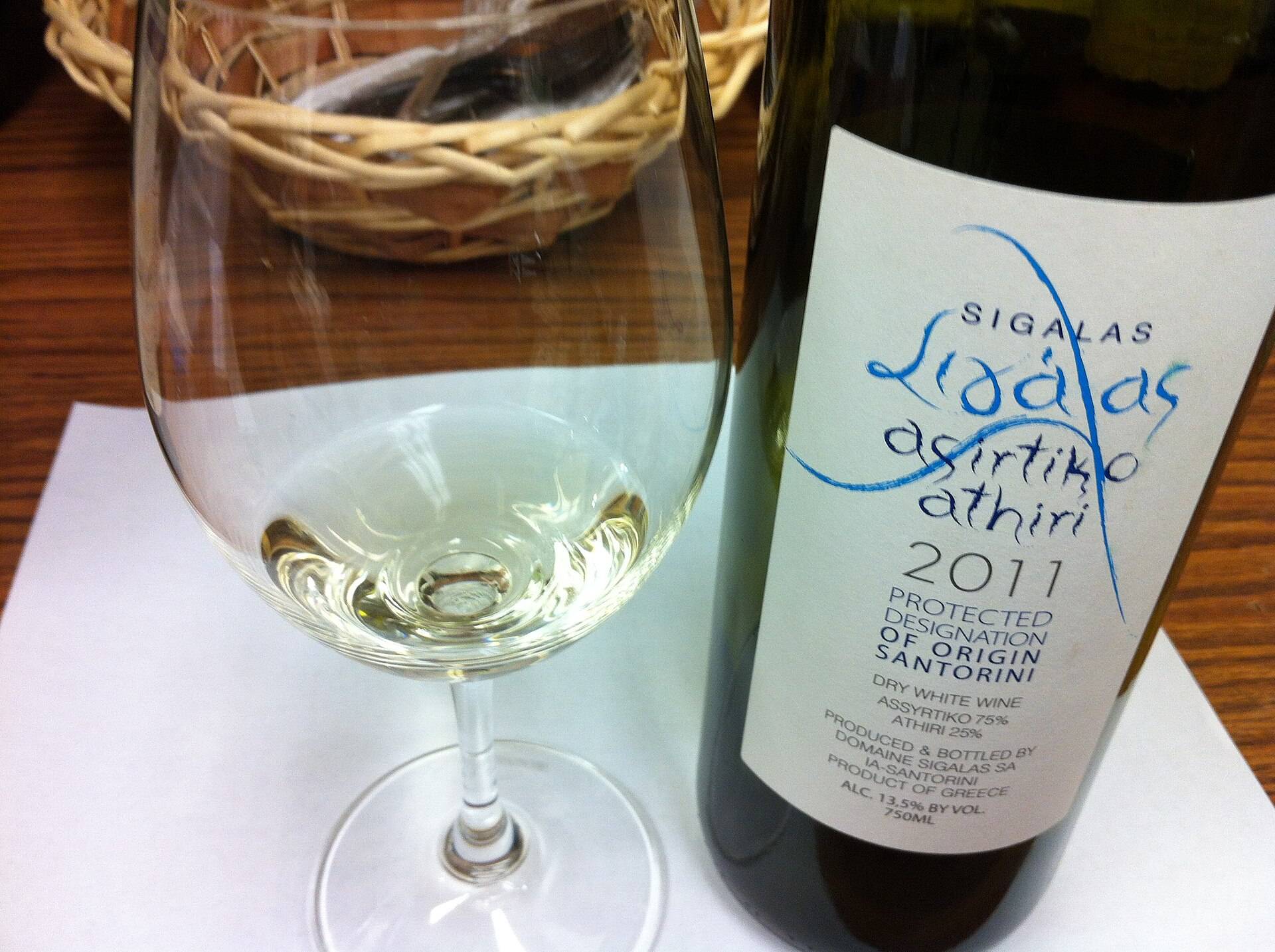
Assyrtiko and Athiri grapes from Santorini
Chapter 01

Assyrtiko, and the strangest vineyard in Europe

Santorini · Volcanic soil · Kouloura · Ungrafted vines

The island grows white grapes on pumice, in baskets on the ground, from vines that were never replanted.

What the grape does

Assyrtiko keeps high acidity even in a very hot climate, which is unusual and is why it has spread from Santorini to the mainland. On the island it makes a dry, taut, mineral white with citrus and a saline finish, often with noticeably high alcohol because the grapes ripen fully while the acid holds.

It ages, which few people expect from a Greek white. Bottles from Santorini commonly improve for five to ten years, and some producers release oak-aged versions labelled nykteri, traditionally pressed overnight.

Why the vines look like baskets

Santorini's vines are trained into a low coiled basket called a kouloura, with the fruit growing on the inside. The shape shelters the grapes from the wind and the sun and traps the humidity that arrives as night mist, which is close to the only water they get: the island has almost no rain in the growing season and no irrigation.

The soil is volcanic ash, pumice and lava with no clay, which phylloxera cannot survive in. Santorini's vines were therefore never grafted onto American rootstock, and old root systems are regularly cut back and regrown, so the plants are far older than they look.

A bunch of Xinomavro grapes on the vine in Macedonia
Chapter 02

Xinomavro, the red that behaves like Barolo

Naoussa · Tannin · Amyndeon · Ageing

Northern Greece grows a red grape with tannin and acid enough to need years in the cellar.

The grape and its home

The name means 'acid-black', which is an accurate description. Xinomavro gives pale-coloured, high-tannin, high-acid reds that smell of tomato, olive and dried herbs when young and develop notes closer to leather and dried fruit with age. The comparison usually made is with Nebbiolo, and it is a fair one.

Its classic appellation is Naoussa, on the eastern slopes below Mount Vermio in Macedonia, where it is the only permitted variety. Amyntaio further north, at higher altitude, gives lighter and more aromatic versions and a well-regarded sparkling rosé.

How to drink it

Young Xinomavro can be austere. It rewards food — roast lamb, aged cheese, tomato-based oven dishes — and it rewards patience, since good bottles from Naoussa are often still improving a decade after the harvest. Decanting a young one for an hour is not excessive.

The nearest city base is Thessaloniki, about an hour and a half from the Naoussa vineyards by road. Several estates in the appellation receive visitors, and the wine roads of Macedonia are signposted.

Vineyards and olive groves in the Nemea basin of the Peloponnese
Chapter 03

Agiorgitiko, and the vineyards of the Peloponnese

Nemea · Altitude · Moschofilero · Mantinea

The largest quality vineyard area in Greece sits an hour and a half from Athens.

Nemea and its red

Agiorgitiko is the most planted quality red grape in Greece and the sole variety of the Nemea appellation in Corinthia. It is softer than Xinomavro — deep colour, ripe red fruit, moderate acidity, tannins that do not fight you — and it is made in everything from light unoaked styles to serious barrel-aged bottles.

Altitude does most of the work. Vineyards run from around 250 metres on the valley floor to over 800 metres on the surrounding slopes, and the higher sites give fresher, more structured wine. The same basin holds the ancient sanctuary of Nemea, which makes a wine visit and a ruins visit the same detour.

Mantinea, and the aromatic white next door

Moschofilero is a pink-skinned grape grown on the high plain of Mantinea in Arcadia, at around 650 metres. It makes a pale, low-alcohol, floral and citrus-scented white that is closer to a dry Muscat in character than to Assyrtiko, and it is at its best young.

Both regions are easy to reach from Nafplio, which makes the eastern Peloponnese the simplest wine trip in Greece to build into a wider route.

Ripe Agiorgitiko grapes, the red variety of Nemea
Chapter 04

How to read a Greek label without knowing Greek

PDO · PGI · Reserve terms · Bottle shapes

Greek labels carry more usable information than most, once you know which words are legally defined.

The appellation words

Greece uses the EU system. PDO wines come from a defined area with a defined grape list — Santorini, Naoussa, Nemea, Mantinea and around two dozen others. PGI wines cover a wider region and allow more freedom, and many excellent bottles sit in this category by choice rather than by failure.

Ageing terms are also regulated. Reserve and Grande Reserve on a PDO wine indicate defined minimum periods in barrel and bottle, so they mean something specific rather than being marketing. Both terms are usually printed in Latin script as well as Greek.

What to expect on the shelf

Most labels give the variety in Latin script somewhere, which is the quickest way in. Vintage matters less for the whites, which are generally drunk young, and a good deal more for Naoussa reds.

House wine in a taverna is a separate category: it is usually local, sold by the half or full kilo rather than the litre, and served in a metal jug. It is rarely remarkable and rarely bad, and it is the cheapest way to drink with a meal.

An Assyrtiko vine trained into the basket-shaped kouloura of Santorini
Chapter 05

The rest of the map, in one page

Crete · Cephalonia · Rapsani · Goumenissa

Beyond the three headline regions there are around three hundred native varieties still in commercial use.

Crete and the islands

Crete has its own varieties and a fast-improving wine scene: Vidiano for whites, and Liatiko and Kotsifali for reds, usually grown at altitude inland from Heraklion. Robola grows on limestone slopes on Kefalonia and makes a lean, dry white.

Limnio, from Lemnos, is one of the oldest documented Greek red varieties. Malagousia was down to a handful of vines in the 1970s and was brought back deliberately; it now makes some of the country's most aromatic whites.

The mainland beyond Naoussa

Rapsani sits on the lower slopes of Mount Olympus and blends Xinomavro with two local varieties. Goumenissa, west of Thessaloniki, blends it with Negoska for a softer wine. Both are PDO regions and both are far less known than they deserve.

Around Athens, Savatiano covers a great deal of ground in Attica. It spent decades as the base for cheap retsina and is now being taken seriously as a dry white from old bush vines.

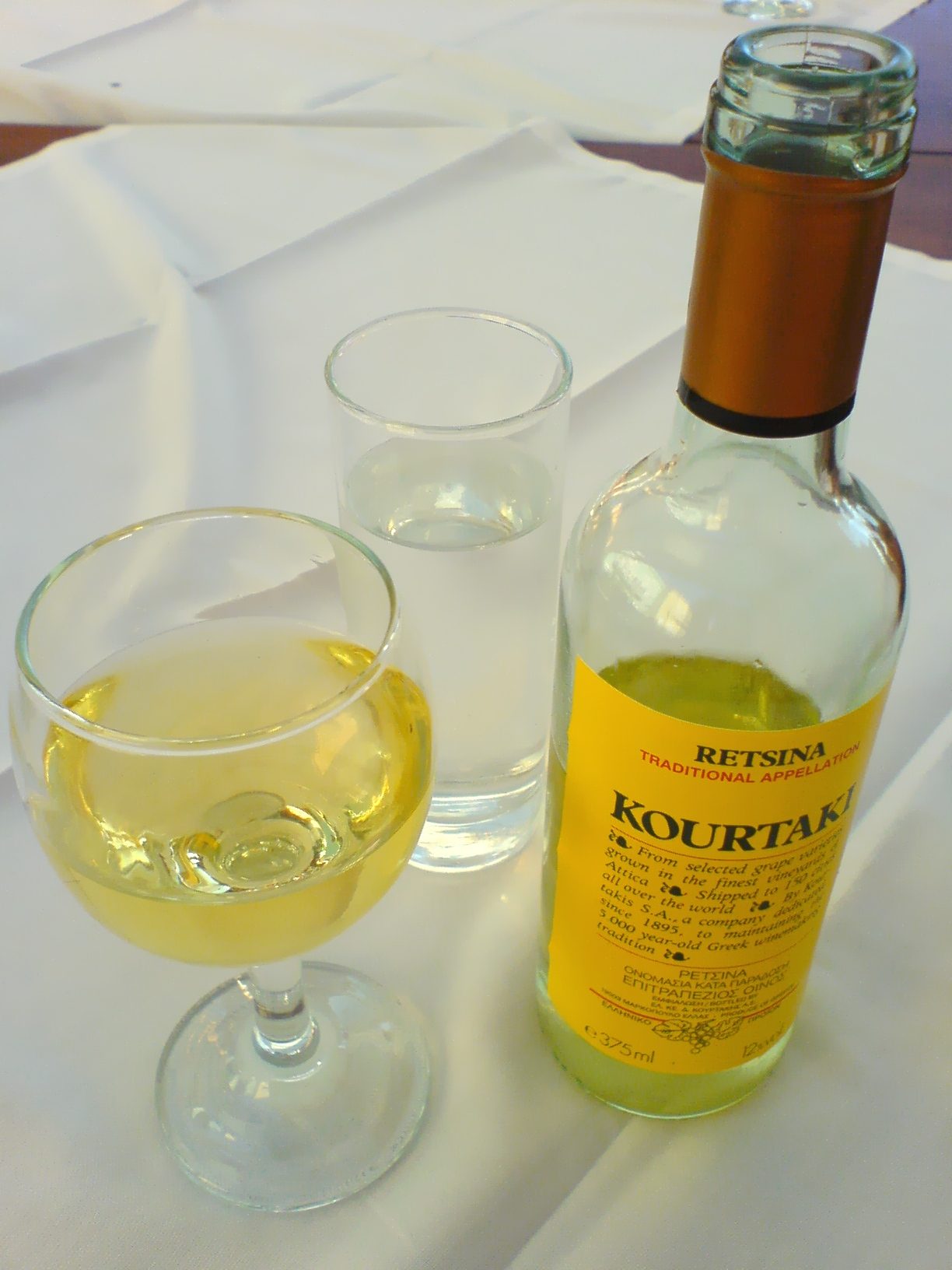
A glass of retsina, the resinated white wine of central Greece
Chapter 06

Sweet wine, retsina, and visiting the vineyards

Vinsanto · Mavrodafni · Tastings · Season

Two traditional styles worth reconsidering, and the practicalities of getting to a cellar.

The sweet wines, which are the serious ones

Santorini's Vinsanto is made from Assyrtiko and Aidani sun-dried on mats for up to two weeks, then aged in barrel for years. It is intense, high in acid and capable of lasting decades, and it has nothing to do with the Italian wine of similar name beyond the sun-drying.

Mavrodafni from Patras is a fortified red, aged oxidatively, closer in style to a tawny port. Samos makes sweet Muscat that has been exported for well over a century. All three are cheap by the standards of comparable sweet wines elsewhere.

Retsina, and how to visit

Retsina is white wine flavoured with Aleppo pine resin, a practice that began when wine was sealed in amphorae with resin. The industrial version made it notorious. A number of producers now make careful low-resin versions from good base wine, and with fried fish or strong meze it makes sense in a way the bulk version never did.

For visits, harvest runs from August on the islands to October in the mountains, and many estates ask you to book. Santorini has the highest concentration of wineries open to visitors; Nemea is the easiest day trip from Athens; Naoussa needs a car and a designated driver.

Varieties worth trying

Six more names to look for on a list

None of these are grown in quantity anywhere outside Greece.

Malagousia

Aromatic white with peach and basil notes; revived from near-extinction in the 1970s.

Grown widely across the north.

Rhoditis

A pink-skinned white grown at altitude in the Peloponnese; crisp and unshowy.

The everyday white of much of the mainland.

Vidiano

Cretan white with texture and stone fruit; the island's most promising revival.

Best from the hills above Heraklion.

Limnio

Red from Lemnos, mentioned in ancient sources; herbal and medium-bodied.

Often blended in northern reds.

Athiri

Soft white often blended with Assyrtiko on Santorini and Rhodes.

Rounds out the sharper island whites.

Negoska

Soft red grown only around Goumenissa, always blended with Xinomavro.

A small appellation worth a detour.

Choose by taste

Five regions, and what actually comes out of them

Match the region to what you like drinking rather than to the itinerary.

RegionGrapeTastes likePractical note
SantoriniAssyrtikoDry, high acid, citrus and salt, often 14%+The most visitable wine region in Greece; book tastings in summer
NaoussaXinomavroPale, tannic, tomato and dried herb, ages for decadesNeeds a car; about 90 minutes from Thessaloniki
NemeaAgiorgitikoDeep colour, ripe red fruit, soft tanninEasiest day trip from Athens; combine with the ancient sanctuary
MantineaMoschofileroPale, floral, low alcohol, drink youngHigh plain in Arcadia; pairs with the Peloponnese road route
CreteVidiano, LiatikoTextured whites; light, spiced redsVineyards sit inland and uphill from the north-coast towns
Map the vineyards

Where the wine regions actually are

The wine map does not follow the holiday map, which is why so few visitors reach the best of it.

Positions are approximate and for planning only. Most estates ask you to book a tasting, and opening seasons vary.

Spring

Vines wake up

Cellars are quiet and tastings are unhurried; island weather is mild.

Summer

Santorini is busiest

Book tastings ahead from June to September; harvest on the island starts in August.

Autumn

Harvest in the north

September and October in Naoussa, Nemea and the mountains, and the most interesting time to visit.

Winter

Bottling and pruning

Many small estates close to visitors; the larger ones stay open by appointment.

Any time

Drink the house wine

Sold by weight in a jug, local, cheap, and a fair guide to what the area grows.

Before you go

Six things to settle before a wine trip

Greek wine regions are small, rural and not always set up for walk-ins.

Book ahead

Most estates receive visitors by appointment, particularly outside Santorini. A day's notice is usually enough.

Driving

Greek drink-driving limits are low and enforced. Plan a driver, a taxi or an organised tasting tour.

Season

Harvest is the most interesting time but the busiest for the winemaker; spring gives you more of their attention.

Shipping

Many estates will ship. Check your own country's duty rules before you fill a suitcase.

Prices

Tasting fees are modest and usually deducted from a purchase. Cellar-door prices are close to shop prices.

Language

English is widely spoken at estates that receive visitors; less so in village cooperatives.

Honest planning

Frequently asked questions

Short answers to the questions that come up in front of a Greek wine list.

Dry white Assyrtiko from Santorini is the wine that made Greek exports credible. It is high in acidity, dry, mineral and often over 14% alcohol, and unlike most Mediterranean whites it improves for several years in bottle.
No. Retsina is a specific style of white wine flavoured with pine resin, and it is a small part of production. The mainstream of Greek wine is unresinated and made from native varieties such as Assyrtiko, Xinomavro, Agiorgitiko, Moschofilero and Malagousia.
Agiorgitiko from Nemea if you want soft, ripe and approachable. Xinomavro from Naoussa if you like structured, tannic, savoury reds that age — it is often compared to Nebbiolo, and young bottles benefit from decanting.
The kouloura, a coiled basket of woven vine wood, shelters the fruit from constant wind and fierce sun and helps it capture night humidity on an island with almost no summer rain. The volcanic soil also keeps phylloxera out, so the vines were never grafted.
On Santorini, yes — the estates are close together and organised tours run daily. Nemea can be done as a day trip from Athens with a driver. Naoussa, Amyntaio and the Cretan hill vineyards realistically need a car and someone who is not drinking.
On a PDO wine it is a legally defined term indicating minimum ageing in barrel and in bottle, with Grande Reserve requiring longer again. It is a regulated statement about ageing rather than a producer's marketing word.
Continue the story

Learn three grapes and the list reads itself

Assyrtiko, Xinomavro, Agiorgitiko — and then follow whichever one you liked back to the region that grew it.

Advertisement