The shallow red-sand shore of Xi beach on Kefalonia
A country that likes children

Greece with Children

Greece is one of the easiest places in Europe to travel with children — late dinners, welcoming tavernas, warm shallow water. The planning that matters is about wind, shade and the length of the crossings.

Greek culture is unusually relaxed about children. They are expected in restaurants at ten at night, fussed over by waiters and included rather than tolerated. Nobody will ask you to keep them quiet, and there is no children's menu because there was never a need for one.

What takes planning is the physical side: which beaches shelve gently and stay out of the meltemi, how long a ferry crossing a four-year-old can sit through, where there is shade at two in the afternoon, and which ancient sites hold a child's attention for more than ten minutes. This guide is about those.

Easiest islandsNaxos, Paros, Kefalonia, Rhodes and western Crete
Best beaches for small childrenLong, shallow, west or south facing
Ferry ruleUnder three hours, in daylight, on a conventional ship
Daily shapeBeach or site early, indoors at midday, out again after seven
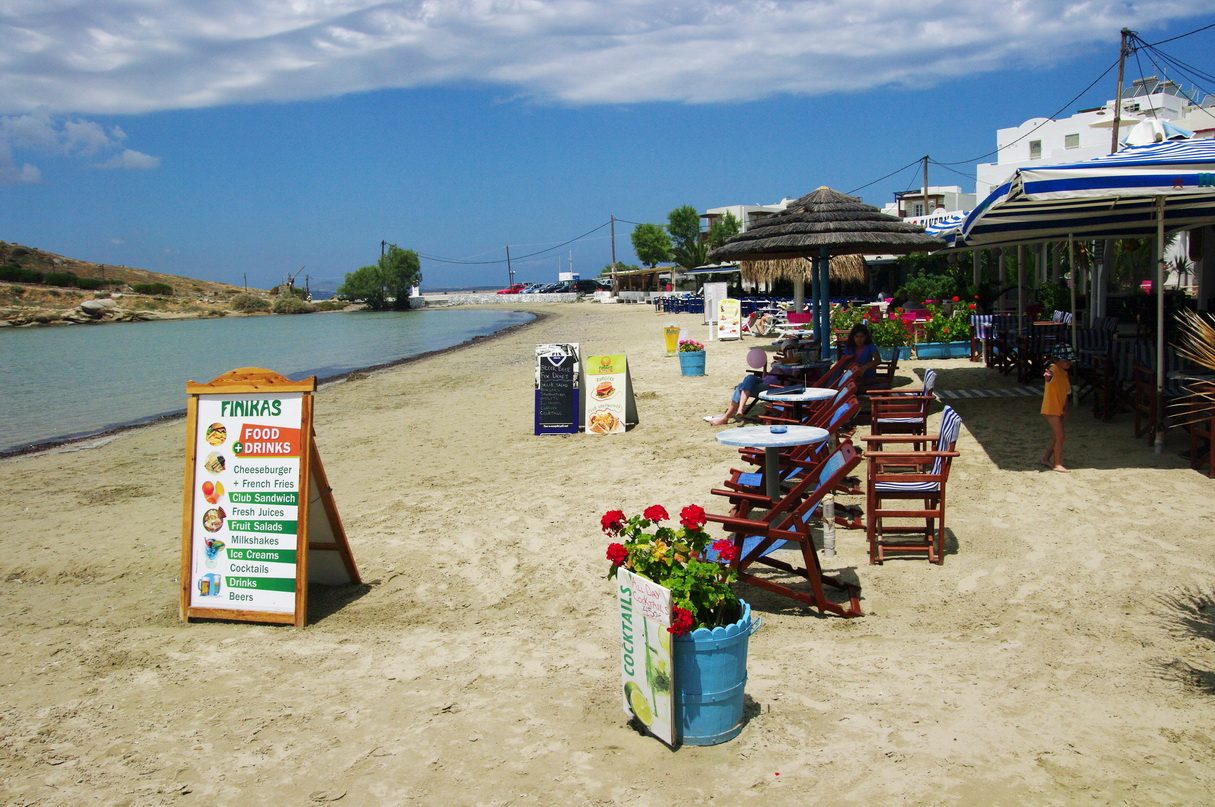
The shallow bay of Agios Georgios beach beside Naxos town
Chapter 01

Pick an island with a town beach

Naxos · Paros · Kefalonia · Rhodes · Crete

The single most useful feature for a family is sand within walking distance of where you sleep.

Naxos and Paros are the Cycladic answer

Naxos has Agios Georgios directly beside the main town: a long shallow bay where the water stays waist-deep a long way out, with tavernas along the back of it. Paros offers the same arrangement at Parikia and Naoussa, and both islands have bus networks that reach the other beaches without a car.

Avoid basing a young family on Santorini. The caldera villages are built on cliffs with steep stepped lanes, the beaches are a bus ride away on the far side of the island, and the volcanic sand gets extremely hot.
Kefalonia, Rhodes and Crete for space

Kefalonia and the Ionian generally are green, sheltered from the meltemi and full of gently shelving bays — Skala and Lourdas at the southern end are as easy as Greek beaches get. Rhodes has the longest warm season and the most family hotels.

In Crete, base west near Chania for the beaches and east near Heraklion for the Minoan sites. The island is large enough that trying to do both from one base means long drives with tired children.

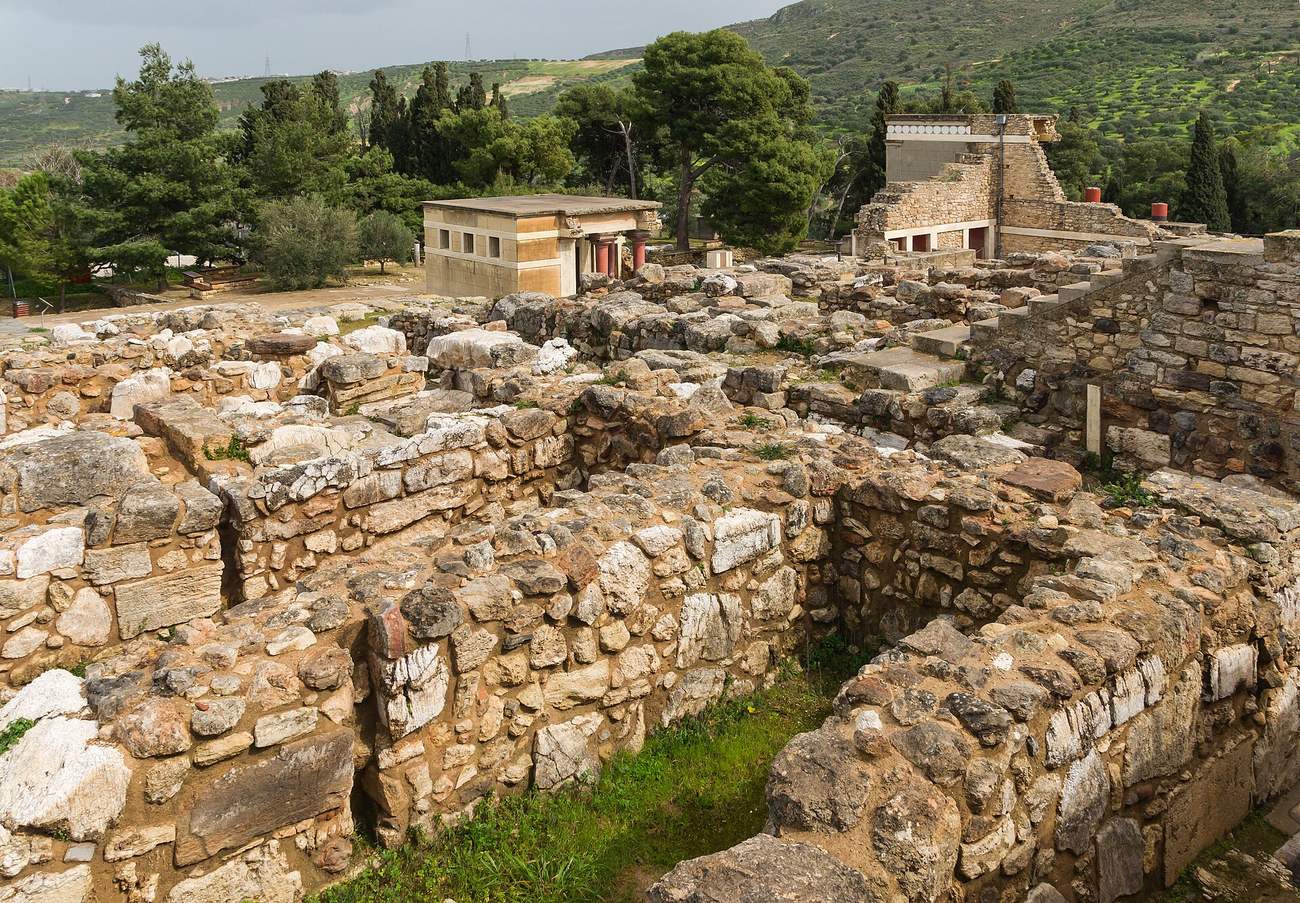
Reconstructed columns and stairways at the palace of Knossos on Crete
Chapter 02

Ancient sites children actually enjoy

Knossos · Acropolis · Museums · Timing · Shade

Ruins are a hard sell at seven. Palaces with staircases, bull frescoes and a labyrinth story are not.

Knossos beats the Acropolis for younger children

Knossos outside Heraklion has partly reconstructed rooms, coloured frescoes, staircases to climb and the Minotaur legend attached to it, which is a great deal more legible to a child than a row of column bases. Go at opening time: it is exposed and it gets very busy.

The Acropolis is still worth doing, but book the first hourly slot of the day, take water, and treat the Acropolis Museum — air-conditioned, with a glass floor over an excavated neighbourhood — as the other half of the visit.

Theatres, stadiums and things with a story

The theatre at Epidaurus works because children can test the acoustics themselves from the top row. Mycenae has a lion gate and a beehive tomb you walk into. Delphi has a stadium at the top of the site that is worth the climb for the running alone.

One site a day is the sustainable rate, and it should be the first thing you do after breakfast rather than the thing you fit in before dinner.

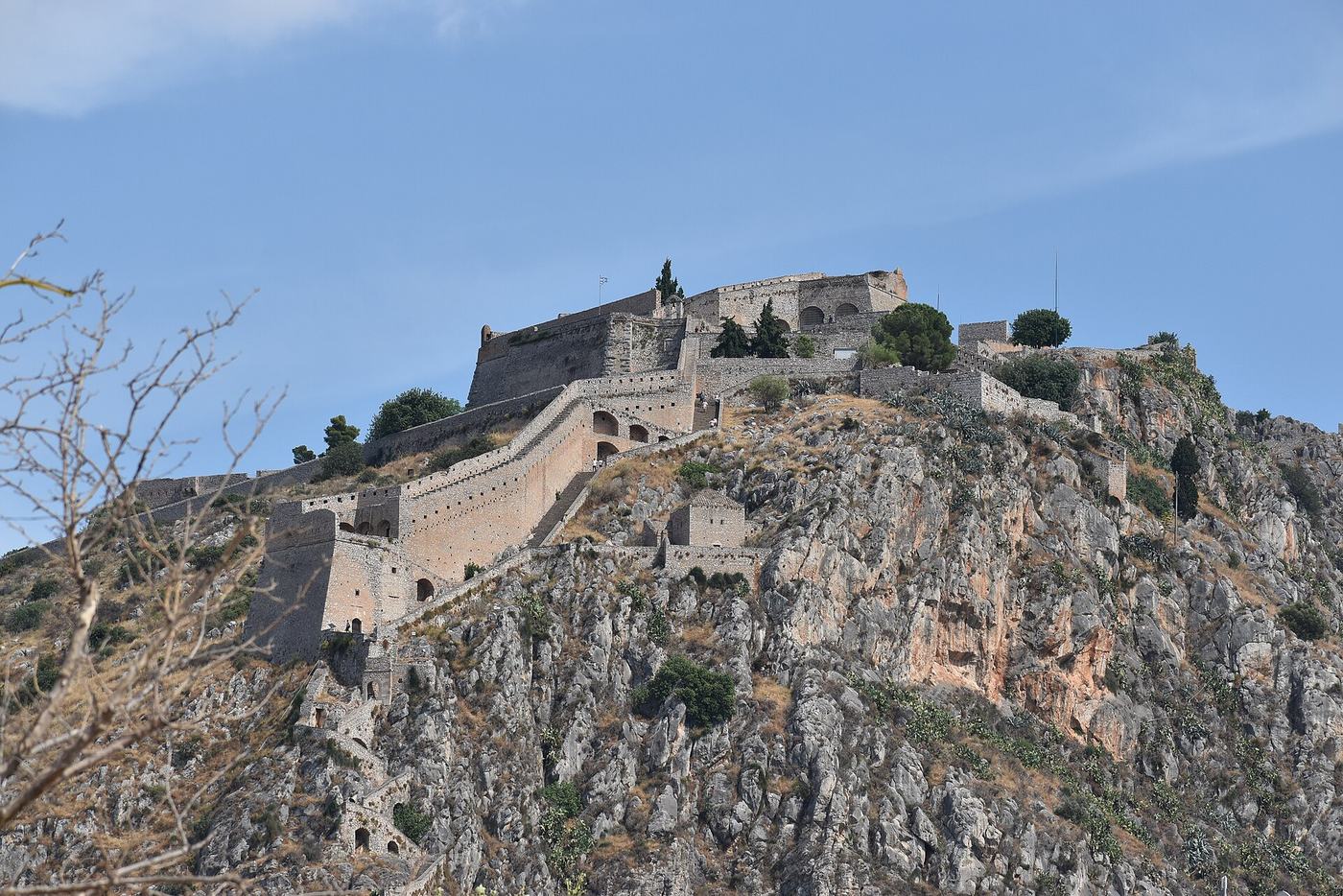
The Venetian fortress of Palamidi on its rock above Nafplio
Chapter 03

Castles, forts and boats: the reliable middle ground

Palamidi · Rhodes walls · Bourtzi · Castles · Boats

Where a classical site loses a child, a fortress with a stair and a cannon does not.

Fortresses to climb

Palamidi above Nafplio was built by the Venetians between 1711 and 1714 and is reached either by road or by a long stair from the town — several hundred steps, best taken early or not at all in July. The bastions, tunnels and sea views do the rest.

The walled medieval town of Rhodes is the largest inhabited one in Europe and can be walked entirely: moat, gates, Street of the Knights and the Grand Master's palace. Lindos adds an acropolis on a rock above a bay.

A boat trip is usually the best day of the week

Small local boats run from most harbours to beaches and caves that cannot be reached by road — the sea caves of Milos, the Blue Caves of Zakynthos, the lagoon at Balos on Crete. Half-day trips suit children far better than full-day ones.

Check the boat has shade and a ladder rather than only a jump-off point, and check the wind forecast the evening before: these are the first trips cancelled when the meltemi gets up.

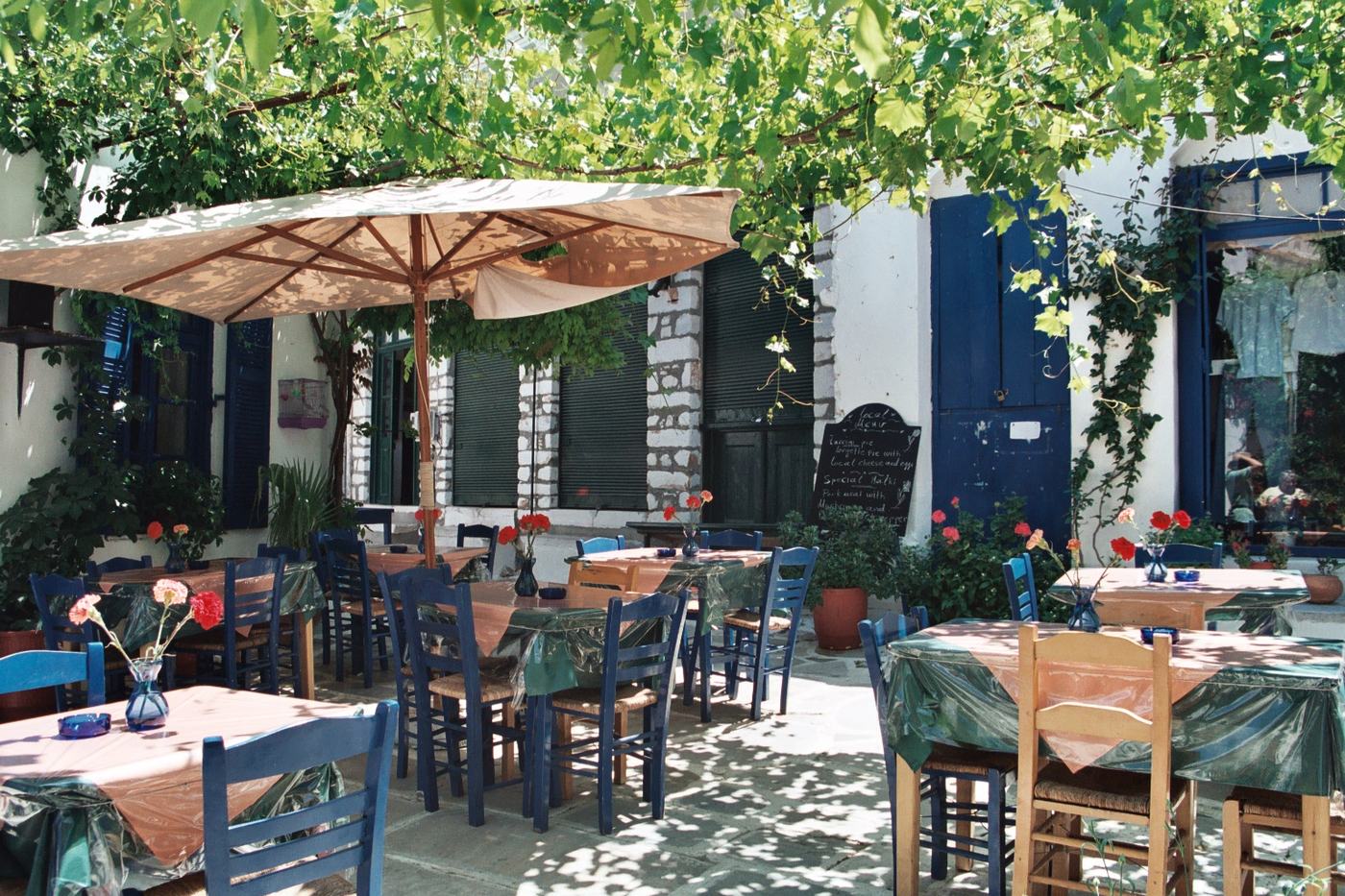
Tables set out under the trees in front of a taverna on Naxos
Chapter 04

Eating out is the easy part

Late dinners · Sharing · Bakeries · Ice cream · Naps

Greek restaurants are built for families eating late, slowly and out of the middle of the table.

Nobody minds a child at ten o'clock

Greek families eat at nine or later, children included, and tavernas are arranged around that. Small children run about between the tables and the staff generally join in. Ordering small shared dishes means nobody waits for a plate and fussy eaters find something.

The practical consequence is that a late afternoon rest matters more than it does at home. Children who nap after the beach cope with a nine o'clock dinner perfectly well.

What to order when nothing is being eaten

Grilled chicken or pork Souvlaki, chips, tzatziki, plain rice and bread will be produced without comment in any taverna, and Feta is the one cheese most children take to. Bakeries handle breakfast and the mid-morning gap.

Water is ordered by the bottle and is cheap. On islands where the tap water is desalinated or brackish, bottled is what everyone drinks — ask at the room rather than guessing.

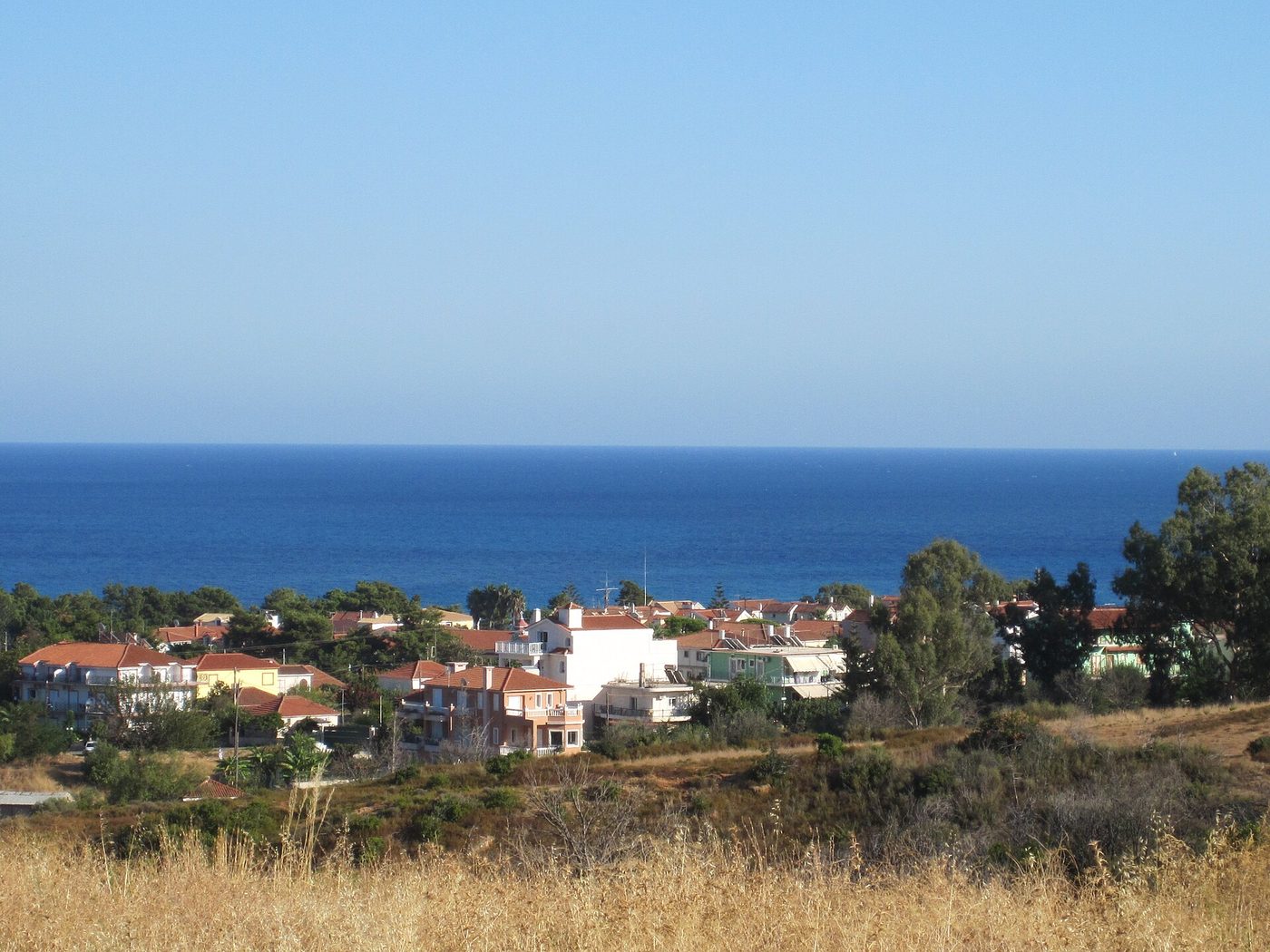
The long shallow beach at Skala on Kefalonia
Chapter 05

Ferries and cars with small children

Crossings · Conventional ships · Car seats · Buses · Buggies

A big slow ferry is much easier with a toddler than a fast catamaran, and it is usually cheaper.

Choose the ship, not just the timetable

Conventional ferries have open decks, lounges, room to walk about and a cafeteria. High-speed catamarans keep everyone seated in an enclosed cabin, move more sharply in a swell and are the first services cancelled in wind. For a family the slow boat is the better boat.

Keep crossings under about three hours where you can, sail in daylight, and board early enough to find seats together. Buggies are easy on conventional ships and awkward on fast ones.

Cars, seats and scooters

Child seats must be requested when booking a hire car and are not always available at island offices in high season; confirm rather than assume. Island roads are narrow, often unfenced above drops, and the smallest car is the right car.

Do not put children on quad bikes or scooters. They are the commonest source of serious holiday injury on the Greek islands and hire insurance frequently excludes them altogether.

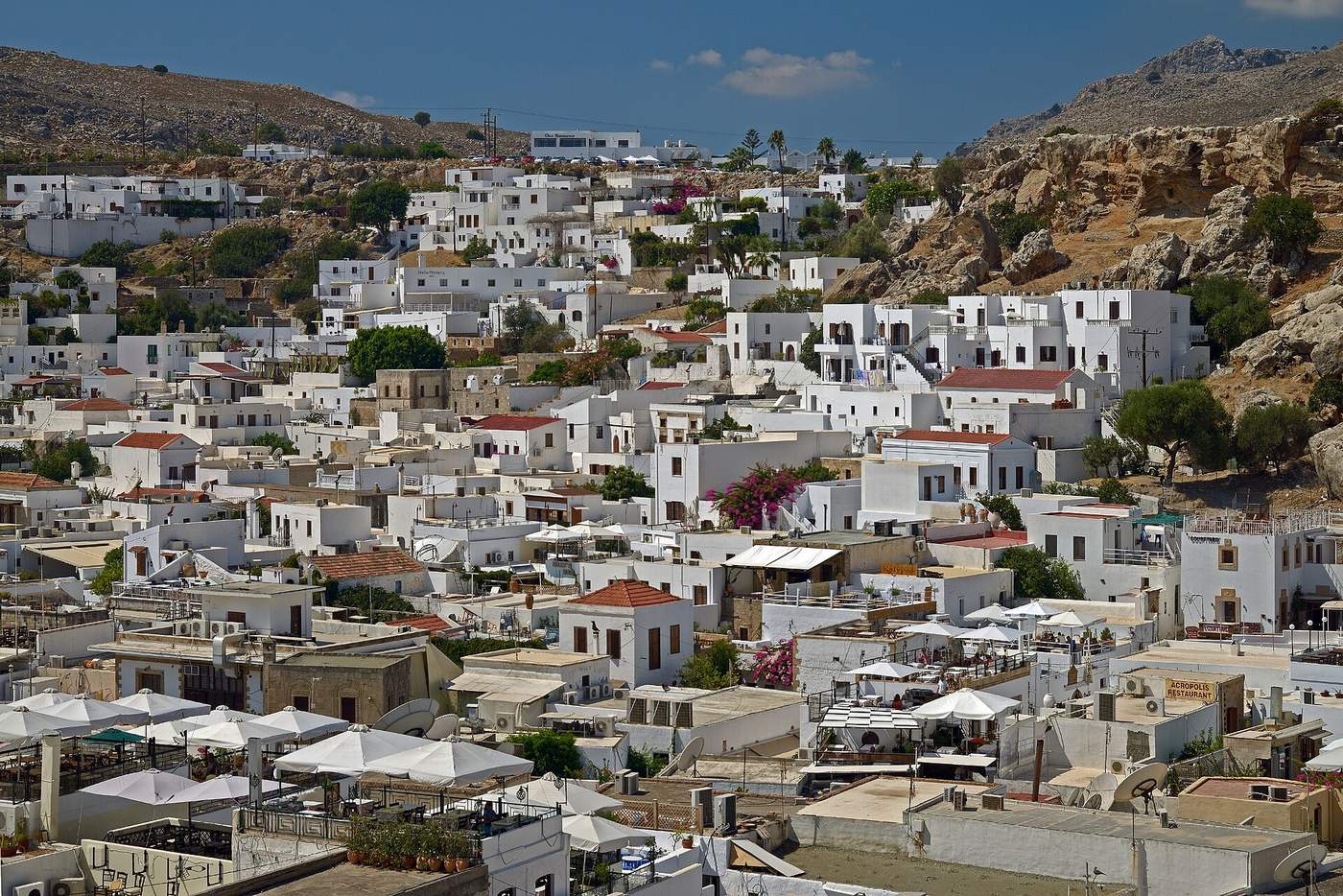
Lindos village and its bay seen from the acropolis above
Chapter 06

Heat, sun and the small hazards of a Greek beach

Heat · Sun · Sea urchins · Jellyfish · Pharmacies

Almost every problem a family has in Greece is a heat problem, and all of them are avoidable.

The middle of the day belongs indoors

From late June to early September the sensible day runs early and late: beach or site before eleven, somewhere shaded and cool from noon until five, then out again. Greek families do exactly this. Shade on beaches is often only what you bring or rent, and the volcanic sand of Santorini and Milos gets hot enough to burn feet.

Pharmacies are excellent, open late in resort towns and staffed by pharmacists who will treat minor complaints directly. The general emergency number is 112 and is answered in English.

Urchins, jellyfish and turtles

Sea urchins live on rocky shores and their spines are the most common Greek beach injury; swim shoes solve it entirely. Jellyfish appear irregularly and locally rather than as a season. Neither is a reason to avoid rocky coves, but both are a reason not to go in barefoot.

On turtle nesting beaches in the Zakynthos marine park and parts of Crete, beaches close at night, umbrellas may not be pushed into marked sand and boats keep their distance. Children usually find the rules more interesting than the turtles.

Island by island

Which island for which family

The variables that matter are the walk to the beach, the shelving of the sand and how much wind the island catches.

IslandTown beachWindBest forWatch out for
NaxosYes — Agios Georgios, shallow and longExposed on the north-westFirst island with small childrenAfternoon wind on the west coast beaches
ParosYes — Parikia and NaoussaWindy in July and AugustBus-served beaches without a carGolden Beach is a windsurf beach, not a paddling one
KefaloniaAt Skala and LourdasShelteredCalm water in AugustDistances; the island needs a car
RhodesAt Faliraki and the east coastWest coast windy, east coast calmLong season and family hotelsThe west coast is for windsurfers
Western CreteAt Chania and Agia MarinaModerateBeaches plus a real townBalos and Elafonisi are long drives
SantoriniNoExposedOlder children who like the calderaCliffs, steps and very hot black sand
Planning in detail

Six things worth getting right

None of them is difficult, and each one saves a bad afternoon.

Walk to the sand

A town beach removes the daily transport problem entirely.

It is the single best filter for a family island.

Swim shoes

Sea urchins on rocky shores are the commonest beach injury.

One pair each, worn in the water.

Slow boats

Conventional ferries have deck space and cancel less often.

Under three hours, in daylight.

Child seats

Island hire offices run out of them in August.

Confirm at booking, in writing.

The afternoon rest

It is what makes a nine o'clock dinner work.

Build the day around it.

No quad bikes

They cause most serious island injuries and are often uninsured.

Hire the smallest car instead.

Before you book

The honest family check

Six questions to answer before the deposit goes down.

Beach distance

Can you walk there in ten minutes with a buggy?

Shelving

Does the sand stay shallow, or drop away at two metres?

Wind exposure

North-facing Aegean beaches are unusable on meltemi afternoons.

Crossing length

Three hours is the practical ceiling with toddlers.

Shade

Is there any at the beach, or must you bring it?

Pharmacy

Where is the nearest one, and does it open on Sunday?

Honest planning

Frequently asked questions

Answers written to help you make a realistic plan, not to add more stops to it.

Naxos, for most families. The main town has a long shallow beach directly beside it, so the daily transport problem disappears, the island has a working bus network and prices are far below the caldera islands. Paros, Kefalonia and western Crete work on the same logic.
Very. Greek families eat at nine or later with children present, tavernas are arranged around that and staff generally join in. Order several small dishes for the middle of the table rather than a plate each and everyone finds something.
About three hours on a conventional ferry, where there is deck space, a cafeteria and room to walk about. High-speed catamarans keep everyone seated in an enclosed cabin, move more sharply in a swell and are cancelled first in wind.
Generally yes. The main hazards are sea urchins on rocky shores, which swim shoes solve completely, and afternoon wind and chop on north-facing Aegean beaches during the meltemi. Choose west or south-facing bays if the forecast is windy.
Only if you ask for them at the time of booking, and island offices genuinely run out in high season. Confirm in writing. Never put children on a quad bike or scooter — they cause most serious island injuries and hire insurance often excludes them.
Knossos on Crete: partly reconstructed rooms, coloured frescoes, staircases and the Minotaur story attached to it. Fortresses work even better — Palamidi above Nafplio and the walled town of Rhodes are both climbable and hold attention longer than a classical ruin.
Treat it as the main planning constraint from late June to early September. Beach or sightseeing before eleven, indoors or in shade from noon until five, out again after seven. Bring or rent shade at the beach, and remember that volcanic sand can be too hot to walk on.
Continue the story

Choose the beach first, then the island

With children, the ten-minute walk to shallow water decides more about the holiday than anything else on the itinerary.

Advertisement