Central Helsinki from the air, the bay at Töölönlahti and the sea and islands beyond it
Seven nights, one very long country

Your First Trip to Finland

Almost every first Finland itinerary makes the same mistake, which is to treat Helsinki and Lapland as two ends of a short country. They are a thousand kilometres apart and the ground between them changes completely.

Finland is easy to travel and easy to misjudge. Getting around is simple — the trains run, the signs are in three languages, everything takes a card — so the difficulty is never logistical. It is that the country is long, that the same week looks entirely different in February and in July, and that the two things people most want from it, the archipelago summer and the Lapland winter, are six months and a thousand kilometres apart.

This guide is for the trip before you know any of that. It covers the distances, the way in and the way around, the three customs that are genuinely different here, and what a workable first week looks like. For the whole country in more detail, read the complete guide; for the month-by-month version, when to come.

Ideal first tripSeven nights. Four in the south and three in the north, or all seven in one half
Getting aroundTrains as far as Oulu; a car for anything above it or off the main line
The one habitBook a sauna for the first evening, not the last
Two trapsUnderestimating the north–south distance, and inland mosquitoes in July
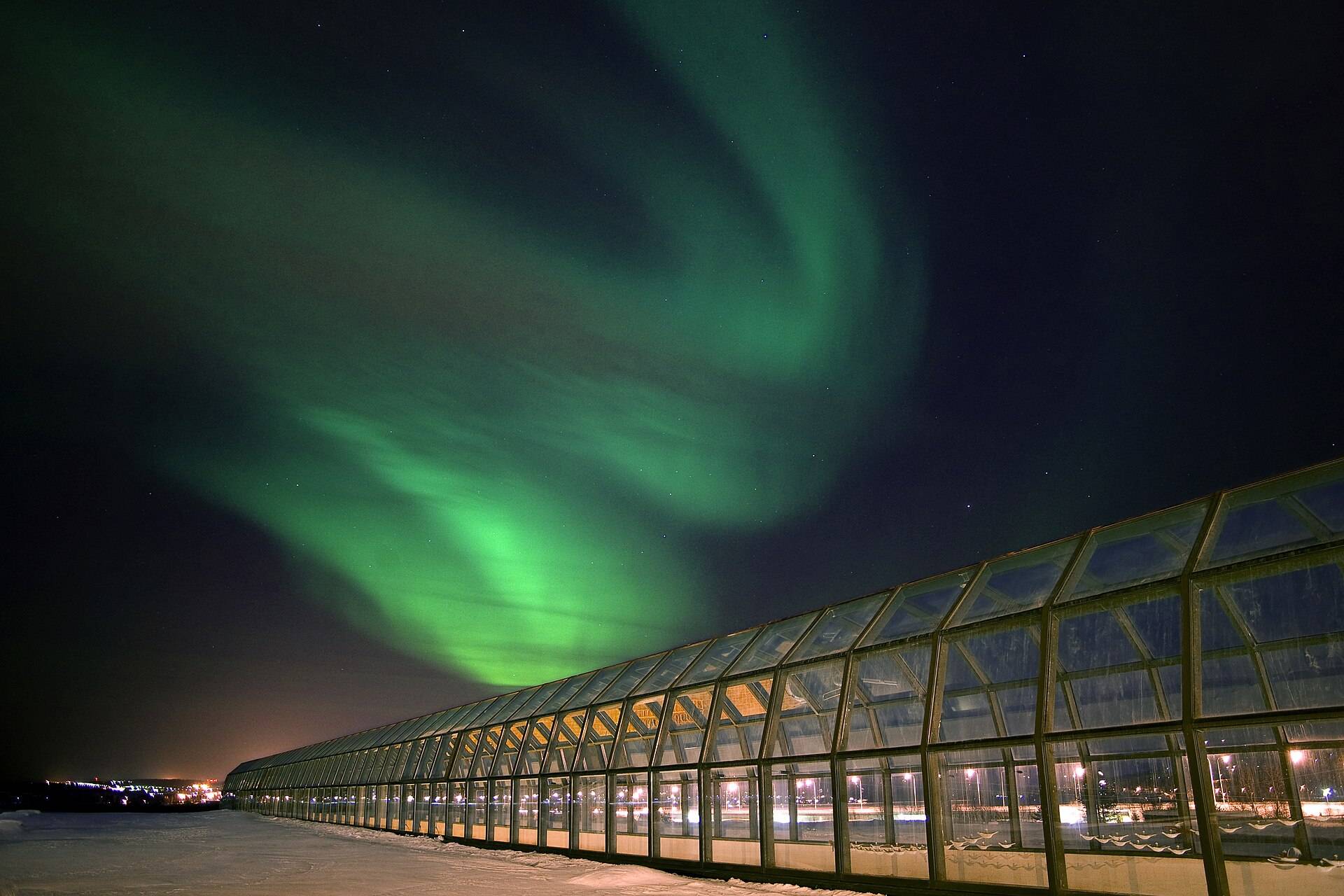
The Arktikum building in Rovaniemi under an aurora
Chapter 01

Finland is long, and the long part is the point

1,150 km · Helsinki to Utsjoki · One night on a train · Two climates

Helsinki to Rovaniemi is further than London to Edinburgh, and Rovaniemi is only halfway up Lapland.

The arithmetic that decides the trip

Finland runs about 1,150 kilometres from the Gulf of Finland to the Norwegian border. Helsinki sits at the very bottom of it. Rovaniemi, the town most people mean when they say Lapland, is roughly 800 kilometres north; Utsjoki, the northernmost municipality, is another 450 beyond that.

That distance is not a detail to be solved with an early start. It is an overnight train, or a flight, or a full day of driving. Plan it in and the trip works; ignore it and you spend a third of your holiday moving.

Two countries, honestly

South of a line through Tampere the landscape is farmland, lake and mixed forest, the towns are close together and the sea is never far. North of Oulu the trees thin, the fells begin, the settlements are an hour apart and the weather has opinions.

A first trip does one of them properly or splits seven nights four and three. Trying to do the archipelago and the Arctic in five days produces a week of travel with a holiday attached.

If you only have four nights, stay south. The north repays a longer stay and rarely a shorter one.

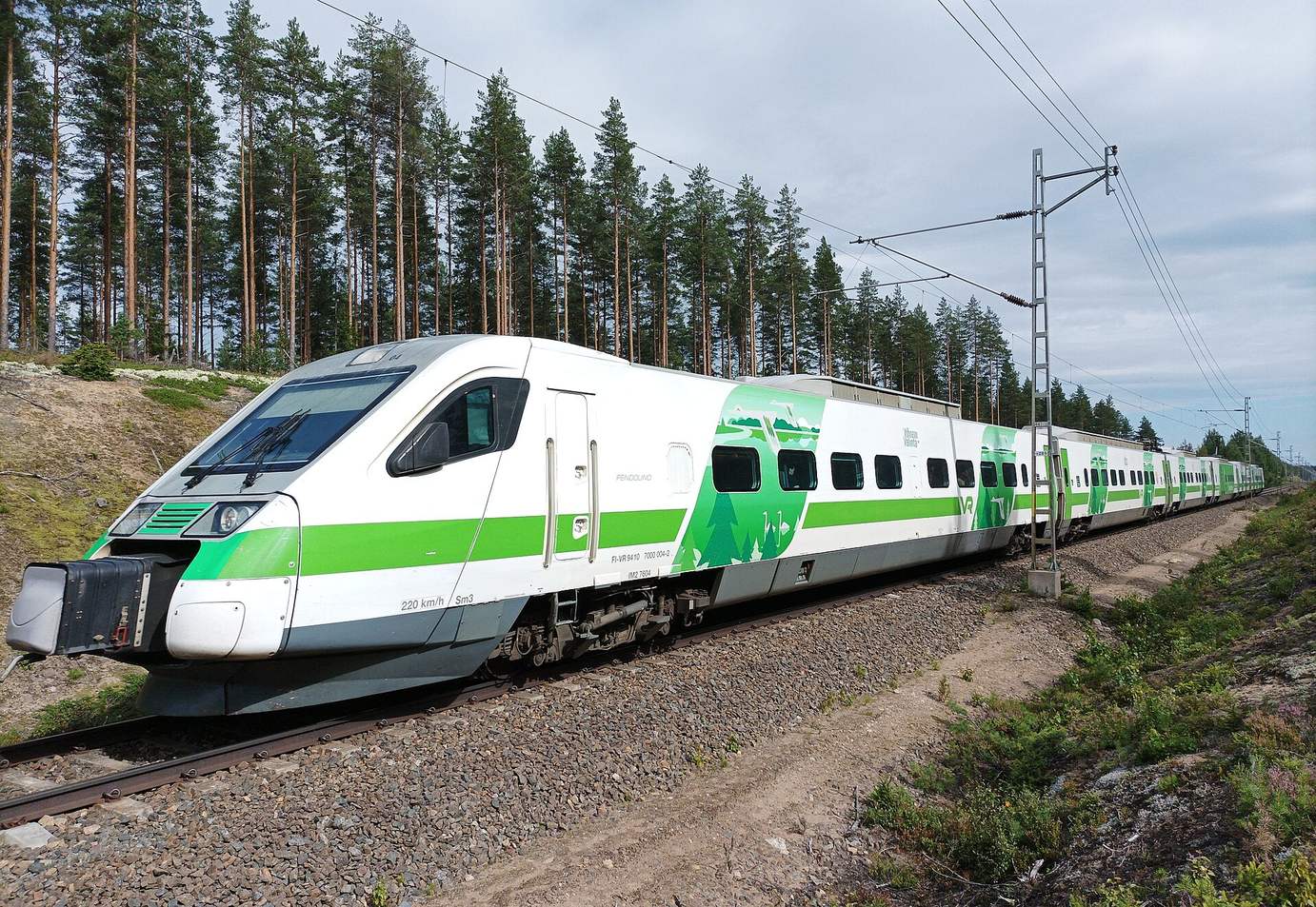
A VR Pendolino running through forest near Pieksämäki
Chapter 02

The train is the default, and it is better than the alternatives

VR · Helsinki–Tampere 1h30 · Night train · Car-carrier · Buses

Finland's rail network does the corridor from Helsinki to Oulu well, and the night train takes your car to Lapland while you sleep.

What the trains actually cover

The useful spine runs Helsinki–Tampere–Seinäjoki–Oulu, with branches west to Turku and east to Kuopio, Joensuu and Savonlinna. Helsinki to Tampere is about an hour and a half; Turku about two hours; Oulu about six. Trains are operated by VR, the state railway.

Above Oulu the network continues to Kemijärvi and Kolari, and it is the car-carrier services on those lines that most visitors miss: you board in Helsinki in the evening, your rental car goes on the same train, and you both arrive in Lapland in the morning.

When you need a car, and when you do not

In Helsinki, Turku and Tampere a car is a liability. Between them it is unnecessary. Above Oulu, and anywhere in the archipelago or on the smaller lake roads, it is the only sensible way to move.

Ferries matter too: Helsinki to Tallinn is a two-hour crossing, and the overnight boats to Stockholm leave from both Helsinki and Turku. Åland is reached only by ferry or by a short flight, and its own islands are linked by a free internal ferry network.

Winter tyres are a legal requirement, not an upsell, and rental cars in the north come with a block heater plug.

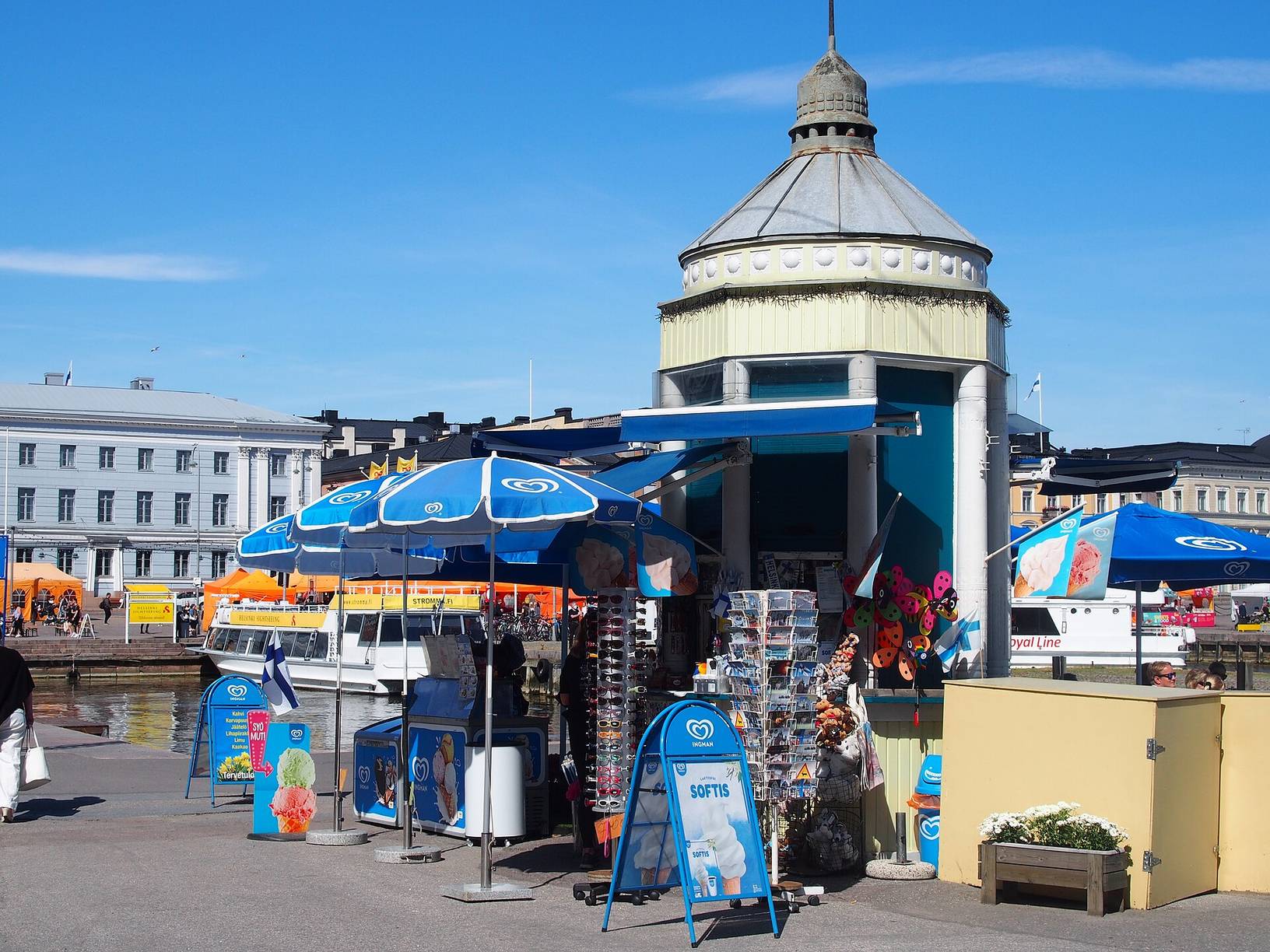
A kiosk beside the Market Square on the Helsinki waterfront
Chapter 03

The first day: a small capital that reveals itself quickly

Kauppatori · Trams · HSL day ticket · Suomenlinna · Monday closures

Helsinki is compact enough that a single day tells you what kind of country you have arrived in.

Do the water first

Helsinki is built on a peninsula with more than three hundred islands around it, and the city makes most sense from the harbour. Buy a day ticket on the public transport network, which covers the trams and — this is the part people miss — the ferry out to Suomenlinna, the sea fortress begun in 1748.

That single ticket turns the fortress from an excursion into a tram ride that happens to cross water. Fifteen minutes each way, eight hundred people living there, and the best view back at the city you will get.

What to leave for later

Many Finnish museums close on Mondays, which catches out more first-time visitors than any other single thing. Check the day before you plan the museum morning, not the morning itself.

Helsinki also empties in July, when Finns take their holiday more or less all at once. Some good restaurants simply shut for three weeks. The city is calmer and the water is warmer; the kitchen you read about may not be open.

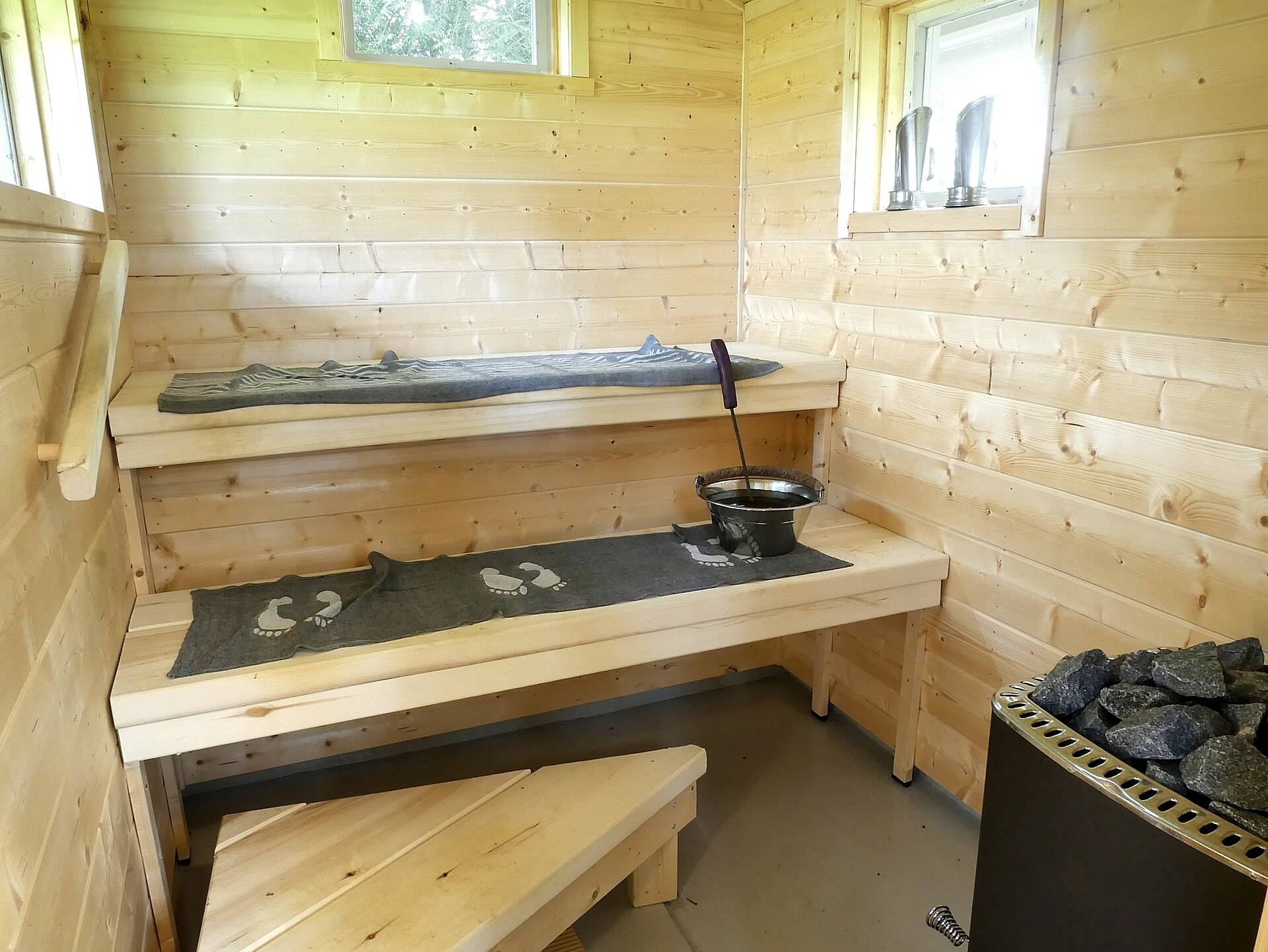
The benches and stove of an ordinary Finnish sauna
Chapter 04

Sauna is domestic, not an experience to be booked at the end

Löyly · Wash first · Sit on a towel · No endurance · UNESCO 2020

There are somewhere around three million saunas in a country of 5.6 million people. It is a room in the house, not a treatment.

What actually matters

Wash before you go in. Sit on a towel or a paper mat — everyone does, and it is about the bench, not modesty. Ask before you throw water on the stones, because the heat lands on everyone. Leave whenever you want and go back in if you feel like it; nobody is counting, and nobody is impressed.

The rest is quieter than the internet suggests. Silence is not required and conversation is normal. Phones are not. In single-sex saunas people are naked and nobody looks; in mixed public saunas and hotel spas swimwear is usual. Read the room for thirty seconds and you will have it.

Where a first-timer should go

Not the hotel cabinet with the electric box in the corner, if you can help it. Go to a public sauna: they are ordinary neighbourhood institutions, they are cheap, and the staff are used to visitors who do not know the drill.

Book it for the first evening rather than the last. Everything else about Finland — the lake, the cold water, the going quiet in company — makes more sense afterwards.

Finnish sauna culture went onto the UNESCO intangible cultural heritage list in December 2020.

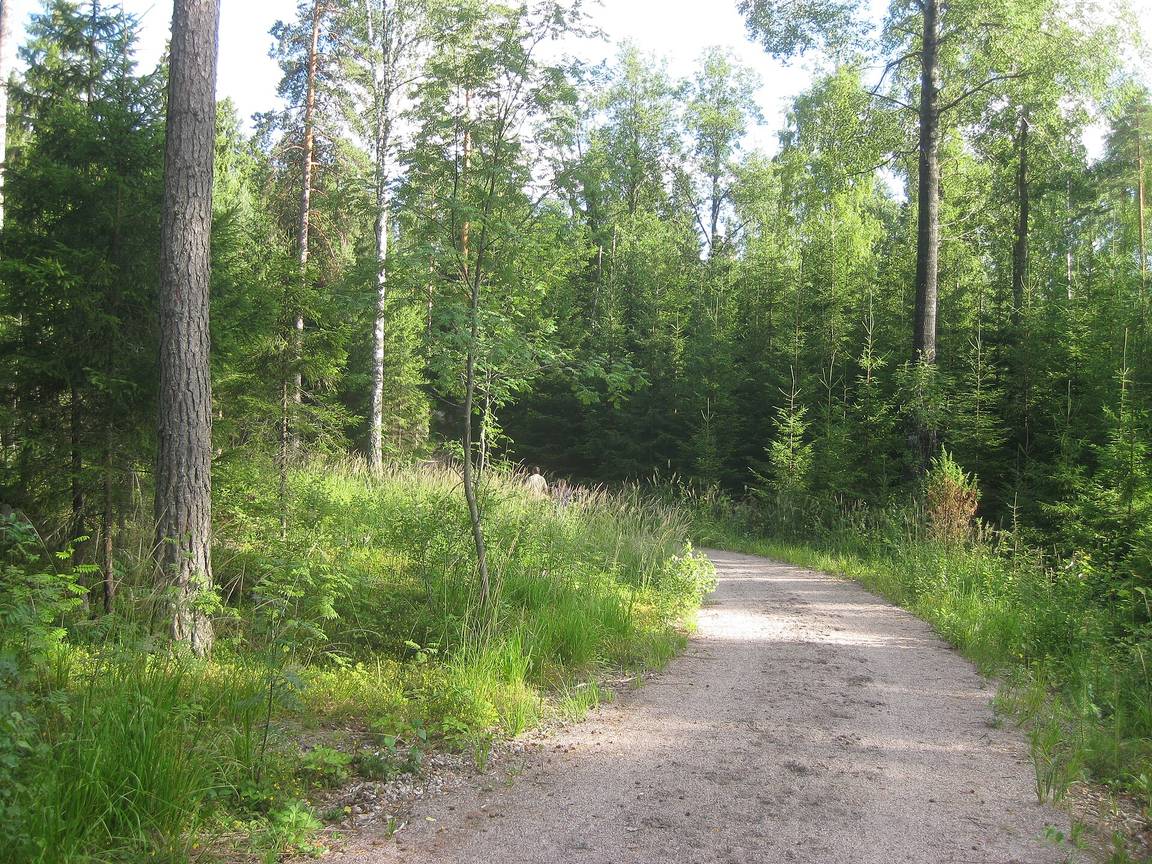
Pine forest and a gravel track in Nuuksio National Park outside Helsinki
Chapter 05

Everyman's right, and exactly where it stops

Jokamiehenoikeus · Berries · One night · Not yards · No fires

You may walk, camp and pick across most of Finland without asking anybody. The limits are narrow, clear and worth knowing.

What you may do

Under everyman's right you may walk, ski, cycle and swim on land you do not own, pitch a tent for a night at a reasonable distance from houses, and pick wild berries, mushrooms and flowers. It applies to private forest as much as to public land, and it is a right rather than a tolerance.

This is why Finland's national parks feel unmanaged in a good way. Over forty of them, free to enter, with marked routes, duckboards over the wet ground and open wilderness huts in the north that anyone may use.

What you may not

Not yards and gardens, not cultivated fields, not cutting or damaging living trees, and no open fire without the landowner's permission — including camping stoves during a wildfire warning. Motor vehicles off-road need permission. Reindeer are somebody's livestock and are not to be approached or fed.

Fishing splits: a rod, line and hook, and ice fishing, are covered. Lure fishing needs the national fisheries fee if you are between 18 and 64. Hunting is not covered at all.

Berries run to a calendar: bilberries late July into August, lingonberries in September, cloudberries in the northern bogs in July.

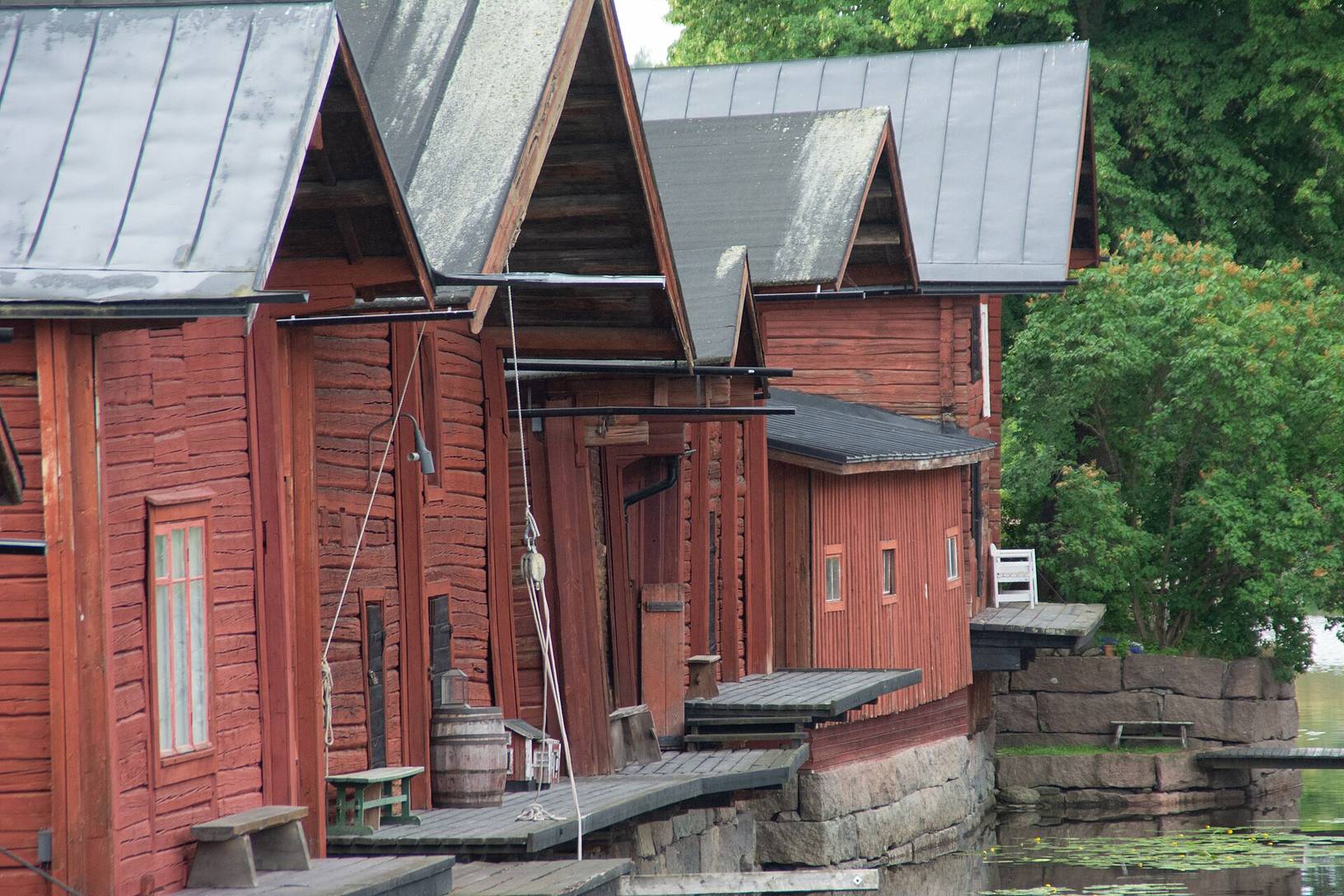
The red wooden shore warehouses along the river at Porvoo
Chapter 06

One short day out, and it should be by the coast road

Porvoo · 50 km · Wooden town · Second oldest · Half a day

Fifty kilometres east of Helsinki is the day trip that gives a first-timer the most for the least effort.

Why Porvoo rather than anywhere else

Porvoo is Finland's second oldest town, and the row of ochre-red timber warehouses along the river is one of the few Finnish views that is genuinely famous inside the country as well as outside it. The old town above them is cobbled, lived in and small enough to walk in an afternoon.

It is close enough to do on a bus in an hour, and it makes the point that Finnish urban history is wooden rather than stone — which is what Rauma then proves on a much larger scale.

The alternative, if you have a car

Drive west instead and take the coast road to Turku, stopping wherever the archipelago starts to show. Turku is the old capital, the cathedral was consecrated in 1300, and the Archipelago Sea beyond it is the largest scatter of islands in Europe.

That is a full day rather than a half, and it is the better one if the weather is good and you are heading west anyway.

Where to base yourself

Four first trips, by what you actually want

Pick one shape and commit to it. The mistake is always the fifth destination, not the missing one.

Shape of tripBase or routeBest monthsThe catch
City and coastHelsinki, with Porvoo and Suomenlinna, then TurkuMay to SeptemberJuly closes a lot of good kitchens for the holiday
Lakeland weekTampere and Savonlinna, or Kuopio, by train and carLate June to AugustMosquitoes inland, and thin bus service off the main roads
Lapland in winterRovaniemi, Levi or Saariselkä, flying inLate December to early AprilShort daylight before mid-January, and everything books early
Split weekFour nights south, three north, night train betweenFebruary–March or SeptemberOne travel day lost each way; worth it, but count it
Practicalities

Six things that make the first week easier

None of them is expensive and four of them are free.

Buy the transport day ticket

In Helsinki it covers trams, buses, metro and the Suomenlinna ferry.

The boat stops being an outing and becomes a route.

Book the night train early

Cabins and car spaces to Lapland sell out weeks ahead in winter.

It is also the only way to arrive north without a flight.

Check Monday

More Finnish museums close on Mondays than visitors expect.

Make it the sauna, forest or market day instead.

Carry no cash

Cards work everywhere, including market stalls and rural fuel stops.

Tipping is not expected and rounding up is plenty.

Drink the tap water

It is excellent everywhere in the country, including the far north.

Bottled water is the one thing genuinely not worth buying.

Learn two words

Kiitos is thank you. Terve does for hello.

English is near-universal; the two words are still noticed.

Before you book

The six questions

Answer these and the itinerary writes itself.

Which half

South or north? Doing both properly needs more than a week.

Which season

Snow and darkness, or light and mosquitoes? There is no neutral month.

Train or car

Below Oulu the train wins. Above it, the car does.

Sauna night

Which evening, and which sauna? Book it before you leave.

Monday

What is open on the Monday you are in town?

Midsummer

Are you there over juhannus? If so, expect a closed country.

Honest planning

Frequently asked questions

The questions a first visit actually raises, answered without enthusiasm.

Seven nights is the useful minimum if you want both halves of the country, and four is enough for the south on its own. The distances are the reason: Helsinki to Rovaniemi is around 800 km and Rovaniemi is only halfway up Lapland. A week split four nights south and three north, with the night train between them, works well. Five days trying to cover Helsinki, the Lakeland and the Arctic does not.
It is a Nordic country and it costs what its neighbours cost, but the parts of it that people travel for are unusually cheap or free. National park entry is free, more than forty of them. Everyman's right makes walking, camping for a night and picking berries free. Public saunas are modest. Tap water is excellent. The costs that bite are restaurants, alcohol and internal flights.
No. Finnish and Swedish are the official languages and English is spoken almost universally, including by older people in small towns. Åland is the exception in the other direction: it is monolingually Swedish-speaking, and Finnish is not much use there. Kiitos, thank you, is worth learning anyway.
Jokamiehenoikeus lets you walk, ski, cycle, swim, pitch a tent for a night and pick wild berries and mushrooms on land you do not own, including private forest. It stops at yards and gardens, cultivated fields, living trees, and open fires, which always need the landowner's permission. Reindeer are livestock and are not to be approached. Angling with rod and line and ice fishing are covered; lure fishing needs the national fisheries fee between 18 and 64.
In a single-sex public sauna, yes, and nobody looks or comments. In mixed public saunas, hotel spas and the newer city saunas, swimwear is normal and often required. What matters more than either is washing before you go in, sitting on a towel, asking before you throw water on the stones, and leaving whenever you want. It is not an endurance test.
Late June to mid-August for the light, the water and the archipelago, accepting mosquitoes inland and a country half on holiday. Late February to early April for winter, when there is reliable snow and the daylight has come back. September is the quiet answer: the autumn colour, the first aurora nights, no insects and no crowds.
Yes, and particularly if you want a car up there. The car-carrier services take your vehicle on the same train, so you board in Helsinki in the evening and start driving in Lapland after breakfast, having lost no daylight. Book weeks ahead in winter; cabins and car spaces go early.
Three things. The north–south distance, which is not solvable by starting early. Monday museum closures. And midsummer — over juhannus, in late June, the cities empty, shops shut and restaurants close, because the entire country goes to a cottage. Being in Helsinki that weekend is a strange experience, and not the one you booked.
Start planning

Pick the half, then pick the month

Everything else about a first Finnish week follows from those two decisions.

Advertisement