Recoleta and the Buenos Aires skyline from the air, with the river beyond
Forty-eight barrios, six that matter first

Buenos Aires in Depth

Buenos Aires is not a city with a centre and a fringe. It is a grid of neighbourhoods that were built at different moments by different people, and knowing which one you are standing in explains almost everything about it.

The city has forty-eight official barrios grouped into fifteen comunas, and the ones a visitor will use come down to about eight. They are not variations on a theme. San Telmo is a colonial street plan the wealthy abandoned during an 1871 yellow fever epidemic. Recoleta is where they moved to, and it looks like Paris because that was the intention. La Boca is a port neighbourhood built by Genoese dockworkers out of ship's paint and corrugated iron. Palermo is parkland and, since about 2000, most of the restaurants.

This guide takes the city barrio by barrio, says what each one is actually for, and covers the practical layer underneath — the subte, the SUBE card, the eating hours, and the two football grounds. For the country around it, read the complete guide; for the city's most misunderstood export, tango.

How longFour nights minimum. Two is a stopover, not a visit
Where to stayPalermo or Recoleta to sleep, San Telmo to walk
Getting aroundSix subte lines and a SUBE card; walking within each barrio
The one habitEat dinner at ten and stop fighting it
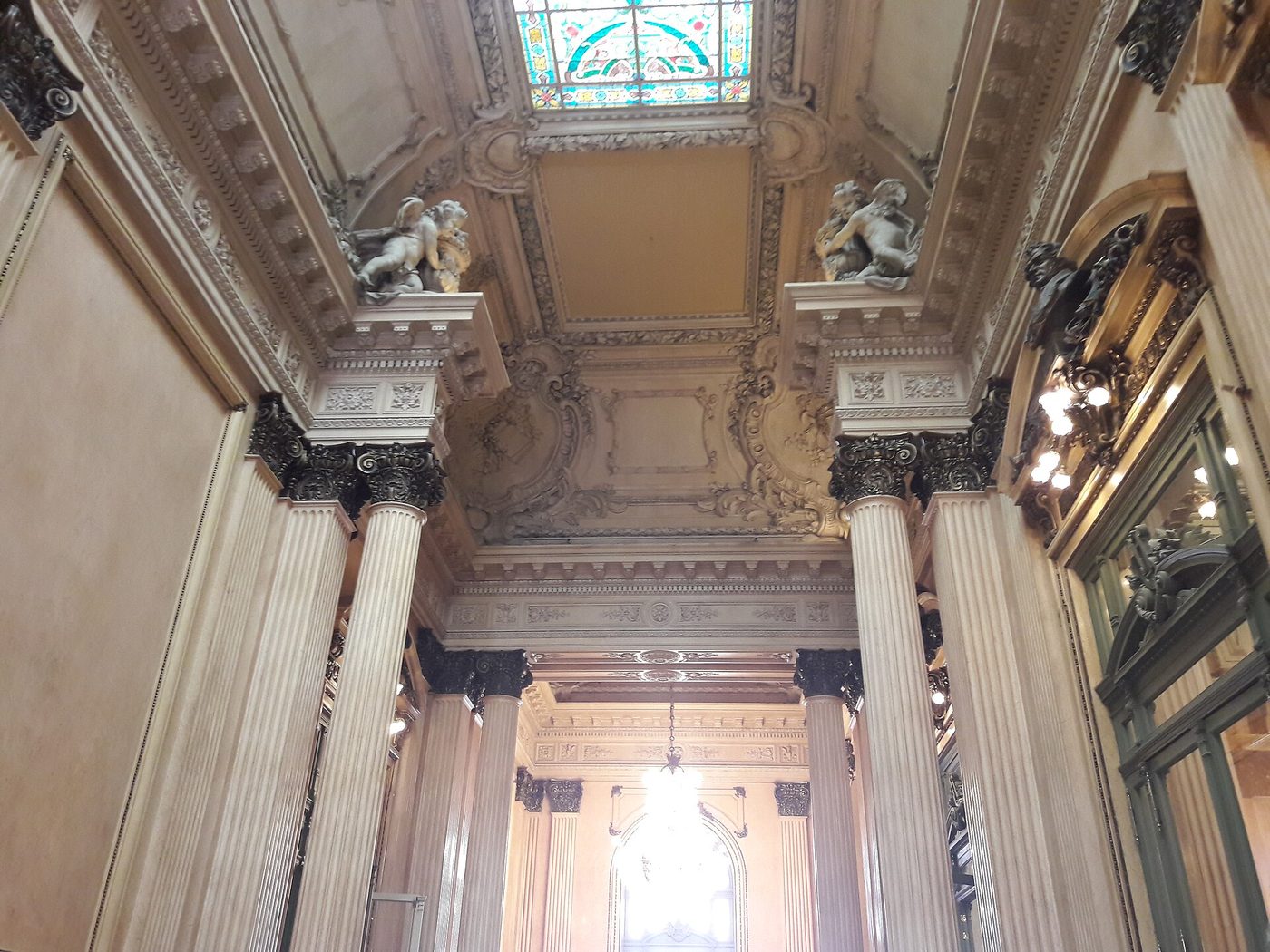
The horseshoe auditorium and tiered boxes of the Teatro Colón
Chapter 01

Centro: the government, the opera house and the widest avenue in the world

Plaza de Mayo · Teatro Colón · Avenida de Mayo · Subte line A, 1913

The old city core is a working downtown rather than an old town, and it empties at night.

What is here

Plaza de Mayo has been the political square since 1580 and still is: the Casa Rosada on one side, the Cabildo on the other, and the Madres de Plaza de Mayo still walking their Thursday circuit. Running west, Avenida de Mayo is the city's Spanish-influenced street, with the Palacio Barolo and the Café Tortoni on it.

The Teatro Colón opened in 1908 and is regularly ranked among the finest opera houses in the world for acoustics. Guided tours run through the day; a ticket to a performance is better if the calendar allows it.

How to use it

Centro is for daytime. The offices empty after seven and the microcentro goes quiet in a way that surprises people who booked a hotel there for the location. Sleep in Palermo, Recoleta or San Telmo and come here to walk.

The subte has six lines. Line A opened in 1913 and was the first underground railway in the southern hemisphere; its restored wooden carriages now run only on special occasions, but the stations are still worth the ride.

Avenida 9 de Julio is claimed as the widest avenue in the world. Crossing it takes two or three phases of lights, which settles the argument in practice if not in fact.

Plaza Dorrego in San Telmo, the square that fills with stalls on Sundays
Chapter 02

San Telmo: the oldest barrio, and the one an epidemic emptied

Plaza Dorrego · Calle Defensa · Sunday feria · Mercado de San Telmo

The wealthy left in 1871 and never came back. What they left behind is the best-preserved street plan in the city.

Why it looks like this

The yellow fever epidemic of 1871 killed a large share of the population and drove the families who could afford to move northwards to Recoleta. Their houses in San Telmo were subdivided into conventillos and let room by room to the immigrants arriving from Italy and Spain.

That is why the barrio has grand doorways opening onto shared courtyards, and why it kept its cobbles and its low skyline while the rest of the city was rebuilt. The Mercado de San Telmo, an iron-framed market hall of 1897, still functions as a market on weekdays.

Sunday, and the rest of the week

On Sundays the Feria de San Telmo runs the length of Calle Defensa down to Plaza Dorrego, several hundred stalls of antiques, leather and assorted rubbish, with street performers along the way. It is genuinely enjoyable and genuinely crowded, and it is not the only reason to come.

On a Tuesday the same streets are quiet, the antique shops are open properly, and the bars on Plaza Dorrego are places to sit rather than to queue. If you have one morning, take the weekday.

Tango on Plaza Dorrego is a street performance for visitors. It is skilful and it is not what Argentines dance. The tango guide explains the difference.

The painted sheet-metal houses along Caminito in La Boca
Chapter 03

La Boca: ship's paint, Genoese dockers and the loudest stadium in the country

Caminito · La Bombonera · Quinquela Martín · Daylight only

The most photographed street in Argentina sits in a working-class barrio that requires some care.

Where the colours came from

La Boca grew up around the mouth of the Riachuelo, built by Genoese dockworkers out of corrugated iron and whatever paint was left over from the ships. The mixed colours are the leftovers, used up wall by wall.

Caminito is a former railway cutting turned into an open-air street museum in the 1950s at the instigation of the painter Benito Quinquela Martín, who grew up here. His museum, a few blocks away, is the better half of the visit and almost nobody goes.

Football, and the practical warning

La Bombonera is the home of Boca Juniors, built into the block so tightly that one stand is a vertical wall. Its stadium tour runs most days. Getting to an actual match takes planning: away supporters have been barred from most Argentine league fixtures since 2013, so a neutral buying a ticket is a matter of official hospitality packages or a member's guest.

The honest caution: La Boca is a poor neighbourhood, and the few blocks around Caminito are policed for visitors while the streets beyond them are not. Come in daylight, stay on the marked streets, and take a taxi or a ride app rather than walking in from the north.

River Plate, the other half of the Superclásico, plays at the Monumental in Núñez at the far northern end of the city.

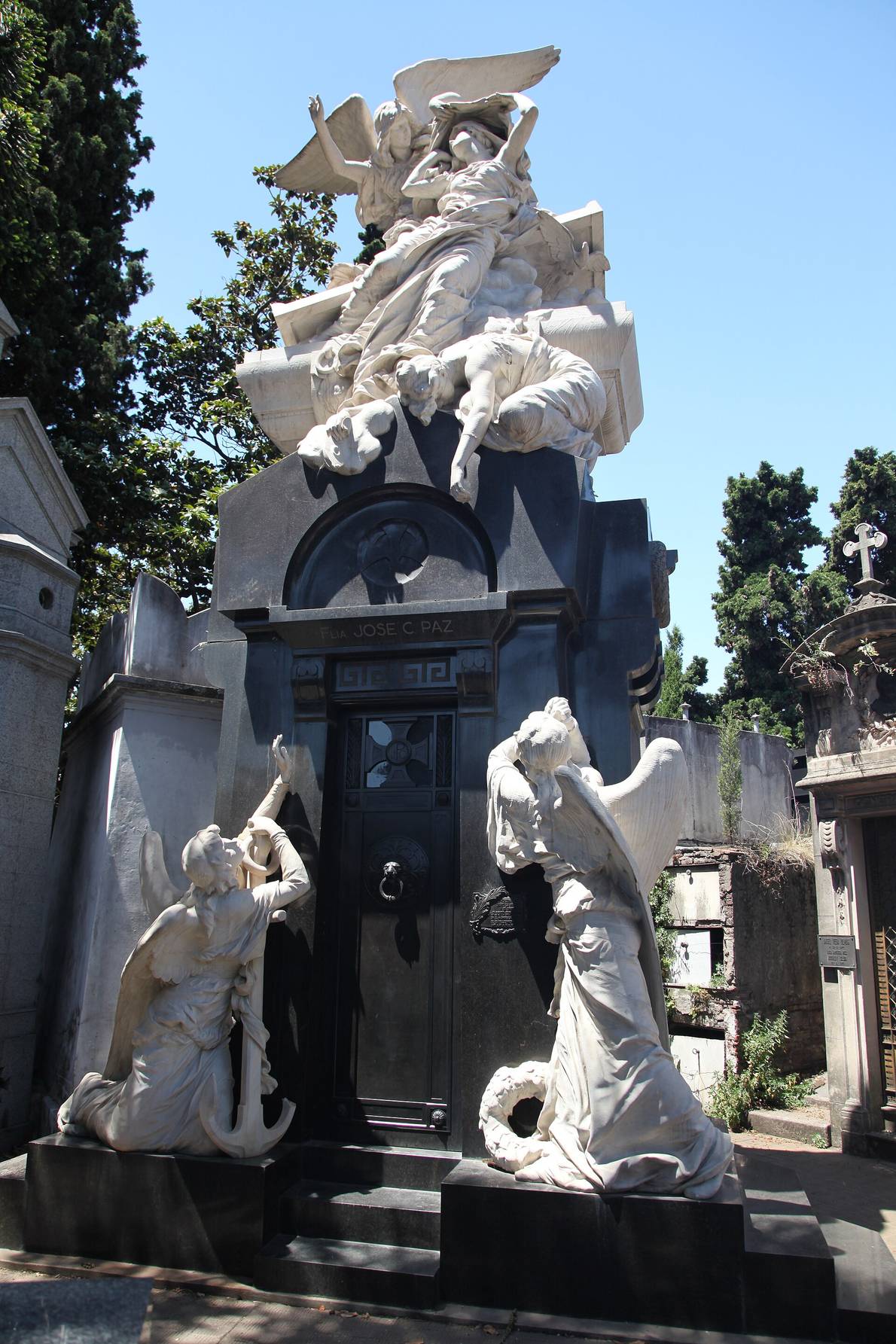
Mausoleums lining one of the narrow streets of the Recoleta cemetery
Chapter 04

Recoleta: the city the epidemic built, and a cemetery laid out as streets

La Recoleta Cemetery · Bellas Artes · El Ateneo · Avenida Alvear

Buenos Aires' most French quarter, and the single strangest place in it.

The cemetery

La Recoleta Cemetery opened in 1822 and is laid out as a grid of streets with several thousand mausoleums along them, in every style the nineteenth century could produce and a few it could not. You walk it as a city, not as a graveyard.

The tomb visitors ask for is the Duarte family vault, where Eva Perón was finally buried in 1976, twenty-four years after her death and after her body had been moved between countries. It is a modest black granite door with fresh flowers on it, and it is always the busiest corner.

The rest of the barrio

Recoleta is apartment blocks with mansard roofs, embassies on Avenida Alvear, and the Museo Nacional de Bellas Artes at the edge of the park. On Santa Fe, El Ateneo Grand Splendid is a bookshop inside a 1919 theatre, with the boxes intact and a café on the stage — a genuine conversion rather than a themed one.

The green space in front of the cemetery holds a weekend craft fair and, on the corner, the enormous steel Floralis Genérica flower, whose petals were designed to open and close with the light.

Museum closing days vary by institution here, and it is not reliably Monday. Check the specific museum the day before rather than assuming a rule.

The pergola and rose beds of the Rosedal in the Parque Tres de Febrero, Palermo
Chapter 05

Palermo: the largest barrio, and where the city eats

Parque Tres de Febrero · The Rosedal · MALBA · Soho and Hollywood

One official barrio, several unofficial ones, and no agreement on where any of them start.

The parks

The Parque Tres de Febrero — the Bosques de Palermo — is the city's lung: lakes, a Japanese garden, a planetarium, and the Rosedal, a rose garden with a white pergola that is the most photographed thing in the barrio after the food.

On the park's edge sits MALBA, the museum of Latin American art, which is the single most rewarding gallery in the city for anyone who does not already know the region's twentieth century. The Evita museum is a few blocks south in a former women's shelter she founded.

Soho, Hollywood, and the rest

Palermo is officially one barrio and colloquially about five. Palermo Soho, around Plaza Serrano, is low houses, boutiques and restaurants. Palermo Hollywood, north of the railway, was named for the television studios and is where a lot of the better kitchens are. Palermo Chico is embassies and enormous houses.

The restaurant scene has been moving outward for a decade — Villa Crespo, Chacarita and Colegiales now hold as much of it as Palermo does, and they are quieter. Any of them is a better dinner plan than the centre.

Most of Palermo's restaurants do not fill until half past nine. A booking at eight will get you an empty dining room and a slightly puzzled waiter.

The Puente de la Mujer across a dock at Puerto Madero
Chapter 06

Puerto Madero and the northern barrios

Docks of 1897 · Puente de la Mujer · Costanera Sur reserve · Belgrano

The newest barrio and some of the oldest suburbs, at opposite ends of the same riverfront.

The docks, and the marsh behind them

Puerto Madero was the city's port, built in the 1890s and obsolete within twenty years because the ships outgrew it. It sat derelict until the 1990s and is now towers, converted brick warehouses and Santiago Calatrava's Puente de la Mujer, which pivots to let boats through.

Behind it lies the better half: the Reserva Ecológica Costanera Sur, 350 hectares of wetland that grew accidentally on rubble dumped in the river. It is free to enter, full of birds, and the only place in Buenos Aires where you can lose sight of the city.

North of the parks

Belgrano is a residential barrio with a small and genuine Chinatown around Arribeños, busiest on Sunday. Colegiales and Chacarita are where the newer restaurants and coffee bars have gone, and Chacarita's vast cemetery holds Carlos Gardel, which draws a steady stream of visitors of a different kind from Recoleta's.

Further out, Mataderos holds a Sunday fair of gaucho horsemanship and folk music that is aimed at Argentines rather than at tourists. It runs seasonally, so check before crossing the city for it.

The ferry to Colonia and Montevideo in Uruguay leaves from Puerto Madero. It is a day trip that involves an international border, so bring the passport.

Which barrio suits you

Where to sleep, and what you get

The honest version. Every one of these is a fifteen-minute taxi from the others outside rush hour.

BarrioCharacterBest forThe catch
PalermoLow houses, parks, most of the restaurantsEating, walking, a first visitSpread out; the good parts are not near the subte
RecoletaMansard roofs, museums, wide avenuesGalleries, the cemetery, quiet nightsFormal, and short of ordinary neighbourhood life
San TelmoCobbles, conventillos, antiquesAtmosphere and walkingNoisy at weekends; patchy at the southern edge
Centro / MonserratOffices, government, theatresSubte access and daytime sightseeingEmpties at night and feels it
Puerto MaderoTowers, docks, the wetland reserveRunning, river air, quietNo street life; you eat where the hotel is
Villa Crespo / ChacaritaResidential, newer kitchens, less polishA second visit, or a longer stayNothing to see; that is rather the point
Practicalities

Six things that make the city easier

All of them are learned in the first two days anyway. Better to know them on day one.

Buy a SUBE card first

One card covers the six subte lines, the colectivos and the suburban trains.

Buy it at a kiosk or station and top it up in cash.

The grid is your friend

Blocks are about 110 metres, addresses run in hundreds per block.

An address of 2400 is twenty-four blocks from the numbering origin. You can navigate by arithmetic.

Move dinner to ten

Kitchens open at eight and fill at half past nine.

Merienda at five o'clock is what makes that survivable.

Take a taxi in La Boca

Caminito is policed; the blocks around it are an ordinary poor neighbourhood.

Daylight, marked streets, and a car in and out.

Check the closing day

Museums here close on different weekdays, and it is not always Monday.

Check the specific institution the day before.

Look for the cafés notables

The city maintains a register of historic cafés, marked with a plaque.

They are the best rooms in Buenos Aires and most of them are ordinary bars.

Before you book

The six questions

Answer these and the four nights arrange themselves.

Which barrio

Palermo to eat, Recoleta to be near the museums, San Telmo to walk.

Which Sunday

San Telmo's feria, Mataderos' fair and Chinatown all peak on Sunday.

Colón or a milonga

Or both. One is a matinée; the other starts at midnight.

Football or not

League tickets for neutrals are difficult. A stadium tour is not.

Which month

November is the best. January is hot and half the city is away.

Day trip or not

Colonia in Uruguay is a ferry ride and an international border.

Honest planning

Frequently asked questions

The questions a trip to Argentina actually raises, answered without enthusiasm.

Four nights is the honest minimum and a week is not wasted. The city has forty-eight barrios and the ones a visitor uses are spread across about fifteen kilometres, so a day tends to cover one or two of them properly rather than five badly. Two nights is a stopover between flights, not a visit.
Palermo if you want to walk to dinner, Recoleta if you want the museums and quiet streets, San Telmo if you want cobbles and atmosphere and do not mind weekend noise. Avoid the microcentro: it is convenient for the subte and empties completely after seven. Villa Crespo and Chacarita are good on a second visit, with newer kitchens and no sights at all.
Because the wealthy left it. The yellow fever epidemic of 1871 pushed the families who could afford to move northwards to Recoleta, and their large houses in San Telmo were subdivided into conventillos and let room by room to Italian and Spanish immigrants. That is why the barrio kept its cobbles, its low skyline and its grand doorways opening onto shared courtyards while the rest of the centre was rebuilt.
The few blocks around Caminito are policed for visitors and are fine in daylight. The streets beyond them are an ordinary poor neighbourhood and are not a place to wander with a camera. Come in the day, stay on the marked streets, and arrive and leave by taxi or ride app rather than walking in. The Quinquela Martín museum a few blocks away is worth the extra effort and almost empty.
Not easily as a neutral. Away supporters have been barred from most Argentine league fixtures since 2013, so tickets go to members and their guests, and what is sold to visitors is generally an official hospitality package. Stadium tours at La Bombonera and the Monumental are straightforward and run most days. If you want the atmosphere without the difficulty, watch a Superclásico in a neighbourhood bar.
It opened in 1822 and is laid out as a grid of streets with several thousand mausoleums along them, so the right approach is to walk it like a small city rather than hunt for one grave. The tomb everyone asks for is the Duarte family vault, where Eva Perón was buried in 1976, twenty-four years after her death. It is a plain black granite door and it is always the busiest corner of the cemetery.
Kitchens open around eight, fill at half past nine, and are busiest after ten. Lunch runs from about one to three. Between them is merienda, a real late-afternoon meal of coffee and medialunas or a slice of tart, and it is what makes a ten o'clock dinner possible. Booking a table for eight will get you an empty room.
Buy a SUBE card at a kiosk or station on the first day: it covers the six subte lines, the colectivo buses and the suburban trains. Within a barrio, walk — the grid is regular, blocks run about 110 metres, and street numbers advance in hundreds per block, so an address tells you exactly how far it is. Between barrios, the subte or a ride app. Line A, opened in 1913, was the first underground railway in the southern hemisphere.
Start planning

Pick the barrio, then pick the Sunday

Buenos Aires is legible once you stop treating it as one place.

Advertisement